Becoming Better Drivers
Driver Education Initiative Award - Summer 2019
Abigail Bui
Fredericksburg, Virginia
Motorized transportation has become vital for economic development and enhancement in societies. Although traffic accidents in developed countries, like France and the U.S., have been decreasing in recent years, they are still the leading cause of hospitalization and death among adolescents. Cognitive impairments, which are most impressionable to adolescents, can lead to future health conditions and repetitive risky behavior (Norwegian University of Science and Technology). Many researchers have alluded to this in hopes of explaining the high reoccurrence rate. Mobile impairments are too a concern for millions find themselves enduring dependent or uncomfortable lifestyles. To put it simply, traffic accidents are a great enigma to public health and safety.
There is an abundance of education and regulations regarding driver safety, but efforts that go into implementing those regulations fall short. An overwhelming 78.5% of traffic accidents occur at fault of the driver, not external factors like weather or pedestrians (Gopalakrishnan). Because the problem is truly generic, as many friends of mine have been in accidents. There has to be multidisciplinary action taken and approved by the bulk of society, otherwise risky behavior among drivers will continue at an increasing rate.
To increase the effort, the law can no longer go uncompromised. Those who drive carelessly need to be recognized by law enforcement as a danger to public safety. Although resources are short and can be put towards to what some people call “better causes,” not many movements have been successful without government regulation. Despite the controversy, the earth’s atmosphere would have been completely degraded by now if it hadn’t been claimed an international crisis and steps hadn’t been taken to outlaw the use of aerosols etc.
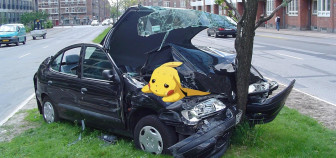
Cell phone use is indisputably the main cause of distracted driving. Not only are adolescents undergoing transitional phases, making them less likely to focus on the road and more on their surroundings, they, along with everyone, experience stress to keep in touch with their family, friends, and places of work. Not all states and countries regulate the use of cell phones while driving. In order to significantly reduce the risk of traffic accidents, further action and regulation should be in place. Governments should also subsidize some app companies to prevent its users from using the apps while driving. Some apps who have adopted these policies by themselves are Pokémon Go and Waze.
Public awareness is also key. Although there are many courses, like drivers ed. and government sponsored commercials, the issue is not pressed as a threat to public health as much as other things have been, like cigarettes for example. Gopalakrishnan, from the department of community medicine in SRM medical college, states that developing awareness amid health care professionals and enticing them to further educate and encourage the general public to follow the necessary driving habits would be of great value. Not only would it decrease the risk of traffic accidents, it would increase the sense of responsibility of citizens to the general public’s health at their own will.
Content Disclaimer:
Essays are contributed by users and represent their individual perspectives, not those of this website.