Between the Posts and the Open Road
2026 Driver Education Round 2
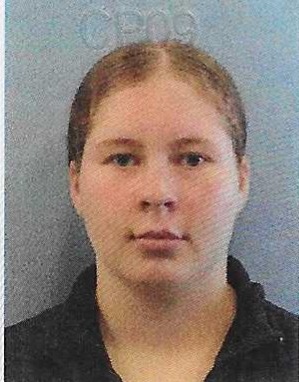
Cordelia P Perkins
Post Falls, ID
Loading forty pounds of damp goalie gear into the back of a car at five in the morning on an icy Idaho road will wake you up faster than caffeine ever could. As an ice hockey goaltender, my mind is wired entirely for defense. I spend hours tracking ninety-mile-an-hour rubber pucks, calculating angles, and anticipating where the next high-speed threat is coming from. It’s an environment where losing focus for even a fraction of a second means a goal scored against my team, or worse, a career-ending injury. But after earning my driver’s license two years ago, I realized something sobering: the ice isn't the most dangerous place I navigate every day. The open road is.
The statistics surrounding vehicular fatalities in the United States aren't just high; they're staggering. An average of 34,000 Americans lose their lives in car crashes every single year. Looking at that number forced me to see a silent crisis happening right in front of us. More Americans die on our roads in a single year than the total number of U.S. service members lost in the entire conflicts in Iraq and Afghanistan combined. When you stretch that timeline out to just two years, traffic deaths surpass the total American combat casualties from the entire Vietnam War. We honor soldiers for stepping into combat zones, as we rightly should, yet millions of citizens casually get behind the wheel of a multi-ton vehicle every morning without giving the danger a second thought. For teenagers and newer drivers especially, that disconnect is terrifying. We routinely treat driving as an effortless rite of passage or a minor convenience rather than the high-stakes, life-and-death responsibility it actually is.
That is why comprehensive driver education matters so much. It can't just be viewed as a dull legal requirement you power through to secure a piece of plastic on your sixteenth birthday. Good driver’s education strips away the dangerous illusion of invincibility that so many teenagers carry around. It forces you to respect braking distances, vehicle weight transfer, and simple physics. When you learn to actively scan for hazards instead of staring passively at the bumper directly ahead of you, driving stops being an automatic reflex and turns into a deliberate, disciplined skill. I still remember my instructor making us calculate how many feet a car travels while a driver simply reacts to a red light. Realizing how fast momentum takes over made me realize that without proper training, a new driver is essentially stepping onto the ice without ever learning how to stop.
Knowing the rules, however, is only half the battle. The hardest part is building concrete, non-negotiable habits that hold up when distractions enter the picture. Distracted driving is everywhere in high school culture. Looking down at a text, glancing at a social media notification, or switching a playlist takes your eyes off the road for maybe five seconds. But at fifty-five miles an hour, those five seconds mean you just drove the entire length of a football field completely blindfolded. To combat this, I treat getting behind the wheel with the exact same strict protocol I bring to my pre-game routine. Before I shift out of park, my phone goes on "Do Not Disturb" and gets thrown into the center console, out of sight and out of reach. I set the GPS, check every mirror, adjust the climate control, and ensure every single passenger is buckled up. No exceptions, no excuses, and no multitasking.
Leaving home for my senior year of high school to attend a competitive hockey academy completely reshaped how I view this responsibility. Back home in Post Falls, I am the oldest of four kids. My routine used to be a chaotic, loud mix of three younger siblings, two crazy dogs, and a house that was never quiet. Driving my younger brothers and sisters to school, rink practices, or the store meant their safety was placed squarely on me. I used to look in the rearview mirror on snowy mornings and see my younger brother and sister arguing over what song to play while our dog leaned her head over the back seat. Moments like that make the stakes personal. You quickly realize that being a good driver isn't just about protecting yourself; it’s about protecting the people sitting inches away from you who rely on your decisions.
Moving away from home didn't change that protective instinct—it just shifted to my teammates. Our roster includes players who moved thousands of miles away from their families across North America and around the world to pursue their athletic dreams. We share dorm rooms, eat meals together, endure grueling off-ice workouts, and rely on each other daily. When I take the wheel to drive a group of international teammates to a gym session or a local store, I feel that exact same weight of responsibility I felt driving my siblings. They are navigating new surroundings, different traffic flow, and unfamiliar roads. One of my teammates admitted to me that driving on highways here felt completely overwhelming compared to the smaller roads back home. Their parents entrusted them to this academy thousands of miles away, and when they step into my vehicle, keeping them safe becomes my direct duty.
Living alongside teammates has also taught me that being a safe driver requires vocal leadership. On the ice, goaltenders are the eyes of the team. We talk constantly, calling out incoming plays, directing defensemen, and holding each other accountable without hesitation. We need to bring that exact same energy to the road. If a friend picks up their phone while driving, speeds aggressively in bad weather, or acts recklessly behind the wheel, you have to speak up. I've had to tell a friend to put their phone down while driving us back from a road game, and even though it felt awkward for a second, she put it away immediately. Uncomfortable conversations prevent catastrophic wrecks. Offering to hold a friend's phone, manage navigation, or take over driving entirely takes five seconds and preserves lives.
We must stop treating driving like a passive background task that we can autopilot through while doing three other things. It is a privilege that demands our absolute, undivided attention every single time we turn the key. My commitment as a driver, a student-athlete, a teammate, and an older sister is to model that standard without compromise. Just like staying set between the posts to protect the net, every driver has a fundamental job to stand guard on the highway and protect every single life sharing the road.
Content Disclaimer:
Essays are contributed by users and represent their individual perspectives, not those of this website.