Five Seconds: What It Costs to Look Away
2026 Driver Education Round 2
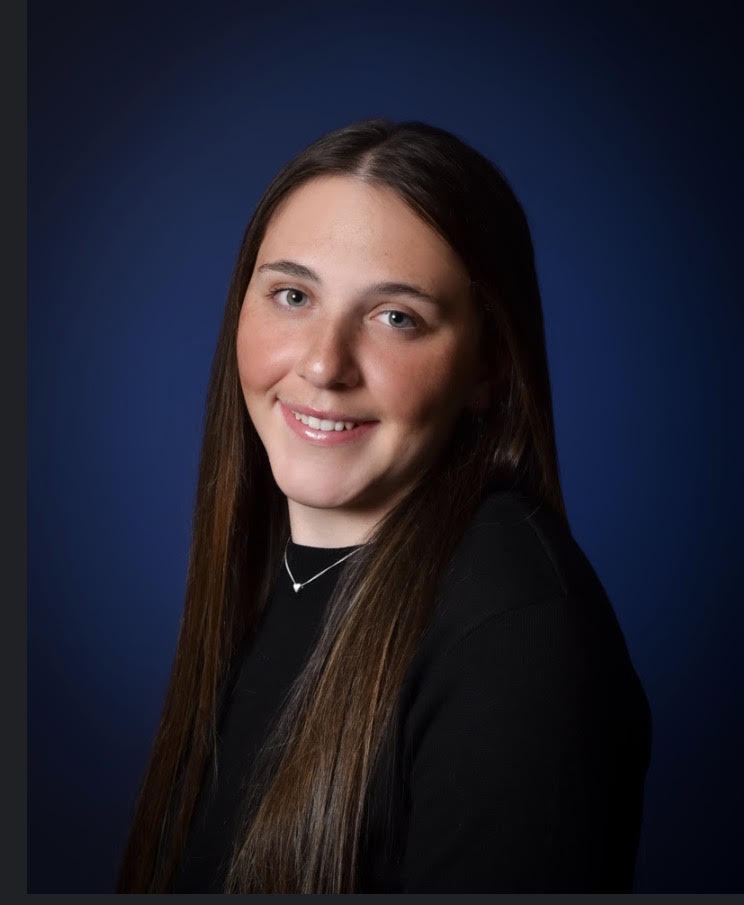
Kinley Arioli
Grosse Pointe Woods, Michigan
Most of us don’t remember our first thousand car rides. They blur together: the ride to school, the drive to practice, the slow crawl home in traffic with the radio on. Driving feels so normal that we’ve stopped seeing it for what it is. But one fact stopped me cold when I first read it. More than 34,000 Americans die in car crashes every year. That’s more than all the U.S. soldiers lost in Iraq and Afghanistan combined, and in just two years, it’s more than the entire Vietnam War. We don’t think of our commute as dangerous, yet by the numbers, it may be the most dangerous thing most of us do all day.
Part of why that surprises people is that road deaths don’t look like a crisis. They happen one at a time, on ordinary streets, on ordinary days. A family loses a son on a Tuesday night. A town loses a teacher on a Friday afternoon. The news covers it for a day, and then life moves on, because we all still have to drive tomorrow. That quiet repetition is exactly what makes it so easy to ignore.
I’m 17, and I’m planning to study psychology or geriatric nursing. Those might sound unrelated to driving, but the more I think about it, the more they feel connected. Both fields come down to the same question: how do people make decisions, and what happens to the people around them when those decisions go wrong?
Psychology is a big part of why crashes happen. We like to believe we can handle a quick glance at a phone, but the brain doesn’t truly multitask. It jumps back and forth between tasks, and every jump costs a moment of attention. Add in a teenage brain that is still developing its ability to judge risk, plus a car full of friends we want to impress, and it becomes easier to understand why so many young drivers make choices that seem small until they aren’t. Almost every crash starts with a decision. Someone decided a text could wait until the next red light. Someone decided they were fine to drive after a couple of drinks. Someone decided to push through exhaustion because home was only forty minutes away. Nobody gets in the car planning to hurt anyone, but the road doesn’t care about our intentions.
Physics doesn’t either. At highway speed, looking away for five seconds means traveling farther than a football field without seeing a thing. When you double your speed, the force of a crash roughly quadruples. Being a good driver isn’t about confidence. It’s about understanding what you’re actually controlling: thousands of pounds of metal moving faster than any person could ever run.
That’s why being an educated driver matters as much as being a licensed one. Passing the test proves you can parallel park and recognize the signs. It doesn’t prove you’ll make the right call at 11 p.m. when you’re tired, your friends are laughing, and your phone is buzzing in the cupholder. Education is what shapes those moments. It means knowing how long it really takes to stop on wet pavement, leaving extra space, and treating a yellow light as a warning rather than a challenge. It means learning from the statistics so you never have to learn from a tragedy.
Safe driving also matters across every stage of life, which is something I think about when I imagine a career in geriatric nursing. For many older adults, driving is more than transportation. It’s independence, routine, and dignity. It means getting to the grocery store, the doctor, or a friend’s house without having to ask anyone for a ride. Aging can bring slower reaction times, changes in vision, or medications that affect alertness, and families often face the painful conversation about when it’s time to hang up the keys. I want to be the kind of nurse who can handle that conversation with compassion, respecting a patient’s independence while helping them stay safe. That starts with taking driving seriously at every age, including mine.
For young drivers, the responsibility is especially real. Car crashes are one of the leading causes of death for teenagers in this country. We’re new at this, we’re easily distracted, and we care a lot about what our friends think. I’ve come to believe the bravest thing you can do in a car is also the most awkward: say something. Tell the driver to slow down. Ask for the keys when someone is too tired. Put your phone out of reach, even if nobody else does. A little embarrassment in the moment is nothing compared to a lifetime of what-ifs.
Safe driving is also about people we’ll never meet: the kid on a bike, the person walking a dog at dusk, the family in the next lane heading home from a birthday dinner. None of them agreed to share the road with someone who wasn’t paying attention, but every time we drive, we ask them to trust us anyway. That trust is a promise, and I want to keep it.
I don’t want to learn this lesson the hard way, so I’m choosing to learn it now. I want to be the driver who puts the phone away, who leaves early instead of speeding, who speaks up when something feels wrong, and who never assumes the worst can’t happen to me. I won’t be perfect, but every trip is a chance to get it right. Whether I end up studying the human mind or caring for people in the later chapters of their lives, I know my work will be about protecting people. It makes sense to start with the road, and with the next time I get in the driver’s seat.
Content Disclaimer:
Essays are contributed by users and represent their individual perspectives, not those of this website.