I Hope You Make It Home
Driver Education Initiative Award - Summer 2019
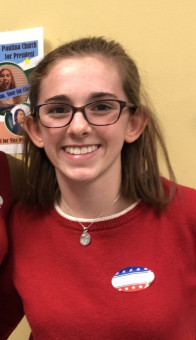
Stevi Dugas
Gonzales, Louisiana
If you ask the average teenager what they feel when they get their license, many of them will say excited to take a step into the adult world, maybe liberated from the constant reliance on car pool, or they may be odd like me. They may say they are terrified. They are terrified of the statistics that I now know. They are terrified of the ninety people who die on average everyday in the United States because of car accidents (2). They are terrified of the videos we watched in drivers ed. They are terrified of drunk drivers, of reckless drivers, of car crashes, and of not making it home because of them.
Which may be rather morbid of me, however it is the world we live in, the thoughts we have, and the reality we young drivers face. Not to say that much hasn’t been done to reduce all of the things we fear. Lap and shoulder seatbelt use, according to Safer America, reduces serious injury in front seat passengers by 50% and fatal injury by 45% (6), and has thus saved countless lives especially when paired with required seat belt use laws that many states have introduced. Laws regulating how much alcohol can be in a person’s system while they are driving have also saved tens of thousands of lives.
But, is it enough?
Is it enough when there are still ninety families mourning at the end of each day because of car crashes (2)? Is it enough when every two minutes someone is hurt in an alcohol related car accident and when every 50 minutes someone dies from one (6)? Is it enough when one in every seven people still do not wear there seatbelts? Is it, truly, enough? No, it is not.
To protect everyone on the road, I propose a federal law that requires seat belt use and more aggressive action to prevent drunk drivers from ever being on the road.
The Elsner Law Firm writes that if everyone used a seat belt every time they got on the road, we would save approximately three thousand lives every year (4). Seatbelts have been proven to save lives, and yet many still do not use them. I confess even I did not always truly understand how important they were. Should I ever be in a car crash, my seatbelt is my best and most basic protection. In Louisiana, my home state, we have laws that require drivers to wear seatbelts, and slogans like “click it or ticket” to encourage the practice of buckling up every time one should get on the road. However, in some states, there isn’t a law like this or the law doesn’t cover everyone in the car. New Hampshire, the only state to not pass a law requiring seat belt use, has only 72.2% of its population on the road using a seatbelt (1). While, when you look to states like Oregon which require seatbelts in the entire car for all ages, you find that 97% of people on the road are wearing there seatbelts(1). The states with the highest seat belt usage such as Hawaii and California also have strict seat belt laws(1). Introducing a strong seat-belt federal law would raise necessary awareness of the problem and lead to more Americans buckling up. This seat belt law should require everyone in the car to be buckled no matter their age or whether they are in the front or back seat because there is no safe place in a vehicle for any age of person without a seat belt. With a law that requires seat belt use, we can ensure an increase in seat belt usage and decrease in car crash fatalities.
When I hear the words “drunk driving”, I don’t think about the statistics. I don’t think about the 10,497 people killed in 2016 alone because of drunk driving (6). I don’t think about the 1,233 children that were killed in 2016 because of drunk driving(6). I think about my aunt, an emergency room nurse, who came to my school one day and made us hold pieces of colored paper, and told us that those holding a piece pink of paper, according to statistics, had died because of a drunk driver.
And, my best friend held a piece of pink paper.
I can talk about numbers and statistics as much as I want, the bottom line is that we are talking about lives. We are talking about best friends, mothers, fathers, sons, and daughters. We are talking about ripping away life because someone wanted to have a good time.
Which is why I believe that we should have a zero tolerance approach to drunk driving and be even more adamant to not just our youth but everyone on the road of the dangers and consequences of drunk driving.
The largest problem with how we deal with drunk driving is that we, as a society, allow repeat offenders to exist. Safer America reports that one-third of drivers arrested or convicted of driving under the influence are repeat offenders. We can change this by changing how we deal with first time offenders.
In Louisiana, the first DWI conviction results in 4,500 dollars in fees, a criminal record, six months in jail, and loss of driver’s license for a year(7). Which, while a high price, does not stop people from doing it again, and again. I think that in addition to this we should require mandatory alcohol counseling. In this alcohol counseling, the convicted person should only get there license back when released by a doctor who can say with confidence that they do not believe that the offender will commit this crime again.
If it isn’t a full plan, it is part of a plan that can work and can save countless lives. We need to take aggressive action towards a future where no mother, no father, no child will ever mourn someone dead because of a drunk driver.
Above all else, I think it is extremely important that we continue to educate the public about the risks on the road, and the consequences associated with some of its most frightening risks. The public needs to know that getting in a car while intoxicated can lead to not just your death, but to others. The public needs to know that not wearing a seat belt is like jumping into the sea without a life-jacket or the ability to swim.
Driver’s education is vital to every driver on the road’s safety. It teaches us not only what a double white line in the middle of the road means, but it also teaches us caution and awareness. It taught me that the consequences of bending the laws of the road, whether legal, moral, or physical consequences, are not worth the two extra seconds it takes to buckle my seat belt or drinking substances that impair my ability to drive. Someone could die. Someone will die.
I do hope that, if we can never get aggressive action towards no drunk drivers or never get a federal law that demands seat belt usage, you will buckle your seat belt and that you will think twice before drinking and driving.
Because, in the time you have taken to read this, someone got hurt in an accident involving a drunk driver. In the time it has taken me to write this essay (two days), 180 people died on the roads. 48% of them who died will have not been wearing a seatbelt (3).
Thousands will drive the roads in my city alone, millions will drive my country’s streets. I do hope they make it home.
Sources:
https://en.wikipedia.org/wiki/Seat_belt_laws_in_the_United_States#cite_note-15
https://www.driverknowledge.com/car-accident-statistics/
https://driving-tests.org/driving-statistics/
https://elsnerlawfirm.com/car-accidents-rates-statistics/
https://brandongaille.com/20-drunk-driving-repeat-offenders-statistics/
https://safer-america.com/car-accident-statistics/
My Drivers Ed Textbook titled Louisiana Office of Motor Vehicles
Content Disclaimer:
Essays are contributed by users and represent their individual perspectives, not those of this website.