In The Driver's Seat: Why Safe Driving Is the Fight of Our Generation
2026 Driver Education Round 1
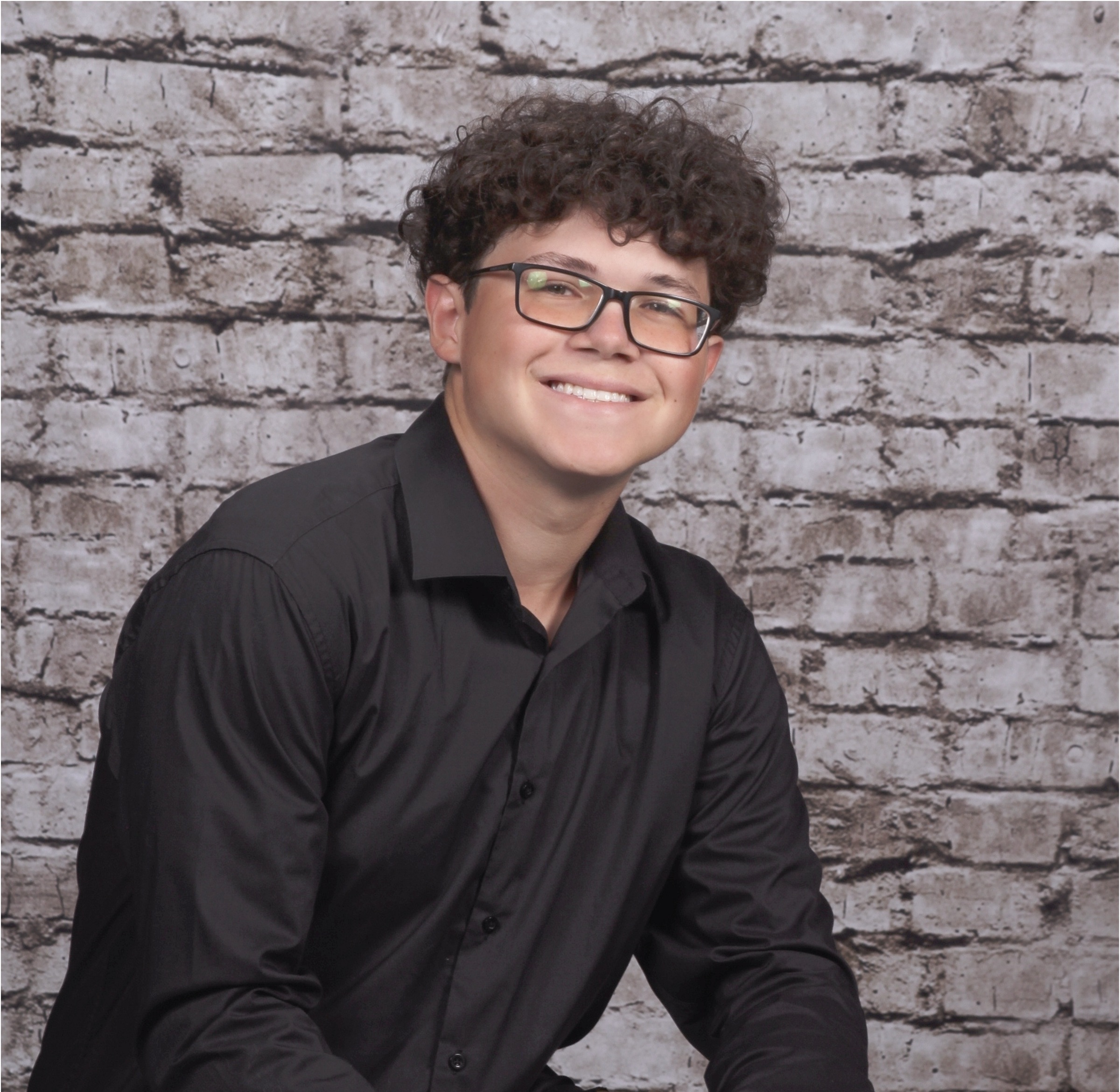
Luka Costa Seraphini
Toms River, NJ
I still remember the exact sound of my mother's keys hitting the kitchen counter the night she came home late, hands shaking, and told us she had almost hit a deer that darted out on Route 9. She wasn't hurt. The car had a small dent. But for a week afterward, she checked her mirrors twice before backing out of the driveway, and I noticed, for the first time, how thin the line is between an ordinary drive and a tragedy. That moment is what comes to mind whenever I hear the statistics about driving in America, because behind every number is a version of that night that didn't end so gently.
Each year, roughly 34,000 people in the United States die in motor vehicle crashes. To put that in perspective, that is more American lives lost in a single year on our own roads than the total number of U.S. service members killed during the entire wars in Iraq and Afghanistan combined. Zoom out just two years, and the death toll from driving surpasses the total number of American lives lost during the Vietnam War. We built monuments, memorial services, and national days of remembrance for those wars. We do not have the same collective reckoning for the quieter, ongoing loss happening on our highways, in our neighborhoods, and outside our own schools.
I think the reason is simple: war feels foreign and driving feels familiar. We assume familiarity means safety. It doesn't. A car is a two-ton machine capable of covering the length of a football field in under three seconds at highway speed. The difference between a safe trip home and a life-altering crash is often a single unchecked blind spot, a text message glanced at for two seconds, or the assumption that "I've driven this road a hundred times, nothing will happen tonight." Statistics don't kill people. Distraction, fatigue, impairment, and overconfidence do. And most of us have been guilty of at least one of those on any given day.
This is especially true for new drivers, my peers and me included. We are the demographic most likely to underestimate risk and most likely to be surrounded by other new drivers who reinforce that underestimation. Driver's education teaches us how to parallel park and merge onto an interstate, but it rarely teaches us to sit with the reality that driving is, statistically, one of the most dangerous things we will do on any given day of our lives. If we do not carry that weight consciously, we tend to carry it recklessly instead, discovering the stakes only after something has already gone wrong.
Being a safe and educated driver, then, is not simply a matter of following rules. It is a matter of respecting a responsibility we are handed the moment we're given a license: the responsibility to treat every drive as if it matters, because it does, to us and to everyone else sharing that road. That means putting the phone in the glovebox, not just on silent. It means recognizing when three hours of sleep and a car are a worse combination than we want to admit. It means understanding that "just this once" is exactly the sentence spoken before most preventable crashes.
It also means becoming the kind of driver who influences other drivers. Safety is contagious in a car full of friends, the same way distraction is. When I am behind the wheel, I have started asking passengers to hold my phone. When I am the passenger, I have started speaking up if a friend checks a text at a red light, before it becomes a habit that follows them onto the highway. These are small, almost invisible choices, but they are the actual mechanism by which national statistics either shrink or grow, one decision at a time, multiplied by millions of drivers every single day.
The comparison to American wartime casualties is not meant to diminish the sacrifice of service members; it is meant to shock us into recognizing a crisis we have quietly normalized. We accept driving deaths as a background statistic of modern life in a way we would never accept for combat deaths, precisely because driving feels ordinary. But ordinary is exactly what makes it dangerous. Somewhere tonight, another driver will make the same choice my mother almost paid for on Route 9, and most of the time, luck will be the only thing standing between an old routine and a new tragedy.
Being a safe and educated driver means refusing to rely on that luck. It means treating every set of car keys the way I imagine a soldier treats a weapon: with full awareness of the power in your hands, and full respect for what carelessness with that power can cost. If my generation can carry that awareness onto every road we drive, we won't need a memorial for the lives lost to negligence. We will have already saved them.
Content Disclaimer:
Essays are contributed by users and represent their individual perspectives, not those of this website.