Luck Is Not a Traffic Safety Plan
2026 Driver Education Round 2
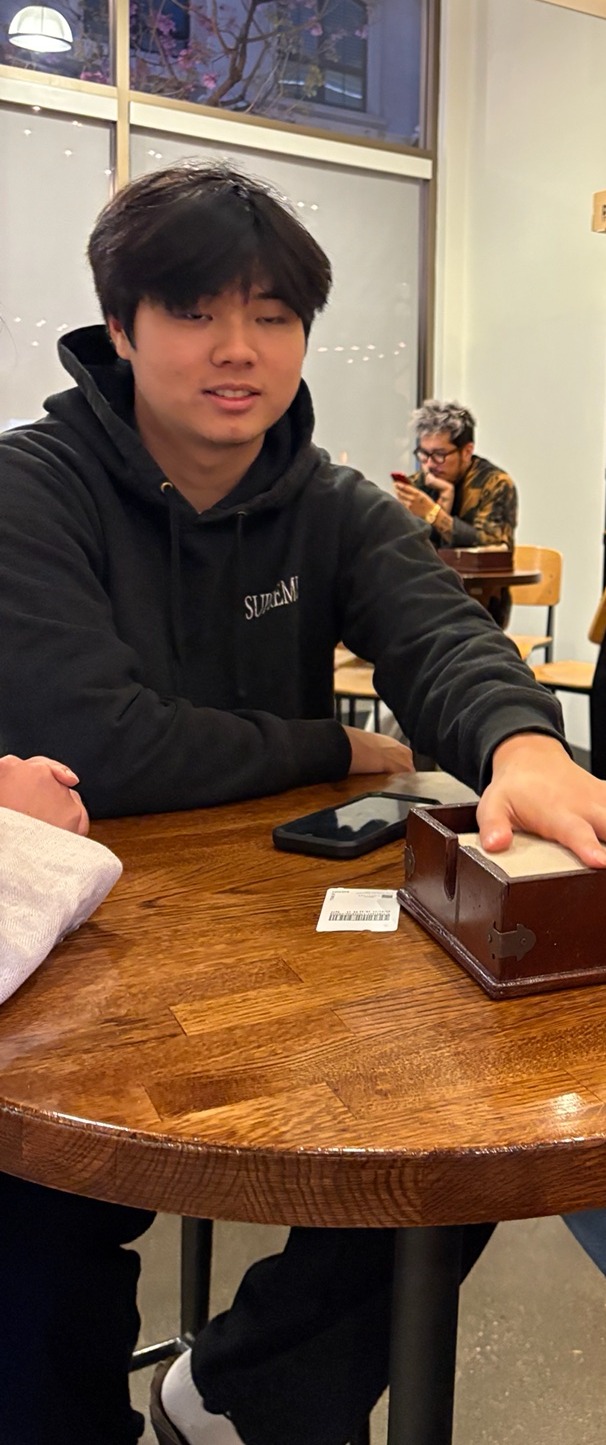
Jared Yoonsang Oh
La Canada, California
The call came on a Tuesday night, November 3rd, while I was closing out my register at work: my mom had been in a car accident. She was okay — that was the first thing I heard, and the only thing that mattered in that moment. But a crash is never really over when the cars stop moving. What followed for our family was weeks of police reports, insurance calls, and a kind of stress I had never watched my mother carry before. That night taught me something no classroom had: a crash is never just about two drivers. It lands on an entire family.
Driver education matters because driving is the most dangerous thing most of us do every day, and the thing we are most casual about. In Los Angeles, a car is not optional. I commute to classes at Cal Poly Pomona, I drive across Koreatown to my job as a head cashier at a Korean barbecue restaurant, and I drive home late at night after shifts, when the freeways finally empty out. Like most twenty-year-olds, I passed my test, got my license, and assumed I knew how to drive. But operating a car and understanding what a car can do are different things. Serious driver education closes that gap. It teaches a driver to read a road instead of just following it — to expect the car that rolls the stop sign, to leave space on the freeway because the driver ahead may brake for reasons you cannot see. Most fatal crashes are not freak accidents; they are the end of a chain of small, preventable decisions — a glance at a phone, a few miles per hour too fast, a gap followed too closely. Education breaks that chain before it starts, because a driver taught to think about consequences drives differently from one only taught to pass a test.
Reducing deaths on the road takes more than telling people to be careful. First, driver education should start earlier and last longer; one semester in high school cannot compete with years of habits absorbed from watching everyone else speed, and short refreshers — especially on distracted driving — should follow drivers into adulthood. Second, the rules we already have need consistent enforcement. Phone use behind the wheel is illegal in California, yet on any drive across LA I can count drivers staring down at their laps. Third, roads and cars can absorb more of our mistakes: better lighting on surface streets, protected left turns, and modern safety technology all lower the cost of human error. Finally, responsibility has to be part of driving culture, including the unglamorous parts — maintaining your car and carrying proper insurance. Those are not bureaucratic chores. They are part of what it means to share the road with other people's families.
I learned that last part the hard way. On November 3, 2026, my mother was driving in Los Angeles when the driver behind her failed to stop and rear-ended her. I was not in the car; I got the news the way most families do — a phone call, a shaky voice, the words "I'm okay, but." In the days that followed, we learned the other driver had no auto insurance at all. That single fact turned a frightening evening into a long, grinding process: a police report to file, our own insurance company to deal with, forms and follow-ups and uncertainty about how the damage and disruption would ever be resolved. Nobody in my family was seriously hurt, and I am grateful for that every day. But I watched my mother — who did nothing wrong, who was simply driving — spend weeks stressed and exhausted by a stranger's irresponsibility. The driver who hit her did not just damage a car. He handed his problem to a family he never met and walked away from it. A lack of preparation does not stay in the intersection. It follows people home.
So the steps I can take start with the only driver I control: me. I keep my phone out of reach while driving — not just because it is the law, but because I have seen how little time a crash needs. I leave earlier for class and work so I am never tempted to make up time on the freeway, and on late-night drives home after a shift, tired, on empty roads where it is easy to get careless, I slow down instead of speeding up. I keep my following distance even when other drivers cut into it. I also take the unglamorous responsibilities seriously: I will never drive uninsured, because I now understand insurance is not about protecting my car — it is about not doing to another family what was done to mine. And I speak up. When friends check their phones at red lights or roll through stop signs, I say something, even when it is awkward, because I know exactly what the other end of that habit looks like. Knowledge from a classroom only matters if it becomes a standard we hold ourselves — and the people riding with us — to.
My mother is fine. Our family was lucky. But luck is not a traffic safety plan, and too many families get a worse phone call than the one I got in November. Real driver education, consistent enforcement, safer roads, and drivers who treat responsibility as part of the job — that is how the number of families waiting by the phone gets smaller. I cannot control the driver behind me. I can control the one in my seat, and since November 3rd, I do.
Content Disclaimer:
Essays are contributed by users and represent their individual perspectives, not those of this website.