One Second Can Change Everything
2026 Driver Education Round 2
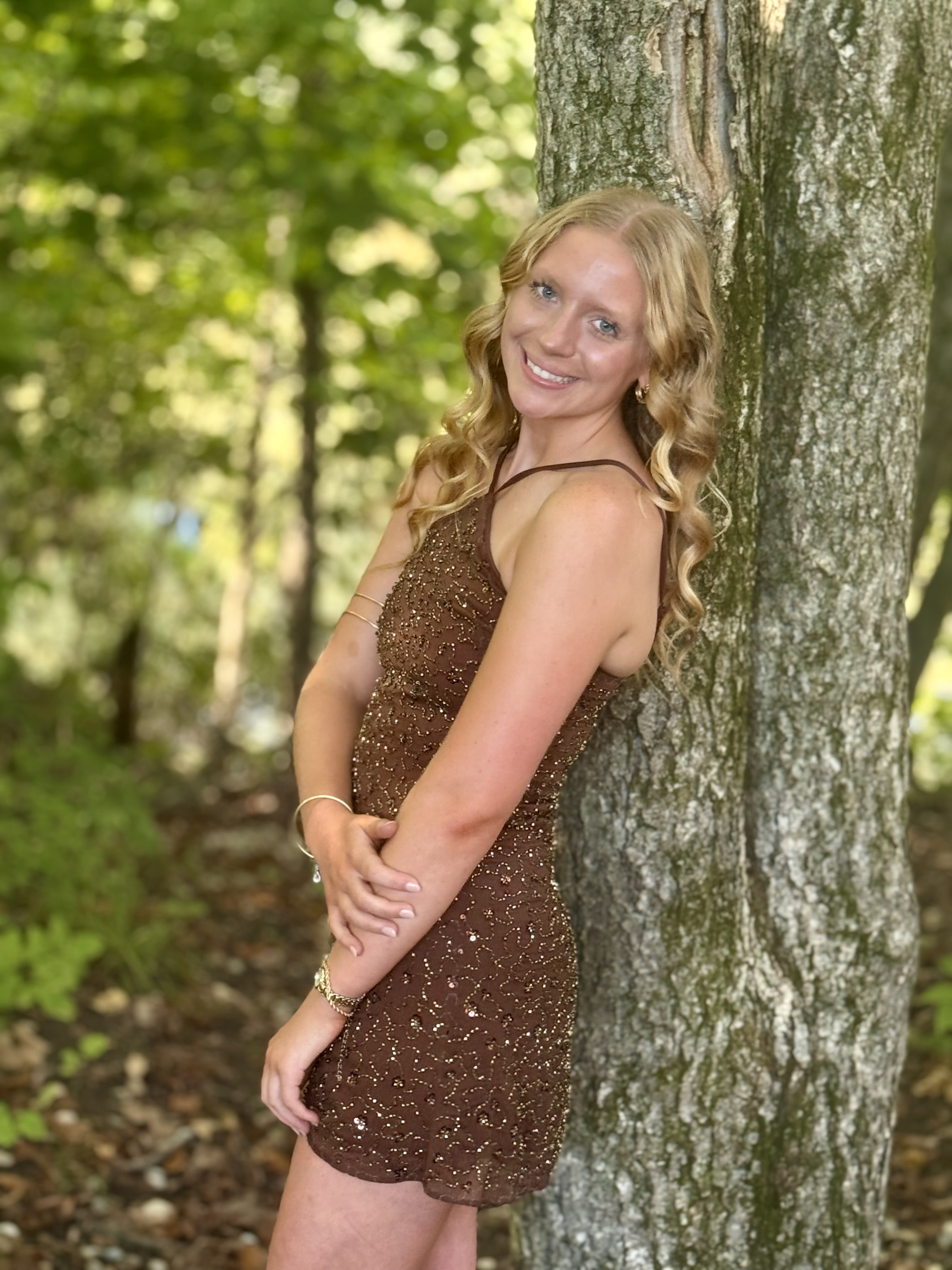
Jenna Barratt
Noblesville, Indiana
One Second Can Change Everything
The sound of a car engine starting is something most of us hear every day. We get in, buckle our seatbelts, turn on the music, and go. Driving can feel so normal that it is easy to forget what we are actually controlling. But a car is more than a way to get from one place to another. In the wrong hands, or even during one distracted second, it can become a weapon.
I have started thinking about this differently because of the people I see affected by crashes.
My 15-year-old brother is a road cyclist. He spends hours training on roads shared with cars, and I have seen how vulnerable cyclists are. Some drivers are patient and give them plenty of space, but others become rude or impatient because they have to slow down for a few seconds. They honk. They pass too closely. They act like cyclists are in their way. I wish every driver could see cyclists the way I do—as someone’s brother, daughter, friend, teammate, or child.
That became painfully real when Haylan, one of the Milligan University cyclists who was killed during a training ride, lost his life. The Milligan cycling tragedy is an example of how quickly everything can change. A group of college cyclists were training together when they were hit by a vehicle. Two students were killed and several others were injured. Haylan was part of the cycling community my brother was connected to, and after his death, my brother participated in a memorial ride for him. Riding in memory of someone who should have still been cycling made the danger of sharing the road impossible to ignore. Haylan was only 20 years old. He was a college student, an athlete, a son, a friend, and a person with a future ahead of him. Instead, his family and friends have memories where there should have been years of new ones.
And this isn’t just something that happens somewhere else.
Just a few weeks ago, a 22-year-old riding a scooter was killed right at the entrance to my neighborhood when a car failed to stop. Every day I drive out of my neighborhood I think about that accident and know that someone who was 22 years old—someone who had a family, friends, plans, and an entire future—was suddenly gone.
Then there are the children my mom sees at work. My mom works at a pediatric hospital, and this year she has cared for two young children whose lives were permanently changed because they were hit by motorists who were not paying attention. One is a 12-year-old girl who loved to dance. She was always dancing. She was a child who should have been worrying about school, friends, music, and what she wanted to be when she grew up. Instead, she is now dependent on a ventilator for the rest of her life. I cannot imagine being twelve years old and having your entire future changed because a driver looked away for a moment. The other is an eight-year-old boy who lost his cousin in the same accident that left him paralyzed. He will never walk again. He will never run onto a football field or play football with his friends the way an eight-year-old should be able to. He lost his ability to walk and someone he loved because of one terrible moment on the road.
These are not statistics to me. They are children! They are families! They are futures that were changed forever!
That is why I believe the phrase “car accident” sometimes does not capture the seriousness of what happened. Accidents can happen, but drivers also make choices. A driver chooses whether to look at a phone. A driver chooses whether to speed. A driver chooses whether to follow too closely. A driver chooses whether to be patient with a cyclist or squeeze past them because they are annoyed about losing a few seconds. Sometimes a driver makes one small decision that seems meaningless at the time. Looking down at a text, changing the radio station, or reaching for something in the passenger seat. Glancing away from the road. But that one second can be enough and all it takes!
The driver’s life can change too. Imagine having to live with the knowledge that your decision caused another person to become paralyzed or took someone’s life. A moment of distraction could lead to criminal charges, prison, guilt, and a lifetime of wishing you could go back and make a different choice. That is a responsibility I do not think we take seriously enough!
My commitment to safe driving also connects to another cause that I have made personal: organ donation. I started an organ donation advocacy club at my school because I wanted other students to understand that organ donation can give people a second chance at life. There are so many tragic accidents where someone does not survive, and most people know someone who has lost a family member or friend in a car crash. Organ donation cannot undo the tragedy. It cannot give Haylan back to his family. It cannot make those children walk again. But it can create hope in the middle of unimaginable loss. That perspective has shaped the kind of person—and future doctor—I want to become.
I want to go into medicine because I want to help people when their lives are at their most vulnerable. But being a doctor is not only about treating people after something terrible happens. I believe it is also about prevention, education, and speaking up before someone gets hurt. Safe driving is prevention. It is protecting the cyclist riding ahead of you. It is watching carefully for a child crossing the street. It is giving a scooter rider enough room. It is stopping completely at an intersection. It is putting your phone away before you even start the car. It is choosing a few extra seconds over someone else’s entire future. I cannot control how every driver behaves. I cannot prevent every crash. But I can control the choices I make when I get behind the wheel, and I can encourage the people around me to make better choices too.
I want people to remember that the road is not just filled with cars. It is filled with people. Someone is riding a bike to practice. Someone is walking home. Someone is riding a scooter to meet a friend. Someone is driving home to their family. And someone is waiting for them to get there. Every time we get behind the wheel, we should understand what is at stake. We are not just responsible for our own lives. We are responsible for everyone around us.
Put the phone down. Slow down. Look twice. Give cyclists space. Watch for pedestrians. Be patient. Because arriving a few minutes later will never be more important than making sure everyone arrives safely.
One second can change everything.
Content Disclaimer:
Essays are contributed by users and represent their individual perspectives, not those of this website.