The Privilege of Safety
2026 Driver Education Round 1
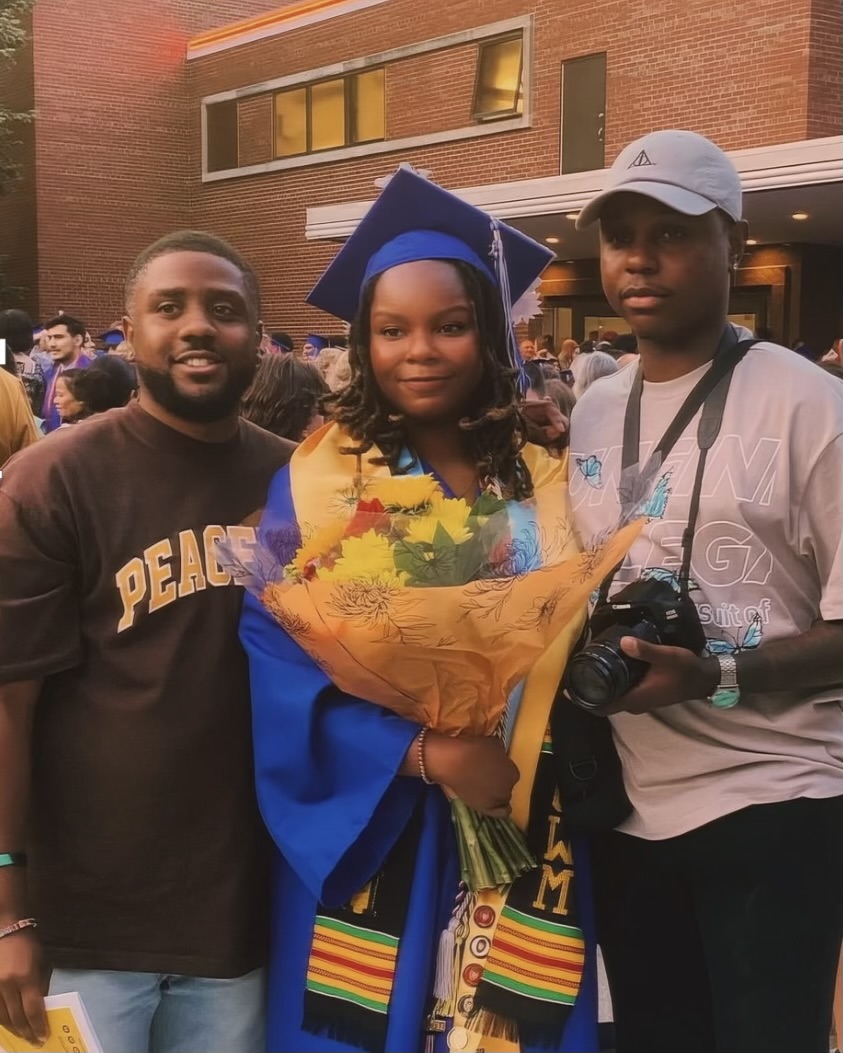
Naomi Phifer
MILWAUKEE, Wisconsin
For many American teenagers, getting behind the wheel represents a long-awaited taste of freedom, a rite of passage marking the transition into adulthood. For me, living in Milwaukee, Wisconsin, driving has come across as less like freedom and more like a constant exercise in caution. Sharing the road here often comes with a sense of fear rather than independence. Milwaukee faces a well-documented reckless driving crisis, made even more severe when combined with Wisconsin's pervasive drinking culture. Traffic fatalities remain a severe reality across our highways, and local enforcement has had to adapt rapidly, with conviction rates for reckless driving jumping from 15% to 84% in recent years. These dangers do not impact everyone equally. As a person of color living in Milwaukee, the threat hits even closer to home, as reckless driving incidents and severe crashes disproportionately plague diverse, historically underserved neighborhoods. What should be a symbol of mobility has instead become a daily hazard for my community.
Driving shouldn't require bracing for impact each time we hit the road. To build safer avenues, we need to shift our culture from reactive fear to proactive accountability, making sure that every driver, on every block, can experience the freedom of the road safely. For many American teenagers, getting behind the wheel represents a long-awaited taste of freedom, a rite of passage marking the transition into adulthood. But for me, growing up on the North Side of Milwaukee, Wisconsin, driving has never felt like freedom. It feels like survival.
Sharing the road in my community requires an exhausting level of hypervigilance. Rather than learning to drive with assurance, youth in my neighborhood learn to drive out of fear, constantly bracing for impact. This reactive, defensive survival style is the direct result of a systemic access gap. High-quality, formal driver education is frequently prohibitively expensive to pay for out-of-pocket, leaving young drivers in low-income, predominantly Black and Brown communities without structured, professional instruction. When foundational driver training is treated as a luxury instead of an essential public resource, unsafe driving habits inevitably take root.
Instead of addressing this root cause through accessible education, the current responses in Milwaukee often feel ineffective or counterproductive. Heavy policing in demographically diverse neighborhoods does not teach safe mechanics; it simply heightens tension. Meanwhile, quick-fix physical measures like unannounced speed bumps placed every few yards without visible signage frequently cause vehicle damage and sudden braking rather than effective safety. For me, these street conditions aren't abstract statistics; they are personal, daily triggers. I live with severe PTSD after my father was the victim of attempted vehicular homicide. This tragedy affected me a few years ago, and though my father thankfully survived the experience, he is still permanently disabled from it.
Our lives as a family have changed drastically, with medical bills taking up most of the space and finances in our home. What saddens me the most is that this trigger prevails after constantly turning on TMJ4 news station to hear family members expressing their distress from losing a family member because of reckless driving. Experiencing near-misses on a near-daily basis creates intense anxiety and a constant, heavy fear for my family's safety every time they leave the house for basic everyday tasks. What should be a routine drive to the store or school feels as though I'm navigating a hazard zone.
Safe driving education is necessary for the overall health of a community, especially mentally. Teens and young adults who are getting behind the wheel for the first time should not see it as an automatic risk to their lives. Subsidizing proper driving education in public Milwaukee schools is a requirement so that young people have the opportunity to feel prepared and safe while driving, in turn gaining a sound sense of confidence and freedom.
Along with policy, I am very aware that breaking the cycle of fearful driving must start with me by continuing to practice safe driving by eliminating distractions such as not texting while driving, and making sure Wisconsin drinking culture is not an influence on me when driving. Also, I will ensure that the people I care about, such as friends and loved ones, go through safe driving education and continue to practice safe driving while sharing the road with others. By combining accessible public education with personal accountability, we can transform driving from a source of trauma into what it was always meant to be: a safe, empowering pathway to opportunity for everyone. I hope that my experience with driving resonates with others and ensures that they are not alone in wanting to see an increase in safety and quality of life.
Content Disclaimer:
Essays are contributed by users and represent their individual perspectives, not those of this website.