Three Seconds
2026 Driver Education Round 1
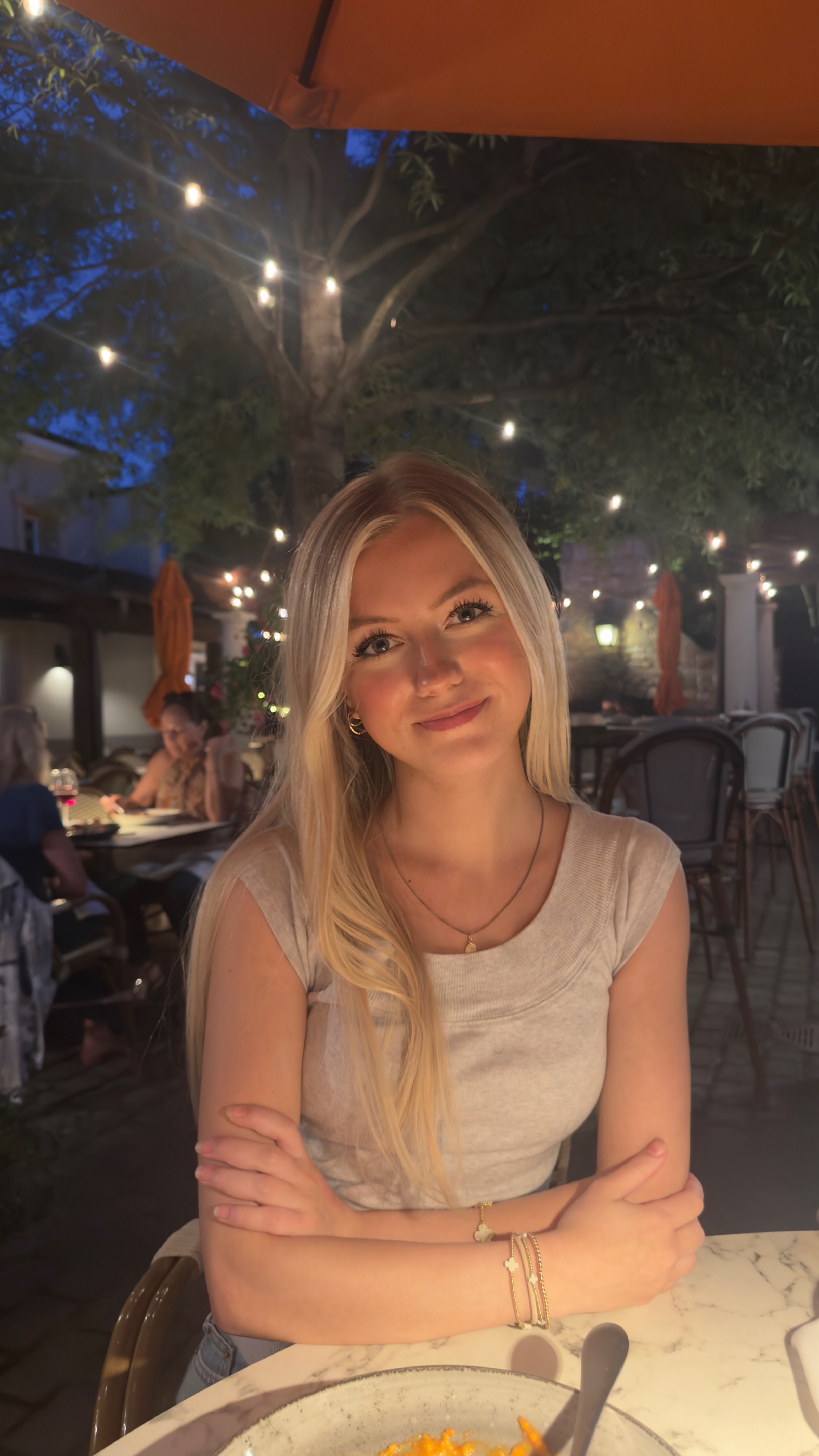
Ava Smith
Burke, VA
When I first got my driver's license, driving represented freedom. It meant late-night trips for ice cream with friends, driving myself to work, and eventually having the independence to leave for college. Like many new drivers, I viewed driving as an exciting milestone rather than something that carried life-changing consequences. That perspective changed the day I was involved in my first, and only, car accident.
I was not alone in the car. I was responsible for someone else's safety as well as my own. In an instant, another driver's distraction changed everything. What had started as an ordinary drive quickly became one of the most frightening experiences of my life. Although we were fortunate to walk away without serious injuries, the accident left a lasting impact on me. It made me realize how little control we sometimes have over the decisions of others and how one moment of inattention can alter lives forever.
Before that accident, I understood distracted driving was dangerous because that is what every driver's education class teaches. After the accident, those lessons became personal. I no longer saw distracted driving as a statistic or something that happened to "other people." I had experienced firsthand how quickly a normal day could turn into an emergency because someone failed to give the road their full attention.
Since that day, I have completely changed the way I approach driving. One habit that has become second nature is something many people probably wouldn't notice. Whenever I am the first car waiting at a red light, I do not accelerate the second the light turns green. Instead, I silently count to three before moving through the intersection.
Some people might think three seconds is unnecessary. I see it differently. Those few seconds allow me to check that every lane has actually stopped before I proceed. They give me time to look for someone trying to beat the red light, a distracted driver looking down at their phone, or a vehicle speeding toward the intersection. Three seconds feels insignificant compared to the lifetime of regret that could come from assuming every driver is paying attention.
The accident also made me more aware of my own habits behind the wheel. While I never considered myself someone who texted while driving, I realized distraction comes in many forms. It can be reaching for a phone to change a song, glancing at a notification, becoming too involved in a conversation with passengers, or rushing because I am running late. None of these distractions seem dangerous in the moment, yet they all take my attention away from the one thing that deserves my complete focus.
As I prepare to leave for college, I know I will spend even more time on the road. I'll be driving unfamiliar highways, navigating busy intersections, and balancing school, work, and extracurricular activities. It would be easy to convince myself that answering one text or making one quick adjustment to my GPS is harmless. But my accident taught me that crashes are rarely planned. They happen during ordinary moments when someone believes, "It will only take a second."
Because of that experience, I have created habits that I intend to keep for the rest of my life. Before I begin driving, I set my destination and music so I am not tempted to adjust them while moving. My phone goes on "Do Not Disturb," and if I truly need to respond to someone, I pull over safely. I leave earlier than necessary so I never feel pressured to speed or rush through yellow lights. Most importantly, I constantly remind myself that every person I pass on the road has someone waiting for them at home. Every vehicle beside me is carrying a life that matters just as much as mine.
The accident also taught me something I did not expect: driving is an act of trust. Every time we get behind the wheel, we trust that strangers we will never meet are paying attention. We trust they will stop at red lights, stay in their lane, and choose not to look at a text message instead of the road. Unfortunately, that trust is sometimes broken. While I cannot control whether another driver chooses to be distracted, I can control the driver that I am.
The statistics surrounding distracted driving are heartbreaking because each number represents a real person whose life changed forever. Behind every crash is a family receiving a phone call they never expected, a friend whose seat at the dinner table remains empty, or a young driver whose future was altered in seconds. My own accident could have ended much differently, and I think about that often. Instead of allowing it to make me fearful of driving, I have allowed it to make me more intentional.
Today, driving means something entirely different than it did when I first received my license. It is no longer just a symbol of independence; it is a responsibility I carry every time I turn the key. Counting to three at a green light may seem like a small habit, but it represents a much larger commitment. It is a reminder that arriving safely is always more important than arriving quickly. My first accident taught me a lesson I hope I never have to learn again, and it is one I will carry with me every mile I drive for the rest of my life.
Content Disclaimer:
Essays are contributed by users and represent their individual perspectives, not those of this website.