Why drivers education saves lives
2026 Driver Education Round 2
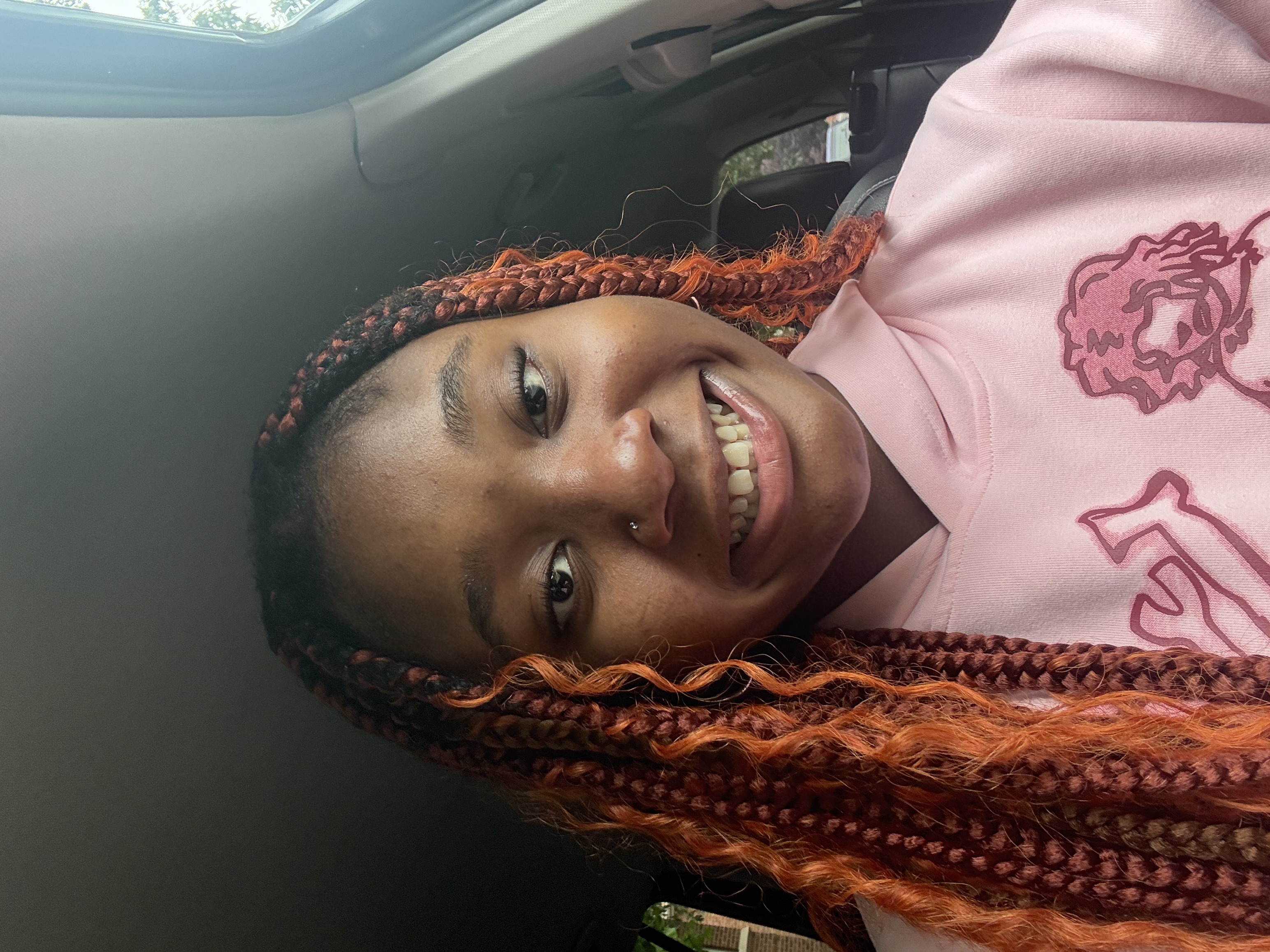
Kamsi Ashinze
Chicago, Illinois
I was driving on the Dan Ryan on an ordinary afternoon, going with the flow of traffic, when the car in the lane next to me started drifting toward mine. At first I thought the driver was changing lanes without signaling. Then I saw her: head tilted down, both eyes on the phone in her lap. Her car kept sliding over, closer and closer, until there was barely a foot between us. I hit the brakes and swerved as far as I could without hitting the car behind me. Her car crossed right through the space where mine had been a second earlier. She jerked back into her lane, never looked up, and kept going like nothing had happened.
For her, it was nothing. For me, it was the closest I have ever come to dying. My hands shook for the rest of the drive. What stayed with me most wasn't the fear, though. It was how easily it could have ended differently. If I had been looking at my own phone, adjusting the radio, or following too closely, I wouldn't have reacted in time. The only reason I walked away was that I was paying attention and knew what to do. Driver education taught me that. Clearly, it hadn't stuck with her.
Every summer, before I'm allowed to sit in a lifeguard chair, I have to prove I know what to do before something goes wrong. I learn to scan the water in patterns, to spot a struggling swimmer before they go under, and to react in seconds. Most of my job isn't dramatic rescues. It's prevention. That's how I think about driver education: it's the lifeguard training of the road, and it saves lives the same way, by stopping crashes before they happen.
Around 40,000 people die on American roads every year, and motor vehicle crashes are one of the leading causes of death for teenagers. Most of those crashes aren't caused by bad luck or broken cars. They're caused by human error: speeding, distraction, impairment, and inexperience. That's exactly why education matters. You can't engineer every mistake out of a car, but you can teach a driver not to make it.
Good driver education does three things. First, it builds skill. New drivers learn how to judge following distance, handle bad weather, check blind spots, and react when something unexpected happens. In a city like Chicago, where one block can include buses, cyclists, pedestrians, and double-parked cars, those skills are the difference between a close call and a collision. On the highway that day, keeping a safe distance and staying aware of the cars around me gave me the split second I needed.
Second, it builds judgment. Knowing how to drive is not the same as knowing when not to. Driver education teaches teens about the real consequences of texting, speeding, and driving impaired, and it does so before bad habits form. A sixteen-year-old who understands that looking at a phone for five seconds at highway speed means driving the length of a football field blind is less likely to do it. The woman who nearly hit me probably thought she was only glancing down for a moment. That moment is exactly what driver education is meant to change.
Third, it builds a culture of responsibility. Students who take driving seriously influence their friends and families. One person who speaks up when the driver picks up a phone, or refuses to ride with someone who has been drinking, can prevent a tragedy no one ever hears about, because it never happened. Since my close call, I've become that person. When a friend reaches for their phone while driving, I offer to handle the texts or the directions for them. It feels small, but small habits are what keep people alive.
Driver education also can't be a one-time class that people forget the moment they get their license. The driver who nearly hit me was an adult, likely someone who had been driving for years. Experience made her comfortable, and comfort made her careless. That's why the lessons of driver education need to be reinforced through refresher courses, public awareness campaigns, and stronger enforcement of distracted driving laws. Safe driving isn't something you learn once. It's something you practice every time you get behind the wheel.
As someone planning to become a doctor, I've spent time shadowing at RUSH and UI Hospital, and I've come to understand that the best medicine is prevention. Emergency rooms can treat crash victims, but they can't undo a moment of carelessness. Driver education works earlier, at the point where a life can still be saved without anyone ever needing a rescue.
A lifeguard's best day is one where nobody needs to be pulled from the water. The goal of driver education is the same: a road where every driver makes it home, not because someone saved them, but because they knew how to keep themselves and others safe. I made it home that day because of what I was taught. Every driver deserves that same chance.
A lifeguard's best day is one where nobody needs to be pulled from the water. The goal of driver education is the same: a road where every driver makes it home, not because someone saved them, but because they knew how to keep themselves and others safe. I made it home that day because of what I was taught. Every driver deserves that same chance.
Content Disclaimer:
Essays are contributed by users and represent their individual perspectives, not those of this website.