Behind the Wheel: Safer Driving for Teens
2026 Driver Education Round 2
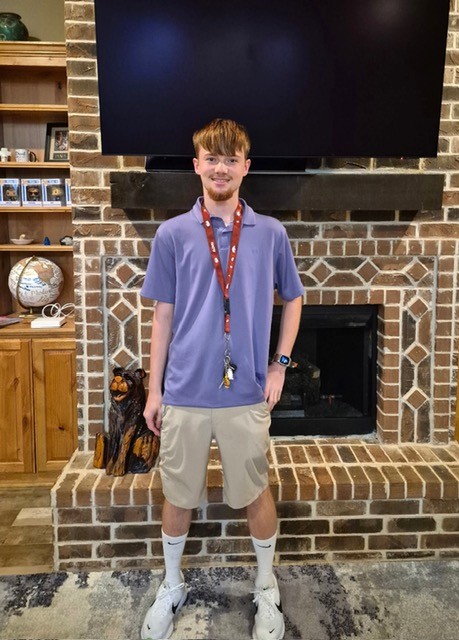
Reid Lawrence
Fort Smith, Arkansas
Behind The Wheel: Safer Driving for Teens
By: Reid Lawrence
Every year, kids are getting their permits or licenses to drive, teens are becoming of age to drink, and the importance of driver’s education becomes more prevalent. The Centers for Disease Control and Prevention reports every year 6,000 teens die in motor vehicle crashes and 5.4% of high school student drivers admit to driving after drinking alcohol.
My high school does not have a Driver's Education course; I simply started driving in my neighborhood and then graduated to driving on the backroads. I do not feel this ideal and think Drivers Education courses should be a required course in high school. If not through your local high school, the local police or sheriff departments should offer an in-person course. The CDC reports that drivers' education programs reduced teen crashes by 20%.
I also feel there should be graduated driving privileges to include a required longer length of driving under adult supervision. The CDC reported the crash risk is highest during the first several months after getting a license. In Arkansas where I live, once a person passes the written driving test, you are only required adult supervision while driving for 6 months before being allowed to take the drivers portion of the test, unless you are under the age of 16. Once passing that test, you are free to drive on the roads with minimal restrictions. The state of Arkansas has driver restrictions to include curfew, no cell phone usage, and no more than 1 passenger under the age of 21. If teens follow that, great! I also know that law enforcement has bigger things to worry about than pulling over a kid having more than 1 passenger or if they are out driving past curfew while not violating the law. The CDC reports 75% of teens admit to driving after midnight without parental supervision and 43% of teen accidents involve distracted driving to include passengers and/or cell phone usage.
Seat belts became mandatory in Arkansas in 1991, but again, law enforcement officers are usually concerned with bigger issues and do not always enforce this. The CDC reports a significant percentage of teens killed in crashes failed to wear a seat belt. Vehicles now days have a light that displays or even high-pitched noise that will sound for so long before going off. I think with modern technology, the auto manufactures need to invent a way for a car to be disabled until the seatbelt is inserted. In Arkansas a seat belt ticket ranges from $25.00-$45.00. I think the cost of this ticket could also be raised to help with prevention.
Our auto insurance company has a plug-in device that monitors the speed of the vehicle, hard brakes, and rapid acceleration for the possibility of a discounted rate on the insurance rates. Life360 also tracks how fast a person is driving. I think there should be an app or device that requires teens to be plugged in for the first year that monitors things such as speeding. The CDC reports 31% of teen drivers involved in fatal accidents had a speeding violation.
I commute to school 1 hour each way several days a week and have witnessed many accidents along the way. Though my commute is not ideal for most teen drivers, frequent accidents have allowed me to have better awareness of safe driving habits and better awareness of my surroundings.
What helped with my awareness was discussing all the accidents my mom and I encountered during our commute. We would discuss who may have been at fault and why, what to do in certain situations, how the road conditions play a factor in accidents, and what to do in the event of an accident.
Years ago, my mother hydroplaned with me as the passenger in the car. It was raining heavily; my mom was not driving fast or recklessly but needed new tires that she unfortunately kept putting off. We ended up hitting the concrete side of a bridge, our airbags deployed, and the car became disabled after impact. I do not recall the impact being significant and it did not result in injury but left a mental impact that has remained with me after all these years. I also was stuck behind an accident one evening while driving home and as I was approaching, I witnessed the person being carried out on a gurney. This accident also happened while it was raining and again the vehicle hydroplaned off the road. The CDC reports weather-related accidents account for roughly 16% of all traffic fatalities. These accidents led the important conversations about road conditions and car maintenance including tire rotations, tire pressure, and never driving on tires that are not safe or need to be replaced.
Even though the conversations can be boring, repetitive, understood, and something we do not think would ever happen to us, the CDC reports teens are 4 times more likely than drivers aged 20+ to be in a fatal crash and males are 2.5 times more likely to be in a fatal crash than female teens. The truth and reality show that we all need to be bored and have these conversations to save my life or someone else.
Content Disclaimer:
Essays are contributed by users and represent their individual perspectives, not those of this website.