Beyond the Windshield: Why Responsibility Is the Most Important Driving Skill
2026 Driver Education Round 2

Rediet Tefera
Edmonton, Alberta
Learning to Be Late
I have spent most of high school learning not to be late.
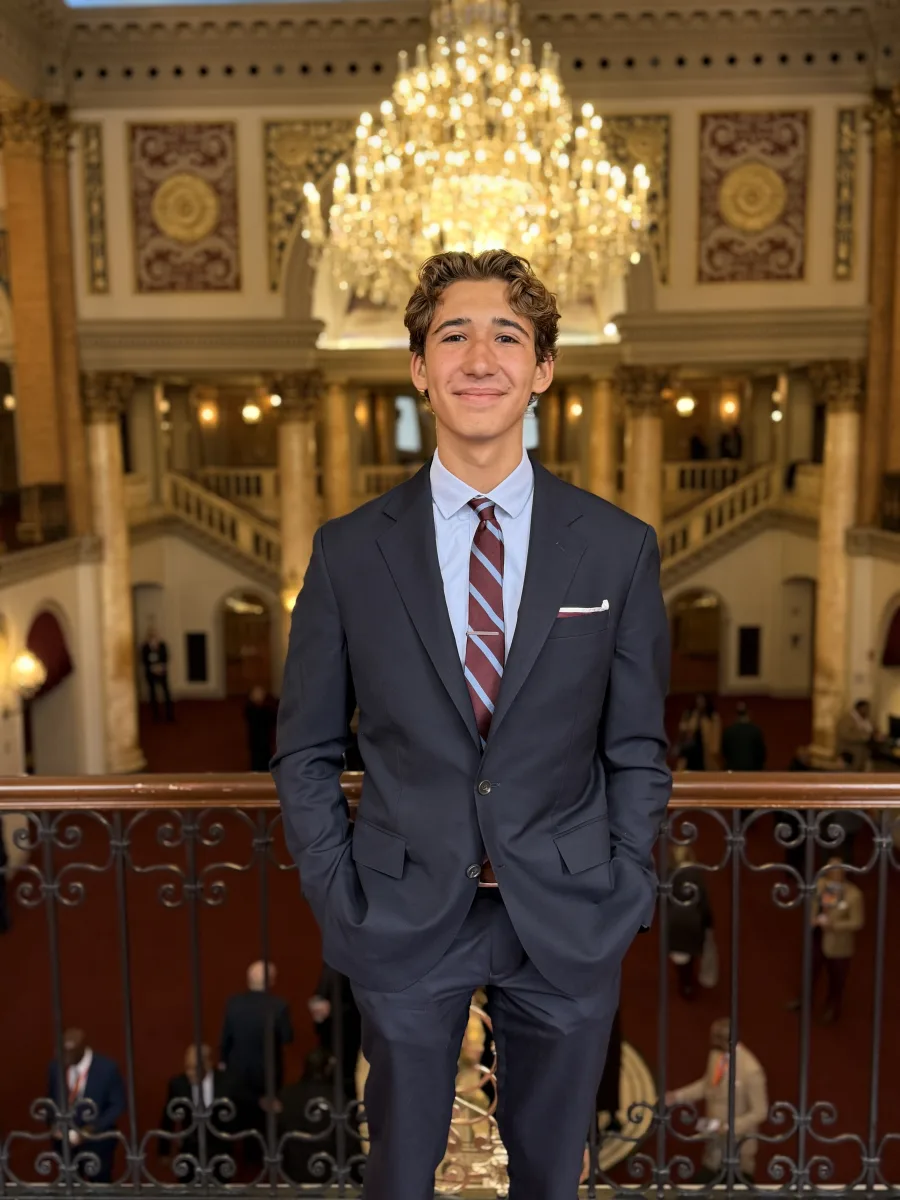
Teachers have deadlines. The youth programs I help organize have children waiting. At the Legislative Assembly of Alberta, where I work as a Page, punctuality and attentiveness are essential. I take pride in being someone others can depend on.
Yet one of the most important lessons I hope to carry into driving is almost the opposite: learning to be late.
Not careless with time. Not indifferent to other people's schedules. Simply willing to arrive ten minutes behind schedule rather than make someone else pay for my impatience.
During my training at the Legislative Assembly, I learned a rule that challenged my understanding of efficiency: when the Speaker stands, Pages stop moving. It does not matter whether we have an errand to complete or someone is expecting us elsewhere. We must remain attentive to the proceedings and respect the procedures governing the Chamber.
I found something surprisingly instructive about being told to stop when my responsibility was to keep things moving. An unfinished errand is not an excuse to ignore the people around me. Sometimes, completing a task responsibly means knowing when to interrupt it.
Driving presents a similar contradiction. A green light gives us permission to proceed, but it cannot guarantee that an intersection is clear. Having the right of way does not eliminate the possibility that someone else will make a mistake. And being late to an appointment does not suddenly make speeding reasonable.
Nevertheless, we often treat inconvenience as though it deserves an exception.
That is why I believe effective driver education must teach more than how to operate a vehicle. It must prepare people to make responsible decisions when those decisions are inconvenient.
According to Transport Canada's *Canadian Motor Vehicle Traffic Collision Statistics for 2024*, 2,050 people died in motor vehicle collisions across Canada that year, the highest annual total in twelve years. Among those fatalities, 143 involved people between fifteen and nineteen years old. Another 817 individuals in that age group suffered serious injuries.
I am seventeen. Those figures represent people close to my age, at a stage of life filled with university applications, friendships, first jobs, and plans for the future. Although statistics cannot tell us which individual tragedies were preventable, they make the case for prevention difficult to dismiss.
Driver education provides an essential foundation: understanding stopping distances, anticipating hazards, maintaining safe following distances, and recognizing the dangers of distraction or impairment. However, knowing that something is dangerous and choosing not to do it are different skills.
Consider a student who understands why speeding reduces the time available to react but is already fifteen minutes late. Or someone who knows that checking a phone creates a distraction but hears a notification from a friend. Neither person necessarily lacks information. Their difficulty lies in applying that information when another desire competes for their attention.
The road does not become safer because we have a good excuse.
Growing up in Edmonton has reinforced this lesson. Winter can make even familiar journeys unpredictable, requiring drivers to adjust their speed, increase following distances, and sometimes reconsider travelling altogether. The posted speed limit does not change simply because snow or ice makes reaching it unsafe.
A driver cannot negotiate with the weather because they have an examination to attend.
I cannot claim that a dramatic personal collision first taught me these lessons. My understanding has developed through quieter observations about how ordinary responsibilities can compete with careful judgment. As a passenger, I also recognize that safety cannot be left entirely to the person operating the vehicle. The people surrounding a driver can either increase the pressure to take risks or make responsible decisions easier.
A passenger who complains repeatedly about being late can contribute to an already stressful situation. Someone who insists upon the driver's immediate attention can create an unnecessary distraction. Conversely, a passenger who offers to manage navigation, accepts a delayed arrival, or respectfully raises a safety concern can help reduce those pressures.
But speaking up is not always comfortable, especially among teenagers who may worry about embarrassing a friend or appearing overly cautious.
Through my involvement in student leadership and teaching children between the ages of nine and thirteen at church, I have learned to think carefully about the difference between explaining a principle and helping someone put it into practice. A rule becomes more meaningful when people have an opportunity to apply it.
This has led me to consider how schools could make road-safety education more interactive, particularly for young people who have not yet received their driver's licences. One idea I believe could be especially effective is a short, student-led activity called **The Passenger Practice**.
Imagine replacing a conventional road-safety lecture with a ten-minute exercise in which students work in pairs through three realistic situations: a driver running late, a passenger noticing a distraction, and a group encouraging someone to drive faster than conditions safely allow.
Students could take turns playing the driver and passenger, practising how to raise safety concerns respectfully without escalating the situation. Rather than simply identifying what a responsible person should do, they would have an opportunity to practise how to respond when making the right choice feels uncomfortable.
For example, telling a friend, "We're not in a rush; you can slow down," sounds simple. Saying it when everyone in the vehicle is complaining about being late requires considerably more confidence.
That is precisely why I think an activity like The Passenger Practice could be valuable. By rehearsing these conversations in a supportive environment, students could become more comfortable expressing concerns before encountering similar situations in real life.
What appeals to me most about this concept is its simplicity. It requires few resources, could be adapted for different age groups, and encourages active participation rather than passive listening. Although no ten-minute activity could eliminate dangerous driving, incorporating exercises like this into existing school programs could help address something conventional driver education sometimes overlooks: even young people who do not yet drive have opportunities to influence road safety.
The same principle guides my own responsibilities. I can prepare directions before leaving, allow additional travel time for unexpected conditions, keep my phone out of reach while driving, and avoid driving when fatigue or another impairment could compromise my concentration. I can also make a point of listening when a passenger raises a concern rather than responding defensively.
These are not extraordinary sacrifices. They are small decisions that help protect the people sharing the road with me.
Perhaps the most difficult responsibility, however, is accepting that making a safe decision does not always feel rewarding in the moment. Waiting at an intersection may be frustrating. Slowing down in difficult weather may mean missing an appointment. Refusing to rush may disappoint someone who expected us sooner.
I dislike disappointing people. I like meeting deadlines. I would much rather arrive early than apologize for being late.
But those preferences should never determine how much risk I am willing to impose on someone else.
At school, at church, and at the Legislative Assembly, I want people to trust that I will fulfil my responsibilities. When I am behind the wheel, I hope they can depend on something more important than my punctuality.
I would rather explain why I arrived late than have someone else suffer because I refused to be.
Content Disclaimer:
Essays are contributed by users and represent their individual perspectives, not those of this website.