From Relculant Driver to Responsible Driver: A Gen Z Reckoning
2026 Driver Education Round 1
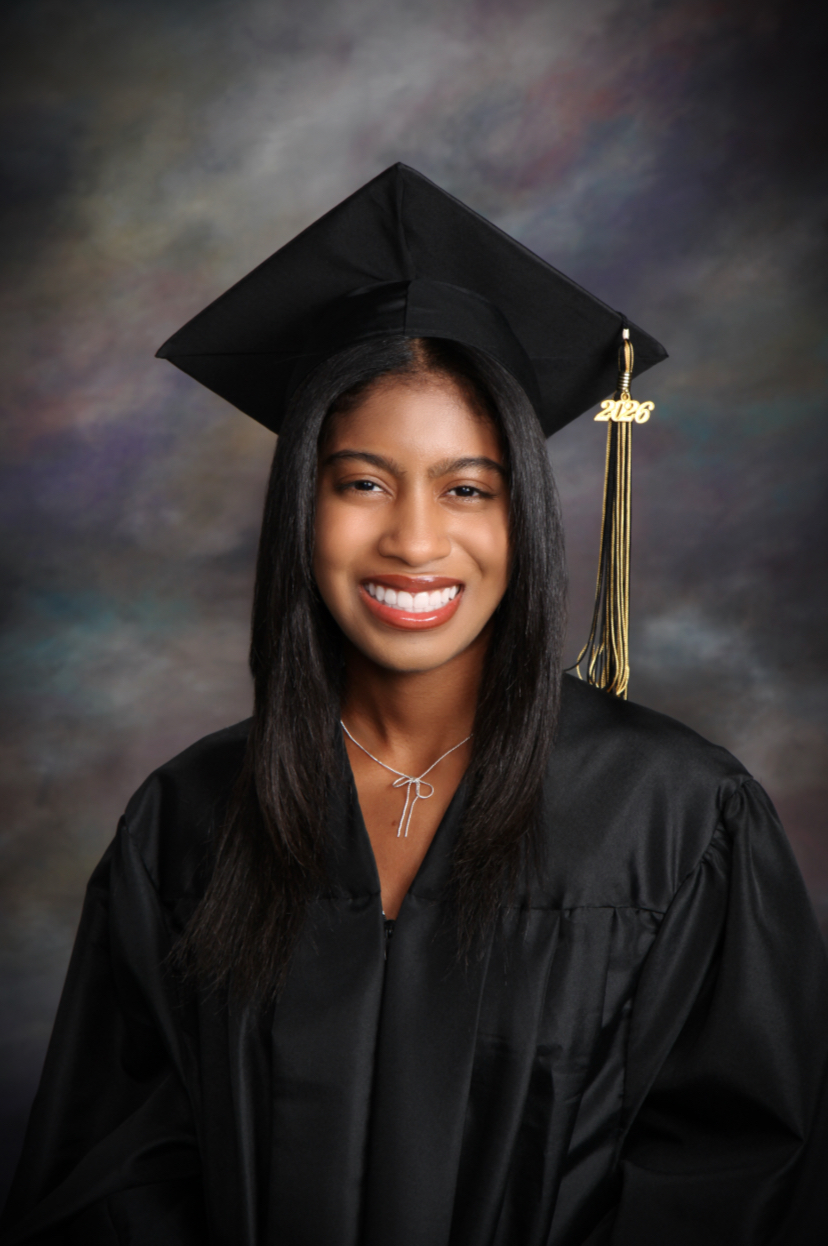
Atalla Ridley
Santa Clarita, CA
Being Gen Z, I have a confession to make that I'm not particularly proud of: I had little to no desire to learn how to drive. Why would I? Mom is my personal driver, and when all else failed, Uber could materialize a car at my doorstep in minutes. Uber Eats was also my mom, who could deliver food or anything I wanted with a simple text, "I need, or bring me food. "Driving seemed like an unnecessary chore. My generation has grown up with convenience at our fingertips, and the romanticized notion of "freedom behind the wheel" that my parents' generation cherished felt foreign to me. That is, until my mom, the woman who had enabled my on-demand lifestyle, put a stop to it all. I was told I would get my license, whether I liked it or not. I had to endure endless stories of how she couldn't wait to turn sixteen, how getting her license was her ticket to freedom. I rolled my eyes and accepted that my days of demands and passive convenience were over.
I live in the State of California, and if I'm being completely honest, it feels like one of the most intimidating states in the country to obtain a driver's license. The speeds on the freeway and streets that feel like racetracks, the constant need for defensive driving, and the sheer chaos of navigating six-to eight-lane highways left me genuinely terrified, but I was not given a choice. At fifteen and a half, I began the grueling process to meet California's stringent requirements: a thirty-hour driver education course, a permit exam, six months of practice, fifty hours of supervised driving (ten of which had to be at night), and six hours of professional behind-the-wheel training. It was a gauntlet designed to ensure that only the most prepared drivers earned the privilege of a license. I am not proud to admit that my first attempt at the permit exam was an absolute disaster. I walked in with the arrogance of someone who had spent their entire life being told they were smart, assuming that the rules of the road were common sense, and I failed. The second time, I was humbled but still not humble enough; I missed passing by two agonizing points because of a question about the penalties of drunk driving and how much jail time it required, which caught me completely off guard. Do they not know I am a child? How would I know that? I remember sitting in my car afterward, tears streaming down my face, feeling like a complete failure. My mom, however, saw it differently. She told me that failing wasn't the end, it was the beginning of actually learning. Defeated, I went home and studied as my life depended on it.
The third time was the charm; I aced the exam with no wrong answers. This may be perceived as a failure, technically yes, but failing made me study and know the material, the rules of the road, with a mastery and knowledge that might not have stuck with me had I passed on my first attempt. That mastery stayed with me in a way that a first-time pass never would have, and it gave me a deep, instinctual foundation in safety that I would carry far beyond the borders of my home state. I learned that driving isn't just about operating a vehicle. It's about anticipating the actions of others, maintaining situational awareness, and understanding that a split-second lapse in judgment can have irreversible consequences. The fifty hours of tense supervised driving with my mom drilled into me the habits that would later prove essential. She taught me to check my mirrors every few seconds, to signal even when no one was around, and to never assume that other drivers will follow the rules.
I received my license a month before my seventeenth birthday. I had transformed from a reluctant participant into someone who actually understood the weight of the responsibility I now carried. That understanding was put to the ultimate test during my senior year of high school when I traveled to Thailand. The rules of the road there were, to put it mildly, a bit chaotic. Seatbelts were nonexistent in many vehicles, and motorbikes carried entire families, including small children, with no restraints. The concept of lane discipline seemed optional at best. And then there was the added challenge of driving on the left side of the road, which completely disoriented my American-trained instincts. My grandmother, a native of the country, dismissed the obvious dangers, laughing off the chaos as "just how they do things here." But I couldn't. The statistics I had learned about driving fatalities back home echoed in my mind, and I knew that safety wasn't something to be compromised, regardless of where I was. I took the initiative to obtain an international driver's license before the trip, and I applied everything California had taught me. I used hand signals to communicate with other drivers, maintained safe speeds even when locals were speeding past me, and insisted on wearing a helmet when riding motorbikes, which was more of a suggestion there. I drove defensively, constantly scanning for hazards. I witnessed many near near-miss accidents involving tuk-tuks and motorbikes, cars, pedestrians, and tourists from other countries driving in a foreign country. My training had not only protected me; it had set an example for others. When I returned home, I carried that mindset with me, and it fundamentally reshaped how I view the responsibility of holding a driver's license.
My overseas vacation and all I had witnessed, combined with my failures, my fears, and my experiences abroad, cemented my commitment to being a safe driver. I now keep my phone completely out of reach when driving, notifications silenced before I even start the engine, eliminating the temptation that has become the modern driver's greatest enemy. I never drive drowsy, and I always, always wear my seatbelt. A habit that still shocks me to see people disregard. I've started speaking up when friends brag about speeding or driving recklessly; I tell them about what I witnessed in Thailand. I remind them that driving is about getting home safely. It's about valuing not just your own life, but the lives of everyone else sharing the road with you. The freedom driving provides is a privilege, and with that privilege comes a non-negotiable responsibility to be safe, vigilant, and educated. My journey from reluctant Gen Z passenger to educated, safety-conscious driver was not a straight path, paved with failures, frustration, and fear. But ultimately, it taught me that the serious implications of being a driver are not abstract statistics; they are the very real consequences of negligence, and they demand our respect, our attention, and our commitment to doing better every single time we get behind the wheel.
I live in the State of California, and if I'm being completely honest, it feels like one of the most intimidating states in the country to obtain a driver's license. The speeds on the freeway and streets that feel like racetracks, the constant need for defensive driving, and the sheer chaos of navigating six-to eight-lane highways left me genuinely terrified, but I was not given a choice. At fifteen and a half, I began the grueling process to meet California's stringent requirements: a thirty-hour driver education course, a permit exam, six months of practice, fifty hours of supervised driving (ten of which had to be at night), and six hours of professional behind-the-wheel training. It was a gauntlet designed to ensure that only the most prepared drivers earned the privilege of a license. I am not proud to admit that my first attempt at the permit exam was an absolute disaster. I walked in with the arrogance of someone who had spent their entire life being told they were smart, assuming that the rules of the road were common sense, and I failed. The second time, I was humbled but still not humble enough; I missed passing by two agonizing points because of a question about the penalties of drunk driving and how much jail time it required, which caught me completely off guard. Do they not know I am a child? How would I know that? I remember sitting in my car afterward, tears streaming down my face, feeling like a complete failure. My mom, however, saw it differently. She told me that failing wasn't the end, it was the beginning of actually learning. Defeated, I went home and studied as my life depended on it.
The third time was the charm; I aced the exam with no wrong answers. This may be perceived as a failure, technically yes, but failing made me study and know the material, the rules of the road, with a mastery and knowledge that might not have stuck with me had I passed on my first attempt. That mastery stayed with me in a way that a first-time pass never would have, and it gave me a deep, instinctual foundation in safety that I would carry far beyond the borders of my home state. I learned that driving isn't just about operating a vehicle. It's about anticipating the actions of others, maintaining situational awareness, and understanding that a split-second lapse in judgment can have irreversible consequences. The fifty hours of tense supervised driving with my mom drilled into me the habits that would later prove essential. She taught me to check my mirrors every few seconds, to signal even when no one was around, and to never assume that other drivers will follow the rules.
I received my license a month before my seventeenth birthday. I had transformed from a reluctant participant into someone who actually understood the weight of the responsibility I now carried. That understanding was put to the ultimate test during my senior year of high school when I traveled to Thailand. The rules of the road there were, to put it mildly, a bit chaotic. Seatbelts were nonexistent in many vehicles, and motorbikes carried entire families, including small children, with no restraints. The concept of lane discipline seemed optional at best. And then there was the added challenge of driving on the left side of the road, which completely disoriented my American-trained instincts. My grandmother, a native of the country, dismissed the obvious dangers, laughing off the chaos as "just how they do things here." But I couldn't. The statistics I had learned about driving fatalities back home echoed in my mind, and I knew that safety wasn't something to be compromised, regardless of where I was. I took the initiative to obtain an international driver's license before the trip, and I applied everything California had taught me. I used hand signals to communicate with other drivers, maintained safe speeds even when locals were speeding past me, and insisted on wearing a helmet when riding motorbikes, which was more of a suggestion there. I drove defensively, constantly scanning for hazards. I witnessed many near near-miss accidents involving tuk-tuks and motorbikes, cars, pedestrians, and tourists from other countries driving in a foreign country. My training had not only protected me; it had set an example for others. When I returned home, I carried that mindset with me, and it fundamentally reshaped how I view the responsibility of holding a driver's license.
My overseas vacation and all I had witnessed, combined with my failures, my fears, and my experiences abroad, cemented my commitment to being a safe driver. I now keep my phone completely out of reach when driving, notifications silenced before I even start the engine, eliminating the temptation that has become the modern driver's greatest enemy. I never drive drowsy, and I always, always wear my seatbelt. A habit that still shocks me to see people disregard. I've started speaking up when friends brag about speeding or driving recklessly; I tell them about what I witnessed in Thailand. I remind them that driving is about getting home safely. It's about valuing not just your own life, but the lives of everyone else sharing the road with you. The freedom driving provides is a privilege, and with that privilege comes a non-negotiable responsibility to be safe, vigilant, and educated. My journey from reluctant Gen Z passenger to educated, safety-conscious driver was not a straight path, paved with failures, frustration, and fear. But ultimately, it taught me that the serious implications of being a driver are not abstract statistics; they are the very real consequences of negligence, and they demand our respect, our attention, and our commitment to doing better every single time we get behind the wheel.
Content Disclaimer:
Essays are contributed by users and represent their individual perspectives, not those of this website.