In the Driver's Seat: The Responsibility Behind the Wheel
2026 Driver Education Round 1
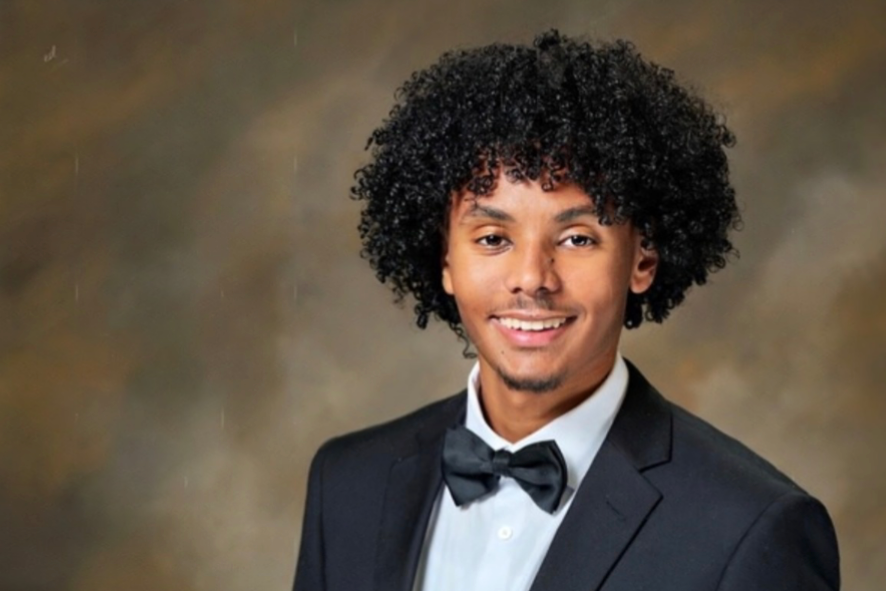
Henok Thedros
Hyattsville, Maryland
In the Driver's Seat
Every time someone gets behind the wheel, they are making a decision that affects more than just themselves. They are responsible for every person in their car, every driver sharing the road, and every pedestrian walking nearby. That responsibility is not something most people think about consciously, but it should be. The statistics alone make the case. An average of 34,000 Americans die each year as a result of driving — more than the total number of American soldiers killed in Iraq and Afghanistan combined. More people die on American roads in two years than died in the entire Vietnam War. These are not abstract numbers. They are lives, families, and futures cut short by something that is largely preventable.
Driver education is one of the most powerful tools we have to change that reality.
The Importance of Driver Education
Most people learn to drive and never think deeply about what they are actually doing. They learn where the gas and brake pedals are, how to parallel park, and when to signal. But driver education at its best goes much further than mechanics. It teaches awareness — of other drivers, of road conditions, of blind spots, and of the split-second decisions that can mean the difference between a close call and a tragedy.
Young and new drivers are especially vulnerable. They lack the experience to anticipate what other drivers might do and the instincts that only come from time behind the wheel. A comprehensive driver education program fills that gap by exposing new drivers to scenarios they have not yet encountered in real life. It teaches them how to handle bad weather, navigate highway merges, and respond calmly when something unexpected happens. That preparation saves lives.
Beyond the individual, driver education creates a culture of responsibility on the road. When people understand the real consequences of distracted driving, speeding, or driving under the influence, they are more likely to take those risks seriously — and more likely to speak up when they see someone else taking them.
Steps to Reduce Driving-Related Deaths
Reducing the number of deaths on the road requires action on multiple levels. At the individual level, drivers need to commit to basic habits that are widely known but not widely practiced. Putting the phone down completely while driving is one of the most impactful things a person can do. Distracted driving is one of the leading causes of accidents, and a text message is never worth a life. Following speed limits, wearing a seatbelt, and never driving impaired are not suggestions, but decisions that protect everyone on the road.
At a broader level, communities and policymakers can invest in better infrastructure, clearer signage, improved lighting on dangerous roads, and stricter enforcement of traffic laws. Technology also plays a growing role. Features like automatic emergency braking, lane departure warnings, and blind spot monitoring have already prevented countless accidents and will continue to do so as they become more standard.
Driver education programs themselves need to be taken more seriously. In many states, the requirements to obtain a license are minimal. Strengthening those requirements — more hours of supervised driving, more comprehensive testing, and mandatory education on the dangers of distracted and impaired driving — would make new drivers significantly better prepared before they get on the road alone.
Personal Experience with Irresponsible Driving
I have not been in a serious car accident, and I am grateful for that. But I have been in the car with people who made me uncomfortable behind the wheel. I have watched drivers speed through yellow lights, glance down at their phones mid-highway, and tailgate other cars out of impatience. In those moments, the feeling in the pit of my stomach was real. You are suddenly aware of how fragile the situation is and how little control you have as a passenger. It changed how seriously I take these things as someone who is learning to drive and will soon be behind the wheel regularly.
Those experiences also made me more aware of the culture around driving. There is a tendency to treat reckless habits as normal — everyone speeds a little, everyone checks their phone at a red light. That normalization is dangerous. It makes it harder to hold yourself and others accountable.
Becoming a Safer Driver and Helping Others Do the Same
For myself, the commitment starts with preparation and presence. Before I drive I want to make sure I am in the right headspace — not distracted, not tired, not rushed. One of the biggest lessons I have learned in my life recently is the value of slowing down. I used to move fast through everything, rushing to the next thing before I had fully processed where I was. I have spent the last year working against that tendency, and it applies directly to driving. Speeding is often driven by impatience, not necessity. Slowing down, being present, and giving the road my full attention is something I am committing to before I ever develop bad habits.
Helping others become safer drivers starts with honesty. If I am in a car with someone who is driving dangerously, I am going to say something. That can be an uncomfortable conversation but it is a necessary one. Lives are more important than avoiding awkwardness. I also plan to share what I know — the real statistics, the real consequences — with friends who are also new drivers. A lot of reckless driving comes from not fully internalizing how serious the consequences can be. When you understand that 34,000 people die every year on American roads, it stops feeling like a distant possibility and starts feeling like a real risk that every driver has a role in reducing.
Driver education is not just a box to check on the way to getting a license. It is the foundation of a lifelong relationship with the road. The more seriously we take it — individually and collectively — the more lives we save. That is a responsibility worth carrying every time we get behind the wheel.
Every time someone gets behind the wheel, they are making a decision that affects more than just themselves. They are responsible for every person in their car, every driver sharing the road, and every pedestrian walking nearby. That responsibility is not something most people think about consciously, but it should be. The statistics alone make the case. An average of 34,000 Americans die each year as a result of driving — more than the total number of American soldiers killed in Iraq and Afghanistan combined. More people die on American roads in two years than died in the entire Vietnam War. These are not abstract numbers. They are lives, families, and futures cut short by something that is largely preventable.
Driver education is one of the most powerful tools we have to change that reality.
The Importance of Driver Education
Most people learn to drive and never think deeply about what they are actually doing. They learn where the gas and brake pedals are, how to parallel park, and when to signal. But driver education at its best goes much further than mechanics. It teaches awareness — of other drivers, of road conditions, of blind spots, and of the split-second decisions that can mean the difference between a close call and a tragedy.
Young and new drivers are especially vulnerable. They lack the experience to anticipate what other drivers might do and the instincts that only come from time behind the wheel. A comprehensive driver education program fills that gap by exposing new drivers to scenarios they have not yet encountered in real life. It teaches them how to handle bad weather, navigate highway merges, and respond calmly when something unexpected happens. That preparation saves lives.
Beyond the individual, driver education creates a culture of responsibility on the road. When people understand the real consequences of distracted driving, speeding, or driving under the influence, they are more likely to take those risks seriously — and more likely to speak up when they see someone else taking them.
Steps to Reduce Driving-Related Deaths
Reducing the number of deaths on the road requires action on multiple levels. At the individual level, drivers need to commit to basic habits that are widely known but not widely practiced. Putting the phone down completely while driving is one of the most impactful things a person can do. Distracted driving is one of the leading causes of accidents, and a text message is never worth a life. Following speed limits, wearing a seatbelt, and never driving impaired are not suggestions, but decisions that protect everyone on the road.
At a broader level, communities and policymakers can invest in better infrastructure, clearer signage, improved lighting on dangerous roads, and stricter enforcement of traffic laws. Technology also plays a growing role. Features like automatic emergency braking, lane departure warnings, and blind spot monitoring have already prevented countless accidents and will continue to do so as they become more standard.
Driver education programs themselves need to be taken more seriously. In many states, the requirements to obtain a license are minimal. Strengthening those requirements — more hours of supervised driving, more comprehensive testing, and mandatory education on the dangers of distracted and impaired driving — would make new drivers significantly better prepared before they get on the road alone.
Personal Experience with Irresponsible Driving
I have not been in a serious car accident, and I am grateful for that. But I have been in the car with people who made me uncomfortable behind the wheel. I have watched drivers speed through yellow lights, glance down at their phones mid-highway, and tailgate other cars out of impatience. In those moments, the feeling in the pit of my stomach was real. You are suddenly aware of how fragile the situation is and how little control you have as a passenger. It changed how seriously I take these things as someone who is learning to drive and will soon be behind the wheel regularly.
Those experiences also made me more aware of the culture around driving. There is a tendency to treat reckless habits as normal — everyone speeds a little, everyone checks their phone at a red light. That normalization is dangerous. It makes it harder to hold yourself and others accountable.
Becoming a Safer Driver and Helping Others Do the Same
For myself, the commitment starts with preparation and presence. Before I drive I want to make sure I am in the right headspace — not distracted, not tired, not rushed. One of the biggest lessons I have learned in my life recently is the value of slowing down. I used to move fast through everything, rushing to the next thing before I had fully processed where I was. I have spent the last year working against that tendency, and it applies directly to driving. Speeding is often driven by impatience, not necessity. Slowing down, being present, and giving the road my full attention is something I am committing to before I ever develop bad habits.
Helping others become safer drivers starts with honesty. If I am in a car with someone who is driving dangerously, I am going to say something. That can be an uncomfortable conversation but it is a necessary one. Lives are more important than avoiding awkwardness. I also plan to share what I know — the real statistics, the real consequences — with friends who are also new drivers. A lot of reckless driving comes from not fully internalizing how serious the consequences can be. When you understand that 34,000 people die every year on American roads, it stops feeling like a distant possibility and starts feeling like a real risk that every driver has a role in reducing.
Driver education is not just a box to check on the way to getting a license. It is the foundation of a lifelong relationship with the road. The more seriously we take it — individually and collectively — the more lives we save. That is a responsibility worth carrying every time we get behind the wheel.
Content Disclaimer:
Essays are contributed by users and represent their individual perspectives, not those of this website.

The Ultimate Destination: My Personal Commitment to Safe and Defensive Driving
Carrolyn Pickett