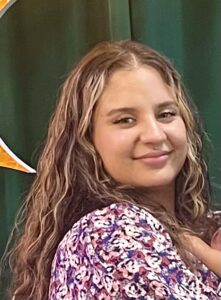
Help Someone, Even If It's Just One
2024 Driver Education Round 2

Cassidy Garibaldo
Rochester, NY
When you are getting behind the wheel of a car, you are entering into a contract in which you agree that you are in a sound state to operate heavy machinery and will act responsibly for the safety and wellbeing of other drivers, cyclists, pedestrians, passengers, and yourself. Driver education, coupled with proper training, is the key to reducing the number of deaths as a result of driving. When drivers do not understand what they did wrong or what they are doing wrong, they cannot correct their behavior, and the exceptionally high number of automobile-related deaths cannot change. Being able to recognize an issue or dangerous driving is the first step in being able to overcome it. By teaching all, especially younger drivers, how to take proper caution each time they take the road, the safety and competency of everyone on the road increases. With the increase in safety technology in modern cars, we can sometimes fall into the illusion that the pressure is taken off of us as drivers. We feel as though we can place our trust in the vehicle and in the other drivers we share the road with. However, when faced with the staggering statistics of 40,990 car crash-related deaths in the U.S. in 2024, it is clear that we are in desperate need of a reminder of what it means to be in the driver’s seat.
I have been fortunate enough to not be involved in a car crash; however, I remember the fear that gripped me when I heard that my younger brother had been in an accident on his way to a routine dentist appointment in our hometown. After I saw for myself that he was unhurt, if a little shaken up, my fear turned to anger. His recklessness stemmed from feeling comfortable with the drive he had made dozens of times without incident. But it only takes one time to have a very different phone call. Left-handed turns onto a busy road are always difficult, but I trusted all my family members and myself to wait for enough space to make the move safely. After the incident with my brother, I had to start asking questions: How do you judge what calls are the right ones to make on the road? Experience? Awareness? Trust in other drivers? I have come to the conclusion that it has to be these and more. By having more in-depth driver education, there can be an avoidance of instances where young drivers, fresh with freedom, make careless decisions that end up hurting themselves and others.
On my daily commute, I pass a memorial for three teenage girls not three months older than myself. They were on their way home from an evening out and were hit by an intoxicated driver; neither of them made it home that night. Every time I pass that memorial, I think about just how easily that could have been me, or my brother, or my best friend, or my sister. Then I thought that they were all something to someone. Same as the three students with commemorative trees outside of my high school—faces that I stopped seeing on my way to second period calculus after a tragic night in early October. Driving is dangerous—possibly the most dangerous thing I do every single day. Being a cautious driver takes practice, alertness, and confidence. I remember one of the first times out in my dad’s old GMC after getting my learner’s permit, he said to me, “Defensive driving doesn’t make you slow; it brings you home.” His words ring in my head every time I’ve left enough following distance to stop safely or when I take a half second to scan an intersection before going through a fresh green light.
To ensure that I am never a hazard to myself or others while I am driving, I will always be vigilant, attentive, and alert while behind the wheel. I will minimize distractions by putting my cell phone in the back seat of the car while I drive and keeping the radio at a level where it is not distracting to myself or others. When it comes to helping others become safer on the road, I will do everything I can to prevent family and friends who may drive irresponsibly from going behind the wheel. However, change cannot be brought about by a single person. Sure, it can start with just one, but in the end, change comes from people electing legislators who will push their ideas forward. Increased opportunities for driver education, especially for teenagers, could have saved at least one of the 40,990 lives, if not more. In my career as a research scientist, I have aspirations of helping as many people as I can, even if it is just one. I know that the one I help is someone’s best friend, sibling, or parent; someone’s someone. I remain adamant that increased funding and promotion for driver safety and education training are the best ways to start helping people. Even if it's just one person.
Content Disclaimer:
Essays are contributed by users and represent their individual perspectives, not those of this website.