Holding Lives in Your Hands
Driver Education Initiative

Sydney Arbeiter
Kenosha, Wisconsin
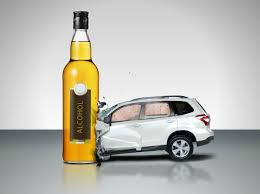
Almost thirty years ago, my uncle was hit by a drunk driver on his way home from work. The crash was so bad that he was left paralyzed from the neck down for the rest of his life. I only ever knew him when he was confined to a wheelchair, dependent on his family for basic human needs, but that wasn’t always the case. He had been an independent, self-sufficient man, who was actively involved in sports, but on that fateful night, that freedom and independence was taken away for good. While he always had a big smile on his face whenever I saw him, I know that was a drastic change in his quality of life and required some major sacrifices from his family.
Until I started drivers ed when I was fifteen, I thought that drunk driving was the leading cause of car accidents. However, a study conducted by the U.S. Department of Transportation showed that 40.6% of crashes are due to recognition errors, which included internal and external distractions and inadequate surveillance of surroundings. They found that “the most frequently occurring critical reason was inadequate surveillance that refers to a situation in which a driver failed to look, or looked but did not see, when it was essential to safely complete a vehicle maneuver” (NHTSA), meaning distracted driving is reasonable for the most car accidents.
Distracted driving is the top cause of car accidents, ranking higher than drunk driving and reckless driving. Maybe that’s because it seems so harmless. How many times have you heard that ding! and thought, “I’ll just see who it is”? Or you’re singing your heart out with your friends, and you focus more on the song than the road. Every time, you’ve been distracted and put yourself, your passengers, and others on the road at risk. When travelling at 55mph, the average speed limit on a highway, and you take your eyes off the road for even just five seconds, you’ve already travelled the length of a football field. That’s plenty of time for a catastrophic accident to occur (CDC Motor Safety). Distracted driving is more than just not looking at the road. Have you ever gotten to work or school or the grocery store and thought, “I have no idea how I got here. I don’t remember the drive at all”? While you might not be looking at your phone, you’re still preoccupied and not paying enough to driving. This is just as dangerous as checking your phone, but even harder to prevent as most people don’t realize they’re putting themselves at risk until after the fact.
While we cover the dangers of distracted driving in drivers ed and we all know texting and driving is dangerous, once we get behind the wheel, that all seems to disappear. If we actually put into practice what we know about safe driving habits, the roads would be a much safer place. When we get behind the wheel of a car, we are taking responsibility for the safety of those around us as well as ourselves. Therefore, it is our obligation to ensure we are doing all we can to drive safely. Easy changes, like keeping the music at a reasonable volume or putting our phones on silent until we reach our destination, can make our driving exponentially safer. By making these minor adjustments, we would have less distractions, so we can better focus our attention on driving safely. I am blessed to be able to say that I have never been in an accident, but so many more people could be able to say that, because these distractions can be easily eliminated. I know I have made mistakes while driving, no one is perfect, but every time I find myself checking a text in the car, I think back to my uncle. The thought of causing that kind of pain to anyone encourages me to immediately eradicate any distractions and focus on driving safely. A major factor in my effort to drive safely is that when I drive while entertaining distractions, I am not just putting myself at risk, but everyone else around me. Driving safely saves lives, and we all need to work together and encourage those around us to drive safer so we can reduce the number of car accidents each year, especially fatal ones.
References:
“Distracted Driving.” Centers for Disease Control and Prevention, Centers for Disease Control and Prevention, 16 Sept. 2019, www.cdc.gov/motorvehiclesafety/distracted_driving/index.html.
“National Motor Vehicle Crash Causation Survey Report to Congress.” July 2008, crashstats.nhtsa.dot.gov/Api/Public/ViewPublication/811059 .
Content Disclaimer:
Essays are contributed by users and represent their individual perspectives, not those of this website.