In the Driver's Seat: Engineering a Safer Road
2026 Driver Education Round 1
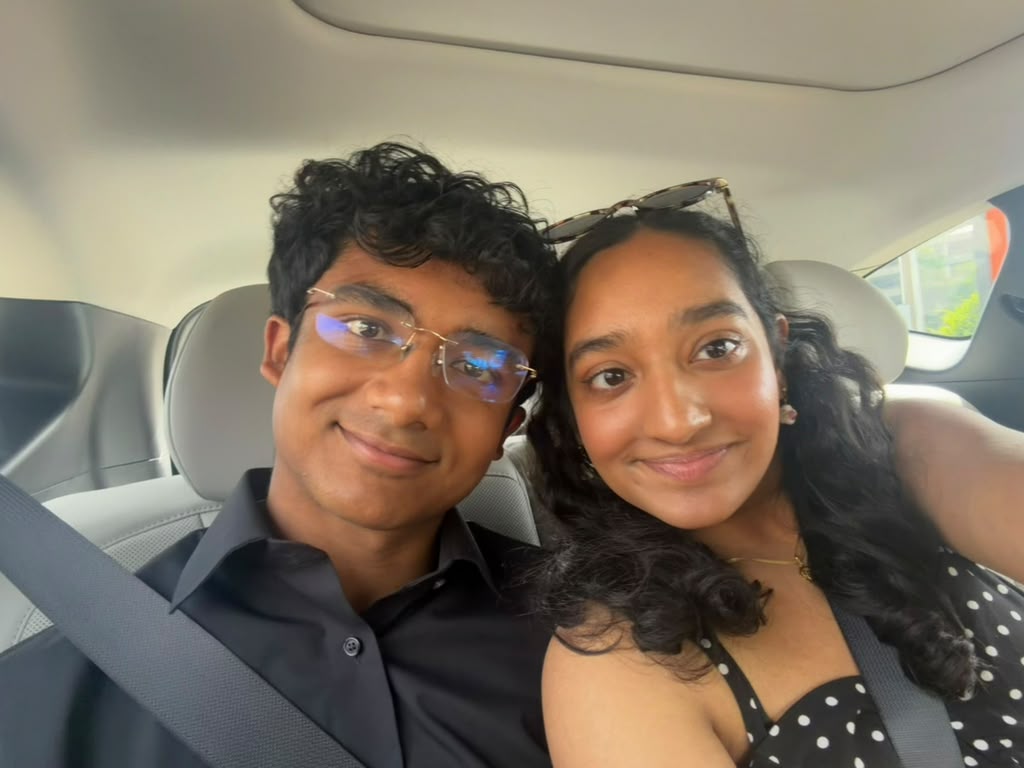
Neel Mani Sulkunte
Cleveland, OH
Every semester at Case Western Reserve University, I walk students through the same lesson in my work as a teaching assistant for first-year engineering: a design is only as good as the failure modes you bothered to consider. Driving is the one piece of engineering nearly every American operates daily, yet most of us never stop to think of it as a system with failure modes at all. We treat the wheel, the pedals, and the two-ton frame around us as background noise instead of the piece of machinery it is. That gap between how dangerous driving actually is and how casually we treat it is, I think, the real reason it kills roughly 34,000 Americans every year: a number that in two years surpasses the total American losses of the Vietnam War. It is not that driving is inherently deadlier than combat. It is that we have collectively decided not to treat it with the seriousness that number demands.
Driver education matters because it is the only intervention that reaches people before the habits form. By the time someone has been driving distracted for five years, you are not correcting a mistake, you are undoing an identity. Education that arrives early — in a classroom, through a permit test, through a parent narrating their own decisions out loud in the car — has a chance to build judgment before bad judgment calcifies into muscle memory. I have seen this dynamic up close in my own coursework and lab work: in the CyPhiLab at Case, I work on control systems for robots that have to make real-time decisions about balance and safety margins, and the same principle applies to a sixteen-year-old behind a wheel for the first time. The systems that fail safely are the ones designed, from the start, around the assumption that a human will eventually make a mistake.
That points toward what I think are the most promising steps for reducing driving deaths going forward. The first is cultural: normalizing driving as a skill that is never fully mastered, the way pilots treat flying, with recurrent training and honest self-assessment rather than a one-time test at sixteen. The second is technological, and it is the piece I am most equipped to speak to. I have spent the last two years building and testing feedback control systems. The same category of tools underlies lane-departure warnings, automatic emergency braking, and driver-attention monitoring in modern vehicles. These systems do not replace an alert driver, but they compress the window in which a lapse in attention turns into a collision. Widening access to that technology, especially in older and lower-cost vehicles where it is least common, would do more to bend the fatality curve than almost any single behavioral campaign.
That statistic stopped being an abstraction for me on a drive home from the airport with my girlfriend, right after a long stretch apart while we were both traveling in different countries. We were catching up, trading stories about our trips, when she asked me to grab her phone out of my pocket. I looked down for a second to dig it out, and the next thing I heard was her yelling, "Baby, watch out!" I looked up to find I had drifted out of my lane and was closing in on another driver's car. I corrected in time, gave the other driver an apologetic wave, and she seemed to shake it off. But the moment stuck with me. Nothing about it looked like reckless driving in the way people usually picture it — I was not speeding, not impaired, not even holding the phone yet. I was just looking down for two seconds while a car moving at 70 miles an hour does not stop caring where the road goes. That is the part of distracted driving that never makes it into a PSA: it does not feel dangerous while it is happening, right up until someone in the passenger seat has to shout your name.
The steps I can take, and that I try to hold myself to, are unglamorous but concrete: Never multitasking behind the wheel and only reaching for things at red lights, treating my phone as inaccessible the moment the car starts, not just while it is in motion; building in extra following distance as a default rather than a reaction; and being willing to say something when I am a passenger and the person driving is not being careful, even when it is socially awkward to speak up. On a longer horizon, I want the engineering work I am doing now — in controls, in robotics, in systems that reason about safety margins under uncertainty — to eventually feed back into how vehicles themselves are designed. Safer roads will come from some combination of better-educated drivers and better-engineered cars, and I would like to spend my career working on the second half of that equation without ever losing sight of the first: that behind every one of those 34,000 deaths a year is a person who, like all of us, believed they were paying enough attention right up until they weren't.
Content Disclaimer:
Essays are contributed by users and represent their individual perspectives, not those of this website.

In The Driver's Seat: Why Safe Driving Is the Fight of Our Generation
Luka Costa Seraphini