More Than a Passenger: What My Dad's Driving Taught Me About Road Safety
2026 Driver Education Round 1
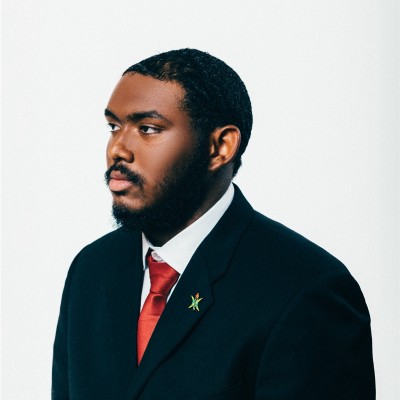
Omarion
Cruger, MS
I've spent more car rides than I'd like white-knuckling the door handle because my dad likes to steer with his knee while he cracks open a drink. He drifts toward the center line without noticing, correcting only when a car coming the other way flashes its lights or lays on the horn. I've said something more times than I can count, and he waves it off like it's nothing, like decades behind the wheel have earned him the right to stop paying attention. Every time I'm in that passenger seat, I'm doing math in my head. How many seconds does it take a car going the other way to close the distance between us. How much room is actually left in our lane. I shouldn't have to run that calculation just to get to the grocery store, but distracted driving doesn't care how many years of experience someone has.
That's exactly why driver education matters so much, and why it can't just be a one-time class teenagers take at sixteen and never think about again. Most driving deaths aren't caused by mechanical failure or bad road conditions, they're caused by decisions. Speeding, distraction, driving under the influence, and simple inattention account for the overwhelming majority of fatal crashes on American roads. My dad isn't reckless because he doesn't know better. He's reckless because habits formed over years of driving without consequences convinced him nothing bad happens as a result. Education has to work against that kind of complacency, not just teach new drivers the rules once and assume the lesson sticks for life.
Reducing driving deaths means treating road safety as an ongoing responsibility instead of a box to check. That starts with stronger enforcement of distracted driving laws, since a lot of drivers, my dad included, will only change behavior when there's a real cost attached to ignoring it. It also means normalizing refresher education for experienced drivers, not just first-timers, because bad habits accumulate quietly over years and nobody sits an adult driver down to point them out. Vehicle technology can help too. Features like lane departure warnings and distraction alerts exist specifically to interrupt the kind of autopilot driving that gets people killed, and making that technology standard rather than a luxury add-on would save lives across income levels, not just for people who can afford it. But technology only closes part of the gap. The rest has to come from a cultural shift where driving distracted, however minor it feels in the moment, stops being treated as normal.
I haven't been in a car accident myself, but I've had enough close calls in my dad's passenger seat to understand how fast a small lapse in attention turns into something irreversible. Watching someone I love treat driving as something he can multitask through has taught me that the danger isn't always the driver who's clearly reckless. Sometimes it's the driver who's been doing it so long they've convinced themselves nothing can go wrong, right up until it does.
That experience has shaped how I drive myself. I keep both hands on the wheel, I don't touch my phone once the car is moving, and I've gotten comfortable pulling over rather than trying to eat, drink, or dig through a bag while driving. It sounds small, but those are exactly the habits my dad never built, and I don't want to end up steering with my knee twenty years from now because I never took the time to be intentional about it now. I've also started being more direct with him instead of just wincing quietly in the passenger seat. I tell him when he's drifting, I ask him to put the drink down until we're stopped, and I don't let it go just because he brushes it off. I'd rather have an uncomfortable conversation in the car than not have the chance to have one at all.
Beyond my own habits, I want to help build a culture around me where people call this stuff out instead of ignoring it. That means being the friend who says something when someone's texting at a red light and doesn't look up when it turns green, and the one who offers to drive when a friend is too tired or too distracted to be paying full attention. Safer roads don't come from one law or one class. They come from a lot of small moments where someone decides the risk isn't worth it, and from people around them who are willing to say so out loud.
Content Disclaimer:
Essays are contributed by users and represent their individual perspectives, not those of this website.