Notifications Can Wait. Newton's Laws Cannot.
2026 Driver Education Round 1
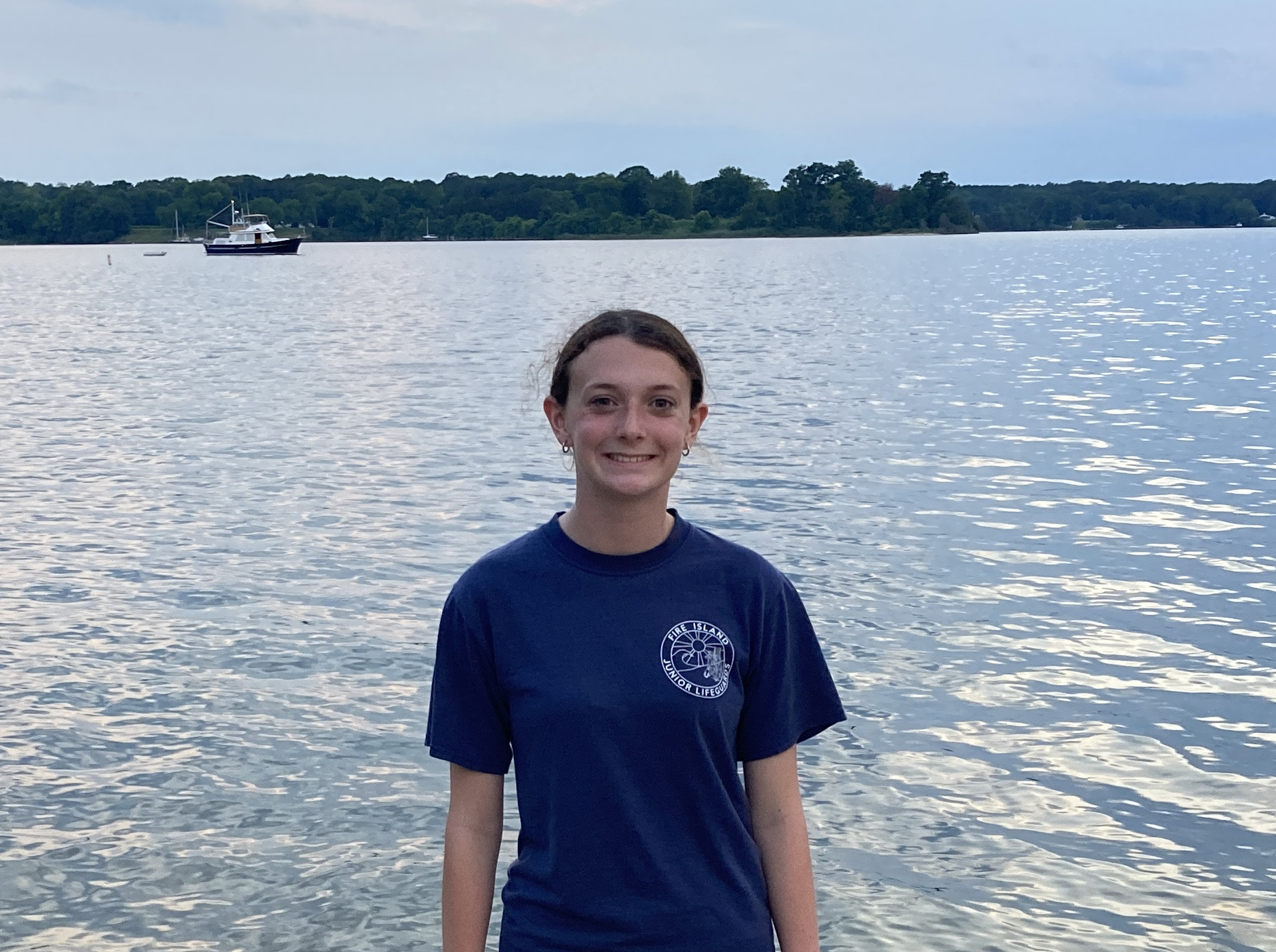
Lily Phillips
Sayville, NY
- Notifications Can Wait. Newton's Laws Cannot
- By Lily Phillips
- My time in high school physics class completely changed how I view getting behind the wheel of a car, revealing a high-stakes battle between distracted driving and the laws of motion. Before taking physics, I thought safe driving meant following the speed limit and avoiding tickets. Now I realize every time I start my car, I am responsible for controlling thousands of pounds of moving mass that cannot ignore the laws of nature just because I made a careless decision to pay more attention to my phone than the road. Driver education is often associated with memorizing traffic signs and passing a driving test, but physics taught me something just as important: understanding reaction time, momentum, and kinetic energy can be the difference between arriving safely and tragedy. Cellphones can easily hijack our focus with endless notifications and noises, but no app or software developer has the power to rewrite Newton's laws of motion.
Although I’ve thankfully never been involved in a crash, I have ridden in cars where a driver's attention drifted to a buzzing phone for just a few seconds. Even before taking physics, those moments made me uneasy. Now I picture the distance the car is traveling, the momentum building with every second, and I realize how quickly a routine drive can become a tragedy.
Physics also changed the way I think about speed itself. New drivers like me and my friends often drive faster than we should because it feels so thrilling to finally have the newfound freedom and independence to go places without our parents. However, if we took the time to think back to what we learned in physics about kinetic energy, we might think twice about putting the pedal to the metal. Learning that velocity is squared completely changed the way I think about speeding. Before physics, driving ten miles per hour faster didn't seem like a big deal. Now I know that even small increases in speed dramatically increase the energy involved in a crash. A responsible driver understands they are not simply sitting in a comfortable seat; they are controlling a heavy machine that takes time, force, and distance to stop safely.
In class, I also learned that Newton’s First Law states that an object in motion will stay in motion unless acted upon by an external force. If a distracted driver drifts off the road or doesn't see a stopped car in front of them because they are looking at a screen, inertia takes over. When a crash occurs, the car stops, but everything inside, including the passengers, keeps moving forward at 60 miles per hour. This also ties into another law of physics: p = mv (momentum equals mass times velocity). Momentum measures how difficult it is to stop a moving object. Unfortunately, a tree, a parked car, or a guardrail will stop the momentum of a moving vehicle pretty quickly.
Though I can’t “silence” the laws of physics, I can take physical steps, like silencing my phone, to protect myself and those who share the road with me. My personal routine before shifting out of “Park” involves a strict digital disconnect. First, I load up any GPS directions I might need and my music playlist. Second, I have my cellphone set to an automated 'Driving' mode that silences incoming notifications. Finally, the phone is physically placed in the glovebox out of view and out of arm's reach. By intentionally removing visual and auditory digital distractions, I make sure my attention is entirely on my driving and not on my phone. As a new driver, I already have enough to think about: traffic, road signs, weather, and other drivers. Removing my phone from the equation allows me to focus on what matters most and be entirely present in my physical surroundings.
Reducing traffic deaths requires more than stricter laws. It begins with education, but it also depends on individual choices. Putting phones away, obeying speed limits, wearing seat belts, avoiding impaired driving, and refusing to drive when overly tired are simple decisions that give physics less opportunity to work against us.
My responsibility doesn't end with my own driving. When I ride with friends (or even my parents), I plan to speak up if someone reaches for a phone while driving or chooses to speed. It may feel uncomfortable in the moment, but protecting lives is more important than avoiding an awkward conversation.
Every time I put my phone away before driving, I am making a choice between two competing forces: the pull of technology and the certainty of physics. Physics taught me that nature doesn't make exceptions for distracted drivers and that lesson may be the most important one I learned in high school. Understanding the science behind driving made me realize that responsibility isn't just about following rules; it's about recognizing that my choices affect everyone who shares the road. "Notifications can wait. Newton's laws cannot.
Content Disclaimer:
Essays are contributed by users and represent their individual perspectives, not those of this website.