The Accident I Have Not Had
2026 Driver Education Round 2
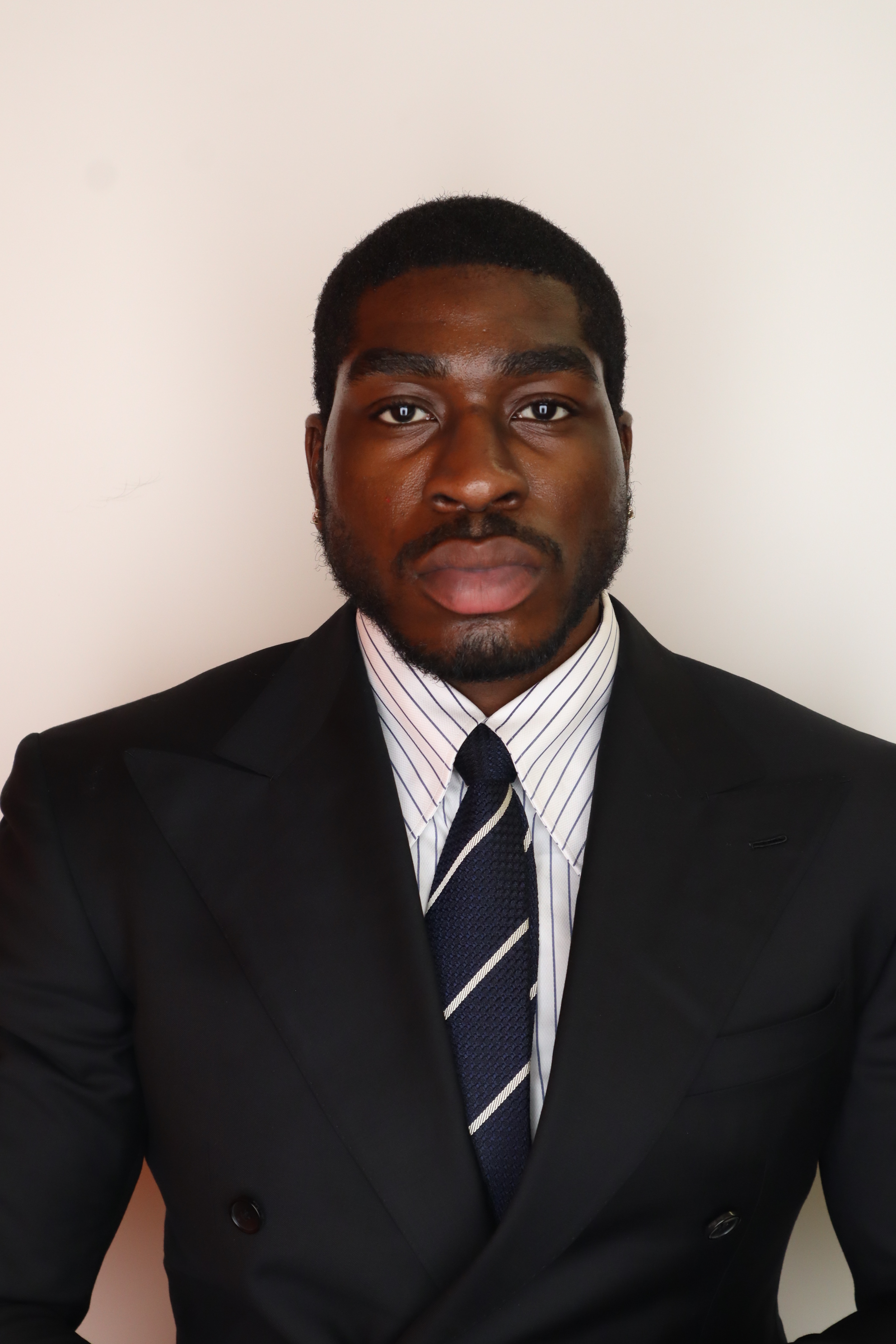
Patrick Kamdem
Alexandria, Virginia
The Accident I Have Not Had
At Morgan State's Food Resource Center, volunteers were logging donations on paper and we were throwing out food we did not know we had. I built the inventory database in Python and SQL and it saved more than four hours a day. Nothing about the volunteers changed. What changed was that the record could finally be asked a question.
I start there because it is the shape of almost every preventable loss, and driving is the largest version of it in American life. This contest's own page puts the figure at an average of 34,000 deaths a year on American roads, more than the American military deaths of Iraq and Afghanistan combined. A number that size goes abstract on a reader. What keeps it concrete is that almost nothing in it is mysterious. We know what kills people on the road, and we have known for decades.
So start with why driver education matters at all. A new driver is not reckless because he wants to be. He is operating a two ton machine on an intuition built from the passenger seat, and intuition is a poor teacher for events that are rare and fatal. Nobody learns from the crash they only get to have once. Education is the only mechanism that puts the lesson in front of the mistake instead of after it. It takes what people have already paid for in blood and installs it in someone who has not paid yet. Speed is not dangerous because an adult said so. It is dangerous because stopping distance grows with the square of velocity, and a driver who has worked that out in a classroom brakes earlier than one who has never heard it. The same holds for the seconds a phone takes away, for the way alcohol shortens reaction time well before it touches coordination, and for why a belt matters most in the crash you did not cause.
What would actually bring the number down. Four things, and none of them are new.
The first is making education continuous rather than a single gate at sixteen. We test a teenager once and then leave him alone for fifty years, while the roads, the cars and the distractions all change around him. A short refresher tied to license renewal, or rewarded with an insurance discount, reaches the drivers carrying the most miles and the least recent training.
The second is designing the phone out of the trip. Willpower is a weak control and we keep building policy on it. A do not disturb mode that is on by default while a vehicle is moving, rather than an option a conscientious person remembers to switch on, is one settings decision made once by a manufacturer that would outperform a great many public service announcements.
The third is enforcement aimed at the behaviors that fill the fatality reports rather than the ones that are easy to ticket. Speed, impairment and unbelted occupants account for the bulk of deaths. A program that measures itself on citations written will drift toward whatever is cheapest to catch. A program that measures itself on deaths prevented will not.
The fourth is reaching people where they already are rather than where a campaign would like them to be. I founded a nonprofit called Destined for Success, and we have run more than ten financial literacy and college readiness workshops for over fifty high school students in the DC area. A great deal of financial literacy is not persuasion. It is learning that a rule exists at all. Road safety has the same gap, and a free hour in a room they are already sitting in costs nothing to give them.
The personal question in this prompt deserves a plain answer. I have not been in a car accident. I am not going to borrow somebody else's crash to make this essay land harder, because an essay about honest risk should not open with a dishonest one. What I have instead is the habit the Food Resource Center gave me. When the same failure keeps arriving at the same kind of person, the person is usually not the problem. The process is.
That habit is also my answer to what I can do. I am 20, a sophomore at an HBCU carrying two degrees at once in Information Systems and Finance with a 3.652 average, and I live in Alexandria while I study in Baltimore. Three commitments are small enough that I can actually be held to them. The first is as a passenger, and I expect it to be the hardest of the three. I will say something when a driver is on a phone or driving angry, because the cost of that sentence is a moment of awkwardness and the cost of staying quiet can be a person. The second is that when I am behind the wheel the phone is out of reach before the car moves rather than after. The third is building the trip around the time it honestly takes, so that speed never becomes the repair for my own bad planning.
The part I can scale is the workshop. Adding one session on what actually kills young drivers costs me a slide deck and gives a room of high school students a set of rules nobody has bothered to tell them. I have been serving with the Greater Washington Urban League since 2023, including back to school events that reach more than a hundred families, and parents are the people who set the rules inside a car long before a state ever does.
I want to spend my career building the systems that decide who gets reached and who gets missed. Thirty four thousand people a year is not a tragedy we stand helpless in front of. It is a backlog.
Content Disclaimer:
Essays are contributed by users and represent their individual perspectives, not those of this website.