The Bronco Problem
2026 Driver Education Round 2
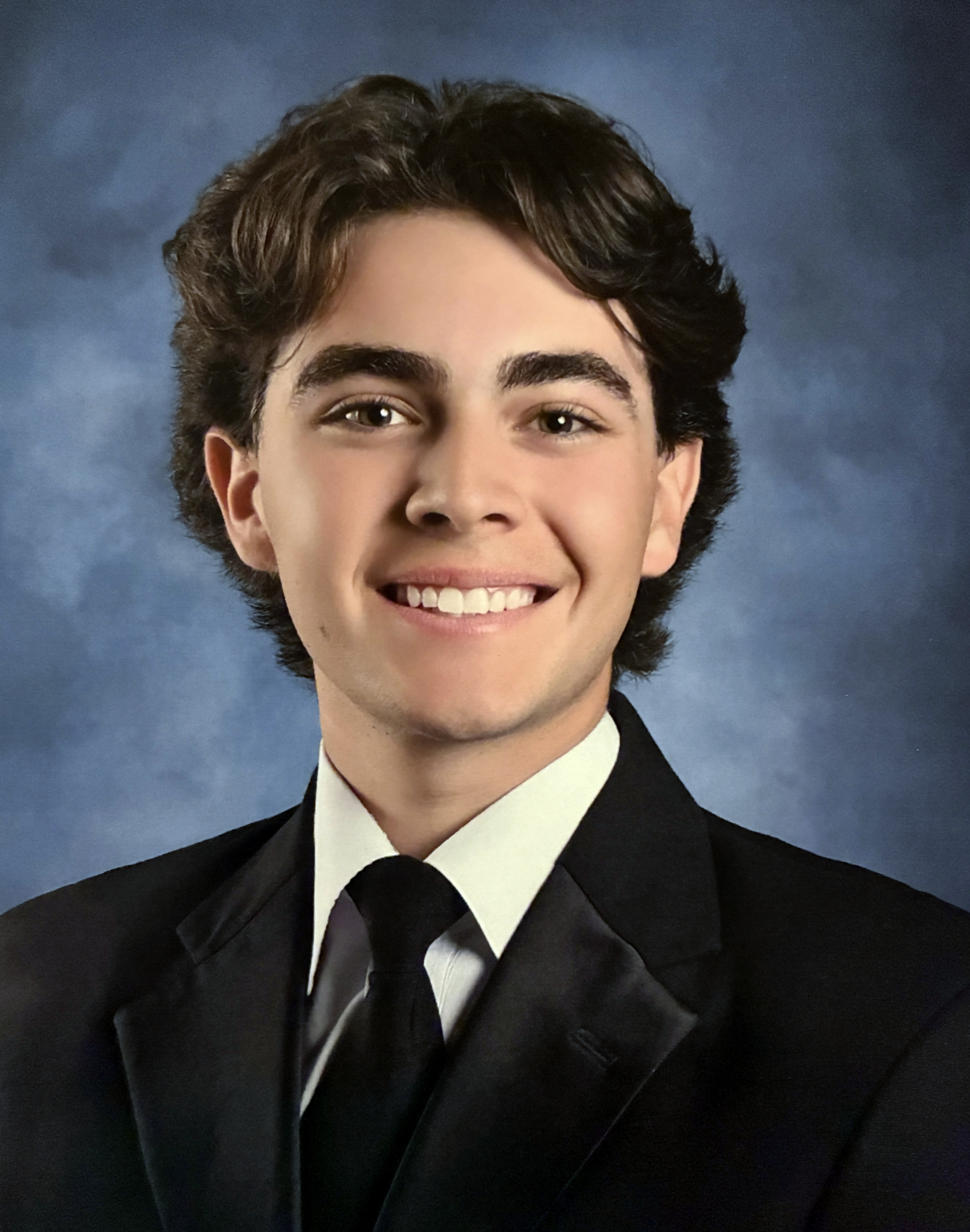
Gabriel Wright
Middletown, DE
My dad and I flew out to LA for a baseball camp, and we were about to get a regular old rental car when I saw a jet black Bronco Outer Banks parked outside. I asked if we could upgrade. He said sure, and the rest is history.
Camp ended early Sunday morning. We could have taken the freeway to San Diego, but we skipped it and took the Pacific Coast Highway instead, through every beach town on the way down. Top off, yacht rock playing, a whiff of salt in the air. We stopped at the surf shops in Dana Point. My dad's soul seemed lighter that day, like he could finally relax. I can't think about a Bronco without thinking about him. Now I drive one, a 2025 Outer Banks.
Which makes this a slightly awkward essay for me to write, because the car I drive is not the one a safety expert would pick for a new driver.
Start with the front end. A Bronco is tall and boxy, and its nose is close to a flat wall. That's a big part of why it looks so good. It's also the shape that worries safety researchers. The Insurance Institute for Highway Safety looked at almost 18,000 crashes where a vehicle hit a pedestrian. Pickups, SUVs and vans with hoods more than 40 inches off the ground were about 45 percent more likely to kill the person they hit than cars with low, sloped hoods, and among medium-height vehicles the blunt ones were worse too. A separate study out of the University of Hawaii found that every 3.9 inches of extra hood height raises a pedestrian's risk of dying by 22 percent. For a child it's 81 percent.
We did pick the Outer Banks trim on purpose, for its safety features. Mine has Pre-Collision Assist with Pedestrian Detection, which warns you and can hit the brakes on its own if somebody is in front of you. The hood study left out vehicles with that kind of system, so those numbers aren't really about my exact car. But when IIHS looked at real crashes, pedestrian braking cut crash rates by 27 percent overall and made no difference at all at night on roads without streetlights, which is where most fatal pedestrian crashes happen. Those were older models, and the technology has gotten better since. It's still a backup, so I try to drive like it isn't there.
Then there's what happens to the people inside. NHTSA gives my Bronco three stars out of five for rollover resistance. For something built to go off-road that's about what you'd expect, but it means that in a bad crash the seat belt is basically the whole plan.
That child number made me think about SafetyTown. One summer I was a group leader at the county's SafetyTown camp, where kids around four to six learn the basics of safety in a miniature town with little streets, storefronts and battery-powered cars. One afternoon a boy in my group walked right out into the street and got hit by another kid driving a Power Wheels. He cried for a long time. When he finally calmed down I sat with him and asked why he hadn't looked before he crossed. He told me he thought it was everyone else's job to keep him safe.
He was little, so I walked him back through it one step at a time. But honestly, he wasn't totally wrong. Little kids can't really judge how fast a car is coming, and they're short enough to disappear behind a parked one. When a kid runs into the street, most of what decides how it ends is the driver. How fast they were going, and whether they were actually looking.
Speed is the part I keep coming back to. AAA's research says a pedestrian hit at 23 miles per hour has about a 10 percent chance of dying. At 32 it's 25 percent. At 42 it's 50 percent. On a road like PCH, where the speed limit keeps dropping as you come into each town and people are crossing to the beach all day, those twenty miles an hour cover the whole range from probably fine to a coin flip.
Looking back, that Sunday might be the best argument I have. We picked the slow road on purpose. Nobody was in a hurry, we stopped whenever we felt like it, and it's still the drive I think about when somebody asks me why I love that car.
NHTSA's early estimate is that about 36,640 people died on U.S. roads in 2025. The rules of the road are on the permit test, and they matter. How tall your hood is isn't on the test, though. Neither is your rollover rating, or what ten extra miles an hour does to the odds for somebody in a crosswalk. I had to go look those up, and I think every new driver should do the same for whatever they're driving, especially if it's the big, fun one. I try to remember that the front end I like looking at so much is the first thing a kid in a crosswalk would see coming.
I'm keeping the Bronco. I'm just the guy doing the speed limit through every school zone in town, with somebody behind me wishing I'd hurry up.
Content Disclaimer:
Essays are contributed by users and represent their individual perspectives, not those of this website.