The Quietest Person in the Car
2026 Driver Education Round 2
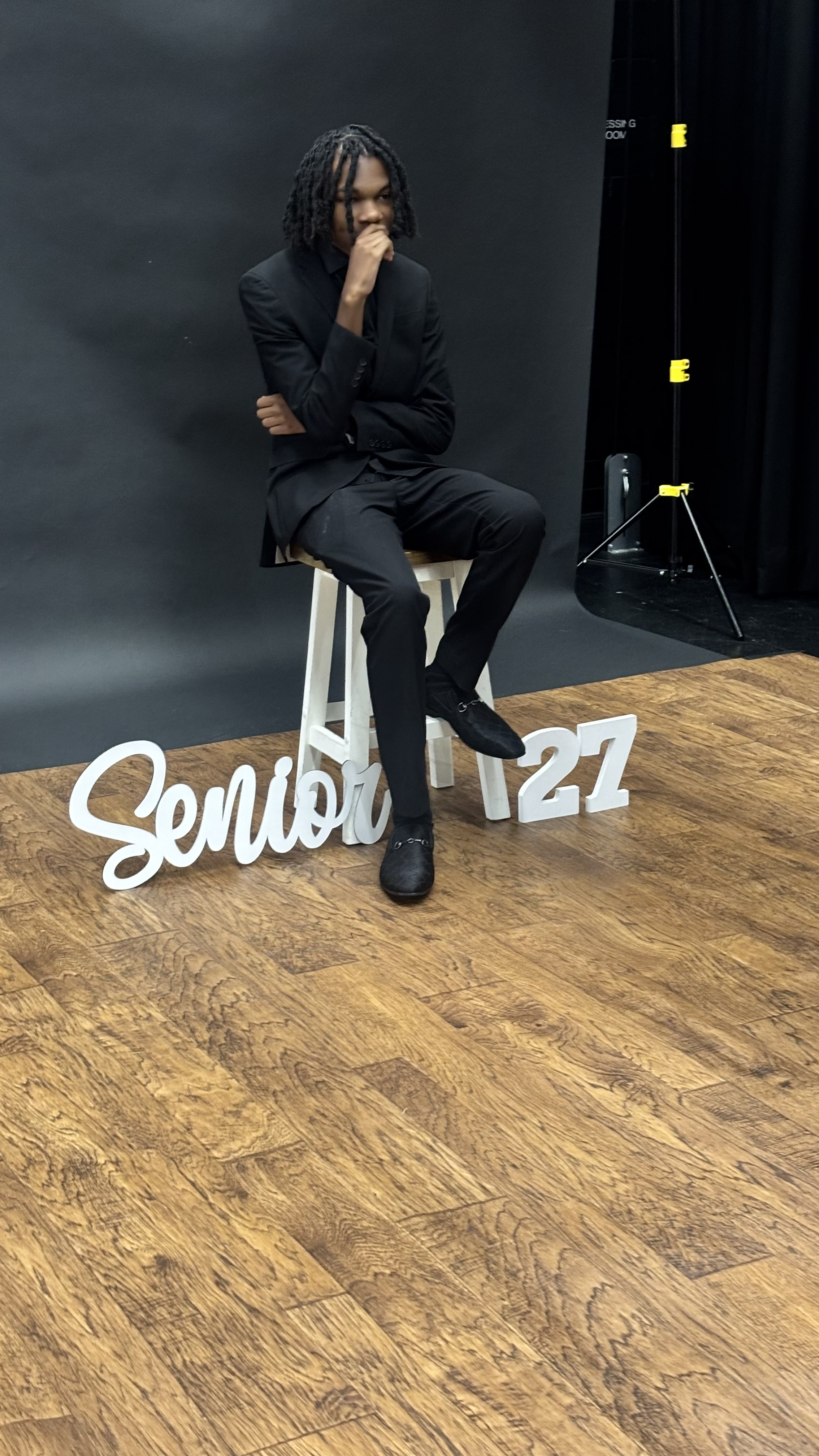
Aayden Wyche
Fairburn, Georgia
It was almost 1 a.m. on a Sunday when our bus pulled into the school parking lot. We had been riding for more than twelve hours, all the way back to Atlanta from DeSoto, Texas, after an out-of-town football game. Nobody was talking. People dragged their bags off the bus like they weighed fifty pounds. I grabbed my instrument case and went to find my ride.
My friend was driving us home. Another friend rode up front, and I sat in the back. It was supposed to be a short drive. We were all tired, and all of us just wanted to be home after that long ride. But the driver was the one I noticed. Yawn. Rubbed eyes. Another yawn.
Then the car got quiet. Not normal quiet. The kind where nobody even checks their phone. I watched the driver's eyes in the rearview mirror. The blinks were slow. Too slow. I started counting how long they lasted, and I did not like the answer. Then he drifted. Twice. Nothing dramatic. We even joked about it. It was no joke. I said nothing. We made it home. Nothing happened. I said thanks, got out, and went inside like it was any other night.
Later, lying in bed, I kept thinking about it. Nothing went wrong, but that didn't make me feel better. We were fine because we got lucky. That's all. And luck is not a plan.
I think about who was in that car. Three of us. Three families waiting at home who believed the hard part of the trip was over. That's the thing about a long trip. After twelve hours, the last stretch feels like a formality. It's not. That's when everyone relaxes and the tired catches up.
So why didn't I say something? A few reasons. First, nobody wants to be the annoying one. After a long trip, everybody just wants to get home, and asking "are you okay to drive?" feels like starting a problem. Second, I was the only one in the car with just a permit. I don't even have a license, and I'm supposed to tell the driver what to do? It didn't seem right. Third, I'm the quiet one. I notice things all the time. I just don't always say them.
I don't think I'm unusual. Most teenagers stay quiet in a car for the same reasons. Speaking up feels like it costs something. But staying quiet costs something too. We just don't see the bill until it's too late.
The funny part is that I already know how to speak up. I'm in marching band. On the field, someone is always saying "check your spacing" or "you're drifting." Nobody takes it personally. It's how the whole group stays together. One person out of place can break the formation. A car is the same, except nobody gets a do-over.
The numbers back up what I felt. The AAA Foundation estimates that 17.6 percent of fatal crashes from 2017 to 2021 involved a drowsy driver. That is close to one in five. It's not a rare problem. It's a late-night problem, the kind that shows up after games, after work, and after long trips. Exactly the kind of night I was having.
This is where I think driver education has a gap. It does a good job training drivers. We learn speed limits, following distance, and why the phone stays down. But almost nobody trains passengers. No one teaches the person in the back seat that they have a job too. We learn what to do when we're driving. We never learn what to do when someone else is driving and shouldn't be. Maybe driver ed should add one lesson: what to say when you're the passenger. It would take five minutes and could save a life.
I've come to believe being a safe and educated driver means more than what you do behind the wheel. A driver's job is to be honest about being tired, and to hand over the keys or call for a ride instead of pushing through. A passenger's job is to notice, and to say something. Everyone in the car shares the risk, so everyone shares some of the responsibility. Safe driving is a team sport. Marching band taught me that first.
So I made myself a rule. If I'm ever a passenger and the driver looks too tired, I say one sentence: "Can we pull over for a minute?" That's it. No speech. No lecture. No pointing fingers. It's short enough for the quiet kid to say, and it gives the driver an easy way to say yes without feeling called out. I phrase it as a question on purpose. I'm not telling anyone how to drive. I'm just asking for a minute. A permit holder can ask that.
And if I'm ever the driver and somebody says it to me, I will listen.
I still think about that parking lot. If I could go back, I'd say it before the car left. Seven words. Maybe ten seconds of feeling awkward. Compared to what could have happened, that's nothing. Nothing happened that night, and I'm grateful. But I don't want to rely on being grateful. I'm still the quiet one. I'm just not the silent one anymore.
Content Disclaimer:
Essays are contributed by users and represent their individual perspectives, not those of this website.
Behind the Wheel: The Importance of Driver Education and the Lessons I Learned from a Car Accident
Xavier Johnson