The Safest Drivers in the World
2026 Driver Education Round 2

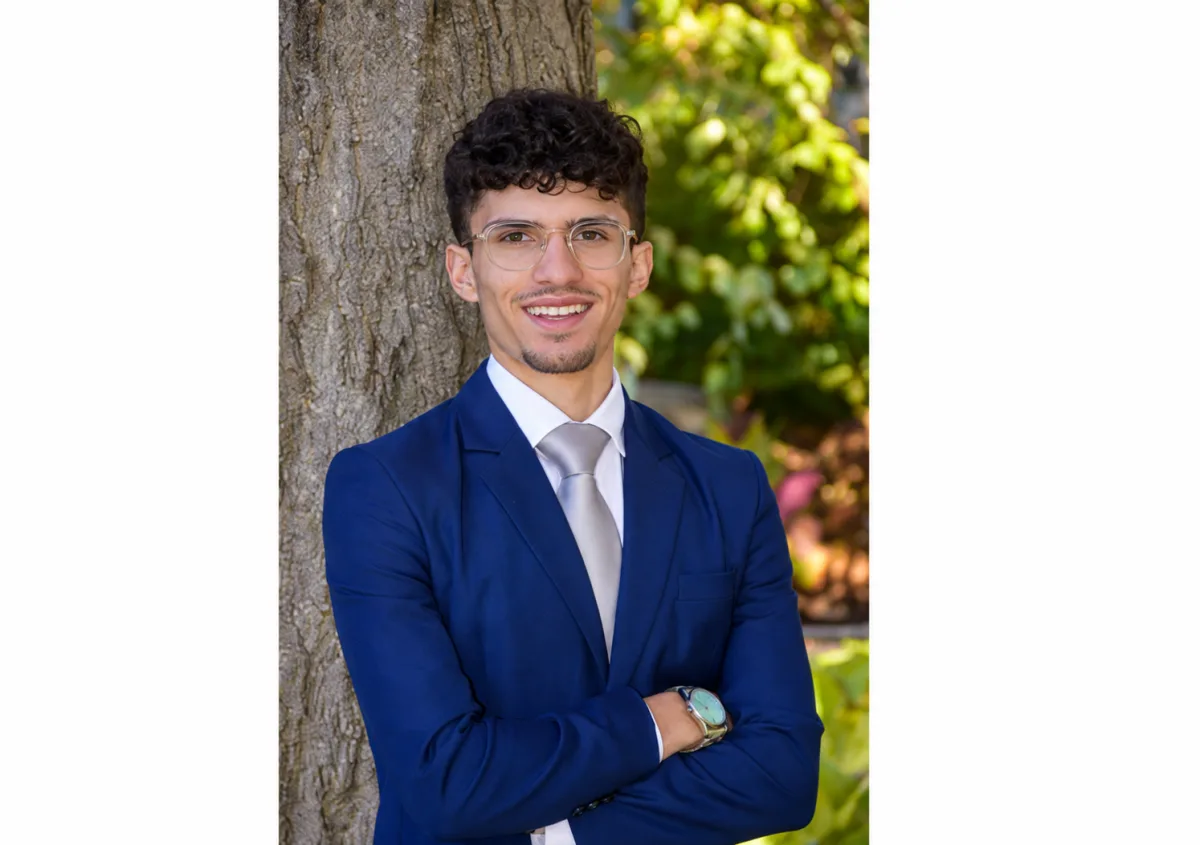
Yassin Elbahrawy
Herndon, VA
In 2024, 39,254 people died on American roads. The federal government's early estimate for 2025 is lower, about 36,640, and that drop is real progress. But it still means roughly a hundred people a day leave home in a car and never come back. As the scholarship prompt points out, driving kills more Americans every year than combat did in Iraq and Afghanistan combined. What strikes me most about that comparison is not the size of the number. It is how calmly we live with it. No one gets into a car feeling like they are heading into danger. That feeling of safety, I believe, is exactly the problem.
I learned to think about this in an unexpected place: designing race cars. When my family lived in the UAE, I competed in F1 in Schools, a program where students design, build, and race miniature Formula 1 cars. To do that well, I studied how real Formula 1 cars are engineered, and one fact changed the way I see driving. Formula 1 drivers travel at more than two hundred miles per hour, inches from other cars, and yet no Formula 1 driver has died from a racing crash since Jules Bianchi in 2015. In 2020, Romain Grosjean's car split in half and burst into flames in Bahrain, and he climbed out of the fire with burned hands. A protective structure called the halo, introduced just two years earlier over strong objections from many drivers, is widely credited with saving his life.
Formula 1 did not become safer by accident. It became safer because the sport treats every crash as information. Each accident is studied, and the lessons are turned into new rules, new equipment, and new training. Drivers are prepared, rested, and focused before they ever start the engine. On American roads, we have much of the same technology, including seatbelts, airbags, and crumple zones, but we do not share the same culture. We treat driving as routine, and routine is where attention goes to sleep.
If the fastest drivers in the world can be kept alive at two hundred miles per hour, then everyday drivers can do far better at forty. The theme of this year's scholarship, "In the Driver's Seat," is a reminder that most of that improvement depends on the person holding the wheel. From what I have learned, it comes down to four habits that racing teaches and driver education should teach just as seriously.
The first is to treat a license as the start of training, not the end of it. In most states, a teenager passes one test and is then trusted for the rest of their life. No athlete would accept that. I have trained in tennis for years, and I still work on the same fundamentals every week, because skills that are not practiced fade. Driver education should continue after the test, with refresher courses, defensive driving practice, and honest feedback, especially in the first years behind the wheel, when young drivers are most at risk.
The second is preparation. A Formula 1 driver never pulls onto the track with loose straps or unchecked mirrors. Everyday drivers can build the same habit in less than a minute: adjust the mirrors, buckle up, set the navigation, choose the music, and put the phone away before the car moves. Most distractions begin with something that could have been done while parked.
The third is respecting physics. As an EMT candidate, I have studied what emergency responders call the mechanism of injury, meaning the forces a body absorbs in a crash. One lesson surprised me: the energy of a moving car grows with the square of its speed. Doubling your speed does not double the force of a collision. It multiplies it by four. That is why "only ten over" is never as small as it sounds. Driver education should teach this directly, because a student who understands the math is much less likely to argue with it.
The fourth is honesty about limits. Racing teams track every detail of a driver's performance and do not let pride overrule the data. Ordinary drivers need the same honesty with themselves. Driving tired, driving after a long and emotional day, or driving after drinking all feel manageable in the moment. They are not. Admitting that you are not ready to drive is not a weakness. It is the most responsible decision a driver can make.
These habits matter to me because I am not the only person in my car. I often drive my younger brother, and I sometimes drive elderly neighbors to their appointments. Each of them trusts me completely, often without thinking about it at all. That trust is the real meaning of being in the driver's seat. It is not about control of a machine. It is about responsibility for the people inside it and the strangers around it.
I hope to become a physician, and I have spent enough time in hospitals to know that the families of crash victims rarely talk about statistics. They talk about one moment and one person. Formula 1 proved that a culture of safety can make even the most dangerous kind of driving survivable. If everyday drivers brought the same seriousness to an ordinary Tuesday commute, many of the people we lose on our roads each year would still be here.
Content Disclaimer:
Essays are contributed by users and represent their individual perspectives, not those of this website.