The Second Brake
2026 Driver Education Round 2
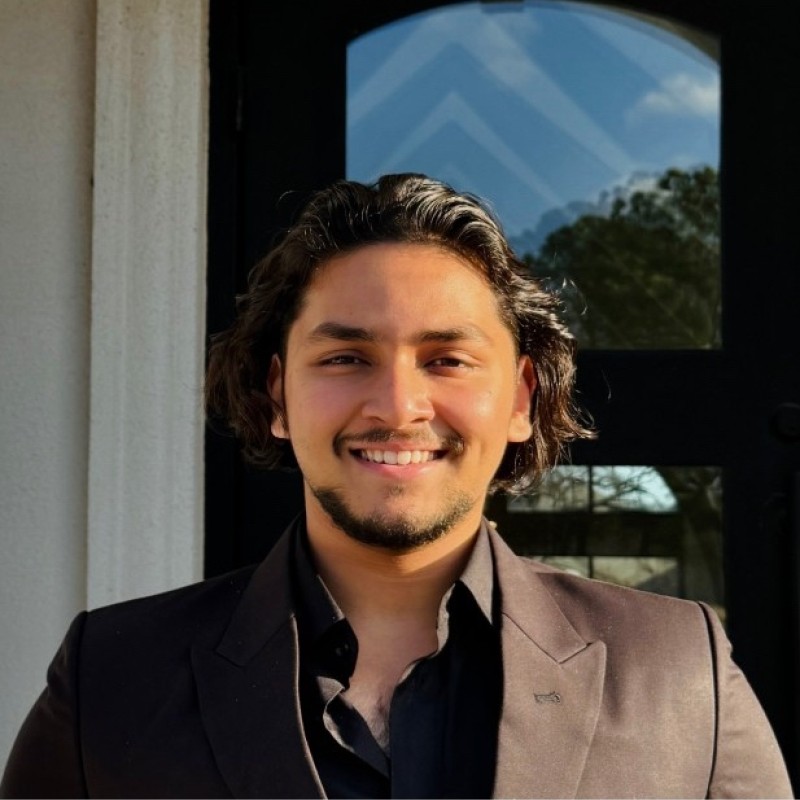
Shah Wasif Fabian
Cincinnati, OH
My first driving lesson took place in a car with a second brake pedal. It sat in the passenger footwell, and I did not know it existed until I drifted toward a parked delivery truck and the car slowed before my foot had moved.
"Mine," the instructor said, and nothing else.
I have thought about that pedal ever since, because it is the best answer I know to the question this scholarship asks. Driver education matters, but not because a classroom makes a safe driver. The National Highway Traffic Safety Administration advises that driver's education be used as one part of a graduated licensing system, and the road supports that advice. The Insurance Institute for Highway Safety reports that teenage crash deaths fell by half between 1996, when the first three-stage licensing program began, and 2024, from 5,819 to 2,899. The lesson was never the lecture. It was the second pedal: a person in the next seat, with the power to correct a new driver, for long enough that good habits harden.
The stakes are not abstract. NHTSA estimates that 39,345 people died in traffic crashes in 2024, a decline of 3.8 percent from 2023. A decline of that size is not a victory. Every number in it was someone's passenger, pedestrian, or parent.
I know what one of those numbers looks like from the back seat. At sixteen, I rode home from a football game with three friends, and the driver glanced down at a message. The car clipped a guardrail at about thirty miles an hour. Everyone was wearing a seat belt, which is why everyone walked away, and I walked away with a broken left wrist. The driver was a kind person and a good student. He cried in the parking lot, not from pain, but because he understood how little it had taken. Two weeks later he handed me his phone before we pulled out of the school lot. "Hold this," he said. "Read me anything that matters." Nothing mattered, and he arrived everywhere on time.
That moment is what I think driver education should aim for. A good course would spend its hours on the situations that fill crash reports for new drivers, such as night driving and a phone in the cup holder. It would also send students home with a log of supervised practice that a parent must sign. The log matters more than the certificate, because a log records the one thing a lecture cannot: how many hours a new driver spent with someone beside them.
What would reduce the deaths? The Centers for Disease Control and Prevention describes a Safe System approach, which starts from the fact that people make mistakes and asks that roads, vehicles, and speeds be built so that a mistake is not fatal. Lower speeds near schools and roads designed to turn a head-on crash into a glancing one are the road's version of the second pedal. So are phones that silence themselves while a car is moving, because a rule that depends on every sixteen-year-old's willpower will fail on some night.
Licensing can do more, too. Stricter limits on night driving and on passengers during the first year give a new driver a protected period in which to practice. They are inconvenient, and the inconvenience is the point.
Access is part of the problem. In my town, the high school dropped driver education years ago, and the private course costs about four hundred dollars. A family that cannot pay relies on whoever is willing to sit in the passenger seat, and that person may be tired or distracted, or may have been taught poorly. Safety that depends on a family's budget is not a system. It is luck.
The last question is the one I can answer myself. I buckle before I turn the key, because my instructor made that the first step of every lesson, and I keep my phone in the glove compartment. I also learned a sentence that works when a friend is driving badly: "Can you pull over for a minute? I feel sick." It has never failed, and it has never caused an argument.
At school, I started a program called Second Seat. On Saturday mornings in an empty parking lot, seniors with clean driving records sit beside freshmen who hold learner permits, with parental permission, for an hour at a time. Twenty-two pairs have taken part, and each pair keeps a one-page practice log that the freshman takes home for a parent to sign. None of the seniors is an instructor. Each is simply the person in the next seat who is willing to say "slow down" and to notice what the new driver does next.
These days I spend a lot of time in the passenger seat. My right foot rests flat on the floor, and I keep it still until I need it.
Content Disclaimer:
Essays are contributed by users and represent their individual perspectives, not those of this website.