Three Feet From Traffic
2026 Driver Education Round 1
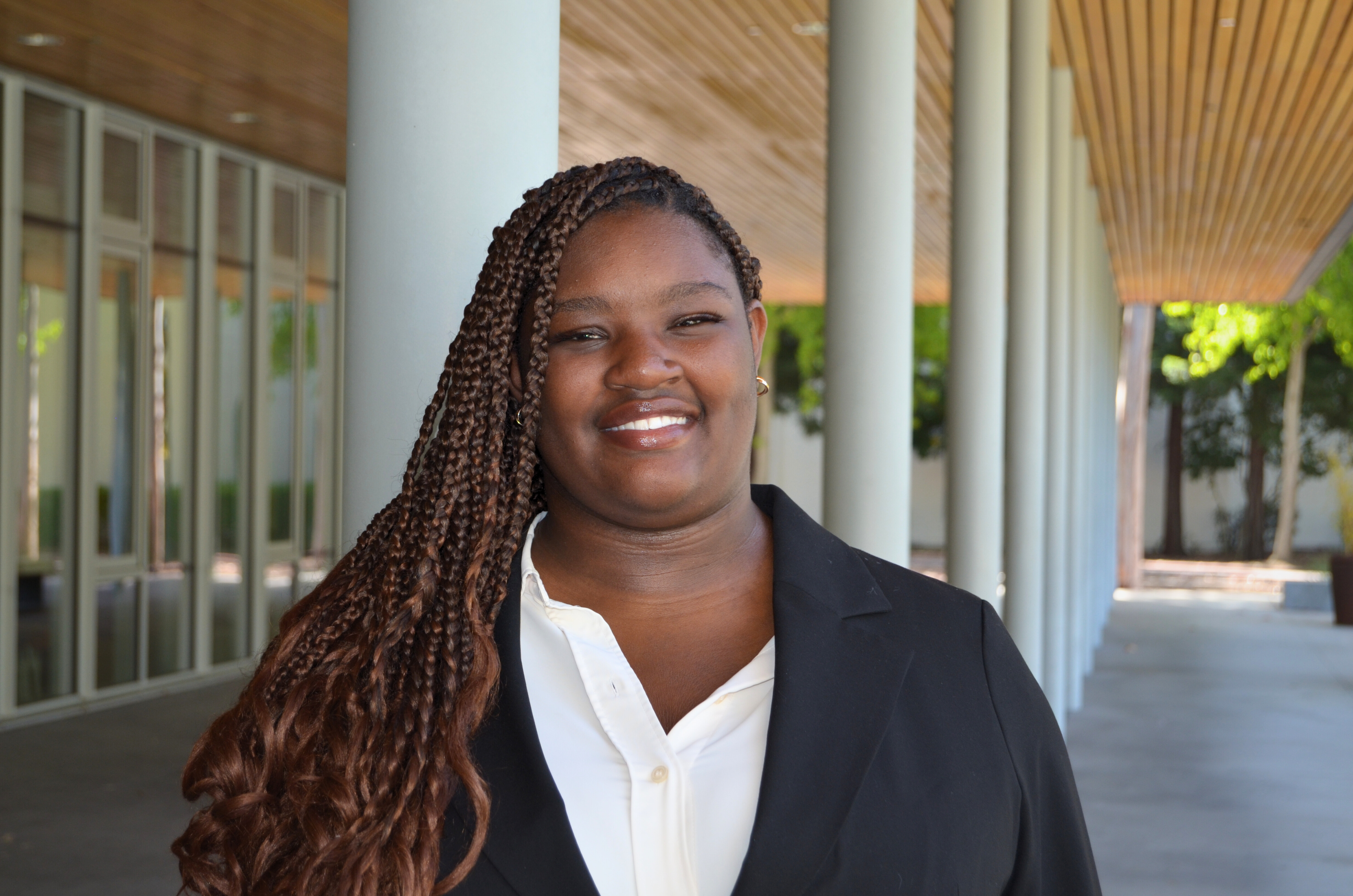
Alyssa C. Gage
Houston, Texas
Growing up, "work zone" was never just a phrase on an orange sign to me. It was shorthand for the kind of work my dad actually does. He's worked in engineering and planning for the Texas Department of Transportation for as long as I can remember, and dinner conversations in my house were rarely about ordinary things. They were about lane widths, sight distances, and decisions that don't look like much on a blueprint but decide whether someone gets home safely. I couldn't always follow the technical details he was describing, but I understood the important part: none of it was abstract. Every number he worked with was tied to a real person on a real highway, whether he ever met them or not.
For a long time, I assumed his job was mostly paperwork — plans, permits, meetings. What I didn't understand until I was older is that the numbers behind those plans are the difference between a work zone that's survivable and one that isn't. Sight lines. Lane widths. Whether a barrier sits three feet from the travel lane or five, and what that difference means when a car is moving at 70 miles an hour. Last year alone, Texas recorded more than 28,000 crashes in work zones, and 203 people lost their lives in them. Most of those people weren't road crews at all. They were ordinary drivers and passengers who didn't slow down, didn't put the phone away, or didn't leave enough room — the exact margin someone like my dad had already calculated for them.
That statistic used to surprise me. It doesn't anymore, because it captures something my dad has spent a career trying to solve without ever quite putting it this way: you can engineer a work zone as carefully as possible — model the traffic, calculate the buffers, place every sign exactly where it should be — and it still comes down to whether the person behind the wheel is paying attention. The real hazard isn't the signs, the barriers, or the math behind where they're placed. It's us.This year's essay prompt points out something similar on a much bigger scale — that the number of Americans killed on the road in a single year outnumbers the total American military deaths from years of war in Iraq and Afghanistan combined. When I first read that, it landed differently than it would have a few years ago, because I already knew the smaller, more local version of it: that an ordinary stretch of Texas highway can be more dangerous, in a given week, than most people ever stop to consider. Reading a number that large is one thing. Watching someone you know spend an entire career trying to engineer it down, one calculation at a time, is another.
It's part of why Texas has a "Move Over or Slow Down" law: if you pass a stopped TxDOT vehicle, tow truck, or emergency vehicle with its lights on, you're legally required to change lanes or drop your speed by 20 miles an hour. I used to think of that number as arbitrary, just another rule to memorize before a test. Now I understand that numbers like that don't come from nowhere — someone studies crash data, reaction times, and stopping distances until they land on a threshold that actually saves lives. It's the kind of work my dad does. Somewhere behind that law is data from people who didn't move over in time. Maybe one of them was someone's dad.
I've noticed my own driving change because of all this, especially now that I'm in college and doing most of my own driving instead of watching from the passenger seat. I leave more space in front of me than I used to. I don't touch my phone once I'm behind the wheel, not even at a red light, because I've heard enough about how fast "just a second" turns into a crash. And when I see cones start lining up ahead of me on the highway, I don't sigh about the delay. I slow down, because I know there's a real chance that someone's dad, or someone's daughter, is standing a few feet from my bumper, trying to get home at the end of a shift.
Drivers ed and safety campaigns can only do so much if the attitude underneath them doesn't change — the idea that a few seconds of inconvenience is nothing compared to what's actually at stake every time someone gets behind the wheel. Being a safe, educated driver isn't a box you check once and move past. It's a decision that has to be remade every single time you're on the road — the one variable no amount of engineering can fully plan for.
I didn't get to choose growing up with road safety as a dinner-table topic instead of, say, sports scores. But I'm grateful I did. It means I learned early that driving was never just about getting where I'm going. It's about honoring the calculations and decisions people like my dad make on my behalf, long before I ever get behind the wheel — and doing my part by actually paying attention once I do. That's not a bad thing to carry with me every time I start the car.
Content Disclaimer:
Essays are contributed by users and represent their individual perspectives, not those of this website.