I Don’t Have an Accident Story, and I Want to Keep It That Way
2026 Driver Education Round 1

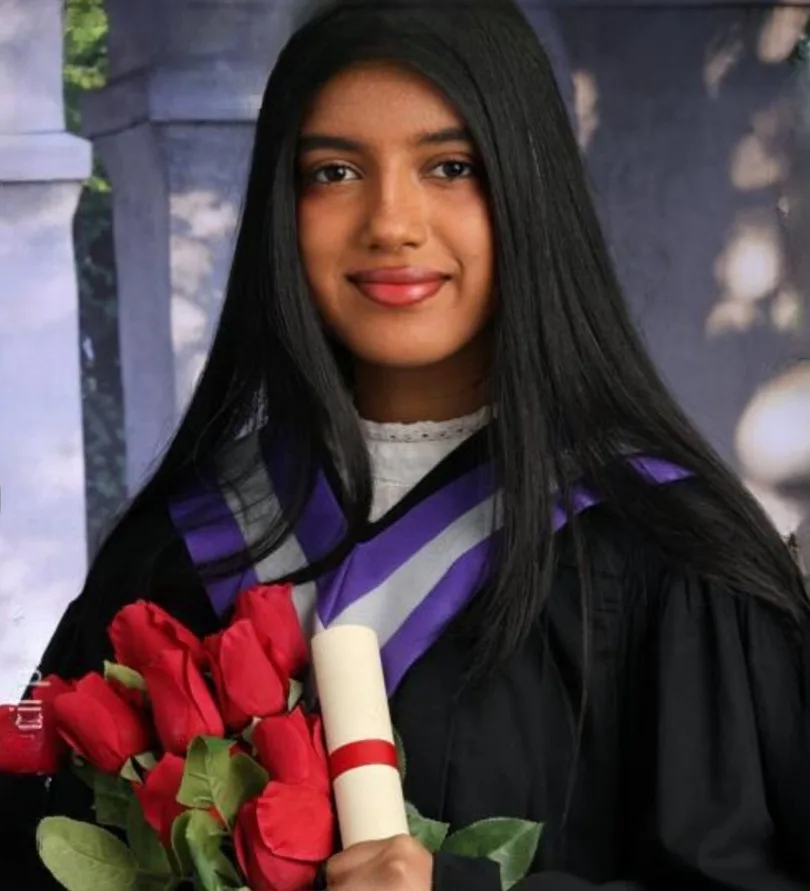
Kyla Romanoski
Mountain Top, PA
I do not have a dramatic accident story to tell. I have never woken up in a hospital after a crash, lost a friend because of a reckless driver, or watched my car being pulled from the side of a highway. I am grateful for that, and I want to keep it that way. To me, the purpose of driver education is not to give people a lesson after something terrible happens. It is to teach them how to prevent that story from ever being written.
Growing up in a family with a background in law enforcement has shaped the way I think about driving. My father worked as a deputy sheriff in Pennsylvania for over thirty years, and my grandfather retired as a Pennsylvania State Trooper. Every time I leave, I hear some version of the same message: wear your seatbelt, I love you, stay off your phone, pay attention, and be careful. I used to think it was simply what parents and grandparents were supposed to say. Now that I drive myself to work, the gym, and other activities, I understand that those repeated reminders are habits they want me to carry into the car even when they are not there.
A license gives me independence, but it also puts other people’s safety in my hands. The safest drive begins before I move the car. I adjust my mirrors, fasten my seat belt, make sure my passengers are buckled, enter my destination, and choose my music before leaving. These actions take less than a minute, but they remove reasons to look away from the road later. Safe driving often consists of small decisions that no one notices because nothing goes wrong. Keeping my phone out of my hands is one of the most important of those decisions. Pennsylvania’s Paul Miller’s Law makes it illegal to use a handheld mobile device while driving, including while temporarily stopped at a red light or in traffic. The law allows hands-free features, but its message is clear: a driver’s hands and attention belong on driving. I set my directions before I leave and wait until I am safely parked to answer a text or handle anything that requires my attention. A message may feel urgent, but it is not more important than the person crossing the street, the car stopping ahead of me, or the family expecting another driver to arrive home.
Being educated also means recognizing that distraction is not limited to a phone. Food, loud passengers, changing music, reaching into a bag, and even strong emotions can interfere with driving. A person can technically follow the law and still be unsafe. I have to be honest with myself about whether I am focused enough to drive. If I am exhausted, extremely upset, or feeling rushed, I need to slow down, take a moment, or find another option.
My family has also taught me not to confuse confidence with skill. As drivers gain experience, familiar roads can make them feel too comfortable. That is when someone may stop checking a blind spot, follow another vehicle too closely, or assume an intersection is clear. I want to remain confident enough to make decisions without becoming so confident that I stop paying attention. Driver education should continue long after the road test because no test can prepare a person for every weather condition, traffic pattern, or mistake another driver might make.
Living in Pennsylvania makes this especially important. A normal trip can include fog, heavy rain, snow, ice, or wet leaves. The speed limit may say one thing, but the conditions may require something slower. An educated driver leaves more space, brakes sooner, clears the entire vehicle of snow and ice, and accepts that arriving late is better than not arriving safely. Planning ahead is part of safe driving because rushing creates pressure to speed or take chances.
Defensive driving is another lesson I carry with me. I can follow every rule and still encounter someone who runs a red light, changes lanes without signaling, or looks down at a phone. I cannot control that driver, but I can leave enough space to react. I can check intersections before entering them, watch my mirrors, avoid staying in blind spots, and resist responding to aggressive behavior. Being right does not protect anyone from a collision. Sometimes the safest choice is to let another driver go and create distance.
I believe good driver education should teach judgment, not just memorization. Students need to understand why following distance changes with speed, why tired driving is dangerous, how weather affects stopping, what dashboard warnings mean, and what to do if a vehicle breaks down. They also need honest conversations about passengers, alcohol, drugs, and phones. Passing a written test proves that someone knows the correct answers. Safe driving requires choosing those answers when friends are distracting, the road is empty, or when there is no police officer nearby.
My family’s law enforcement background does not make me a perfect driver. I can still make mistakes, and that is exactly why I need to remain willing to learn. Their reminders have helped me understand that safe driving is not about avoiding a ticket. It is about avoiding the moment that cannot be taken back. Paul Miller’s Law may create a legal consequence for holding a phone, but the greater consequence could be harming someone because I believed one notification deserved my attention. I hope I never have a personal tragedy to use as proof that driver education matters. I would rather tell the less dramatic story: I buckled my seat belt, put my phone away, slowed down in bad weather, and gave another driver room to make a mistake. Then I arrived safely, and so did everyone around me. That story may not include flashing lights or a life-changing ending. That is what makes it a success. I do not have an accident story, and every educated choice I make behind the wheel is meant to keep it that way.
Growing up in a family with a background in law enforcement has shaped the way I think about driving. My father worked as a deputy sheriff in Pennsylvania for over thirty years, and my grandfather retired as a Pennsylvania State Trooper. Every time I leave, I hear some version of the same message: wear your seatbelt, I love you, stay off your phone, pay attention, and be careful. I used to think it was simply what parents and grandparents were supposed to say. Now that I drive myself to work, the gym, and other activities, I understand that those repeated reminders are habits they want me to carry into the car even when they are not there.
A license gives me independence, but it also puts other people’s safety in my hands. The safest drive begins before I move the car. I adjust my mirrors, fasten my seat belt, make sure my passengers are buckled, enter my destination, and choose my music before leaving. These actions take less than a minute, but they remove reasons to look away from the road later. Safe driving often consists of small decisions that no one notices because nothing goes wrong. Keeping my phone out of my hands is one of the most important of those decisions. Pennsylvania’s Paul Miller’s Law makes it illegal to use a handheld mobile device while driving, including while temporarily stopped at a red light or in traffic. The law allows hands-free features, but its message is clear: a driver’s hands and attention belong on driving. I set my directions before I leave and wait until I am safely parked to answer a text or handle anything that requires my attention. A message may feel urgent, but it is not more important than the person crossing the street, the car stopping ahead of me, or the family expecting another driver to arrive home.
Being educated also means recognizing that distraction is not limited to a phone. Food, loud passengers, changing music, reaching into a bag, and even strong emotions can interfere with driving. A person can technically follow the law and still be unsafe. I have to be honest with myself about whether I am focused enough to drive. If I am exhausted, extremely upset, or feeling rushed, I need to slow down, take a moment, or find another option.
My family has also taught me not to confuse confidence with skill. As drivers gain experience, familiar roads can make them feel too comfortable. That is when someone may stop checking a blind spot, follow another vehicle too closely, or assume an intersection is clear. I want to remain confident enough to make decisions without becoming so confident that I stop paying attention. Driver education should continue long after the road test because no test can prepare a person for every weather condition, traffic pattern, or mistake another driver might make.
Living in Pennsylvania makes this especially important. A normal trip can include fog, heavy rain, snow, ice, or wet leaves. The speed limit may say one thing, but the conditions may require something slower. An educated driver leaves more space, brakes sooner, clears the entire vehicle of snow and ice, and accepts that arriving late is better than not arriving safely. Planning ahead is part of safe driving because rushing creates pressure to speed or take chances.
Defensive driving is another lesson I carry with me. I can follow every rule and still encounter someone who runs a red light, changes lanes without signaling, or looks down at a phone. I cannot control that driver, but I can leave enough space to react. I can check intersections before entering them, watch my mirrors, avoid staying in blind spots, and resist responding to aggressive behavior. Being right does not protect anyone from a collision. Sometimes the safest choice is to let another driver go and create distance.
I believe good driver education should teach judgment, not just memorization. Students need to understand why following distance changes with speed, why tired driving is dangerous, how weather affects stopping, what dashboard warnings mean, and what to do if a vehicle breaks down. They also need honest conversations about passengers, alcohol, drugs, and phones. Passing a written test proves that someone knows the correct answers. Safe driving requires choosing those answers when friends are distracting, the road is empty, or when there is no police officer nearby.
My family’s law enforcement background does not make me a perfect driver. I can still make mistakes, and that is exactly why I need to remain willing to learn. Their reminders have helped me understand that safe driving is not about avoiding a ticket. It is about avoiding the moment that cannot be taken back. Paul Miller’s Law may create a legal consequence for holding a phone, but the greater consequence could be harming someone because I believed one notification deserved my attention. I hope I never have a personal tragedy to use as proof that driver education matters. I would rather tell the less dramatic story: I buckled my seat belt, put my phone away, slowed down in bad weather, and gave another driver room to make a mistake. Then I arrived safely, and so did everyone around me. That story may not include flashing lights or a life-changing ending. That is what makes it a success. I do not have an accident story, and every educated choice I make behind the wheel is meant to keep it that way.
Content Disclaimer:
Essays are contributed by users and represent their individual perspectives, not those of this website.