In The Driver's Seat
2026 Driver Education Round 2
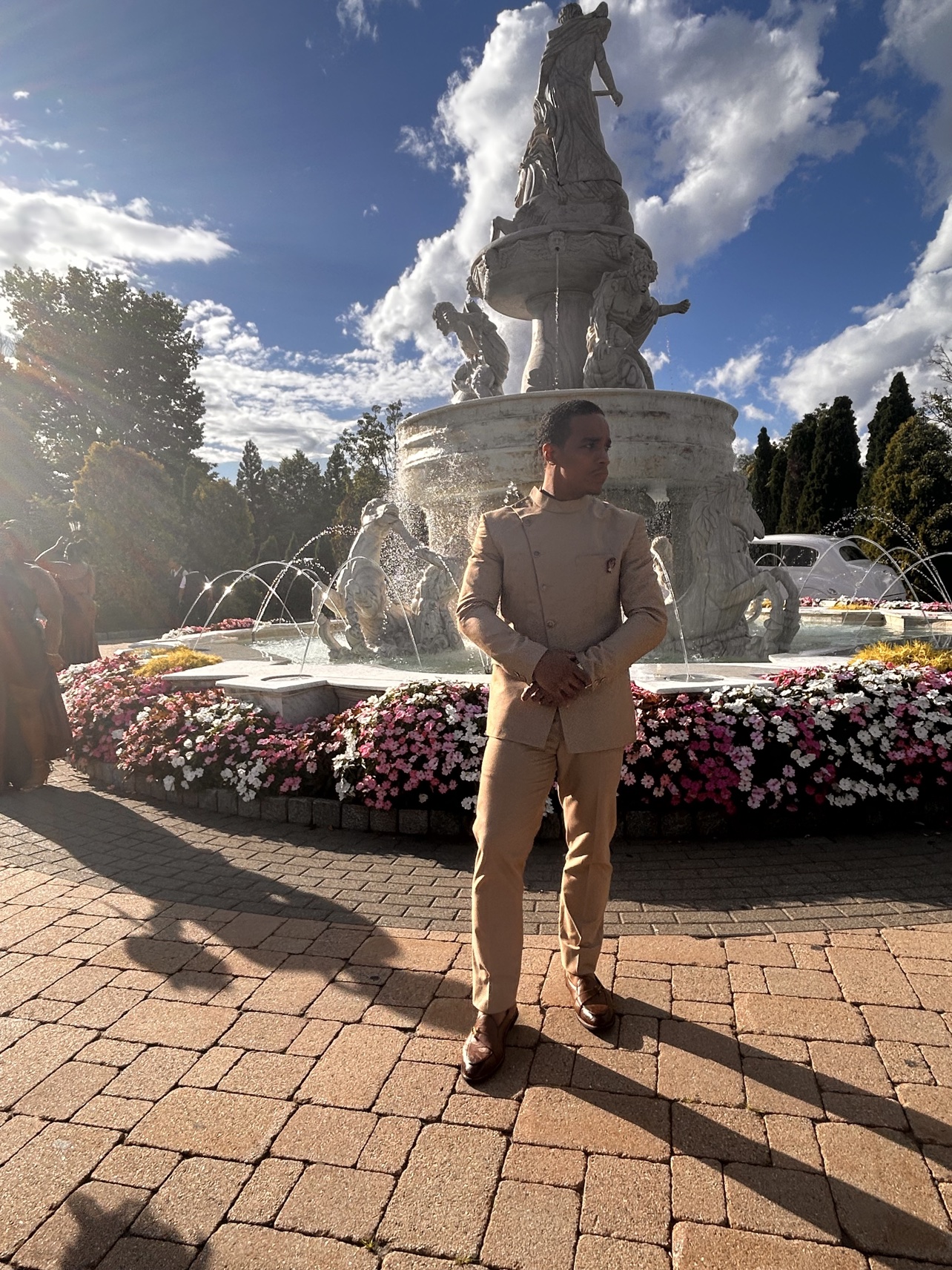
Savion V. Kennedy
Henrico, Virginia
My name is Savion V. Kennedy. I'm twenty-two, a senior at Loyola University Maryland studying data science and information systems and data analytics, and I have my driver's license. In the summer of 2025, I worked as a Domino's delivery driver in Henrico, Virginia. Three months of driving for a living — in rain, in rush hour, in neighborhoods I'd never seen before a GPS told me to turn — taught me more about road safety than anything I'd read. I don't own a car today, and most days I'm a passenger in a friend's car or getting a ride. But every time I buckle a seatbelt, whether I'm driving or riding, I think about what those delivery shifts showed me: crashes are not random. They are patterns. And patterns can be broken.
Why driver education matters
Driving is the most dangerous thing most of us do every day, and it's the one we take most casually. We study for tests, practice for sports, rehearse for interviews — then climb into a two-ton machine at sixty miles an hour with almost no thought at all. That's what driver education is for. It exists because instinct is not enough and because most new drivers learn from whoever happens to be in the passenger seat, which usually means inheriting someone else's bad habits along with the good ones.
As a data science major, I think about this in terms of data. Traffic deaths in this country aren't scattered noise; they cluster around the same causes year after year — speeding, impairment, distraction, no seatbelt. Driver education is the intervention aimed at the human side of that dataset. A classroom lesson on following distance seems boring until you're the one who needs those three seconds. Behind-the-wheel practice seems tedious until your hands know what to do before your brain catches up. Education turns rules into reflexes, and reflexes are what save you in the two seconds when thinking is too slow.
There's a second, quieter reason it matters. Good driver education teaches judgment, not just rules. Anybody can memorize what a yield sign means. Judgment is knowing that the intersection you're approaching has a blind corner, that the driver ahead is weaving, that you're too tired to be sharp and should pull over. I started developing that judgment on delivery shifts, and I wish I'd had more of it formally taught before I ever took an order across town in a thunderstorm.
What would actually reduce driving deaths
I'll start with the obvious one because it's still the biggest one: the phone. Put it on Do Not Disturb before the car moves, or put it in the glovebox. Every driver I watched drift across a lane line or sit through a green light had the same glow on their face. We treat texting and driving like a personal choice, but it's not — your choice becomes everyone else's emergency. Phones have built-in driving modes now. Use them. Normalize it the way we normalized seatbelts: not as a suggestion, but as what responsible people just do.
Second, kill the idea that speeding is a victimless shortcut. As a delivery driver, I felt the pressure constantly — the order is getting cold, the next one is already assigned, the app is counting your minutes. I made a rule for myself early: the pizza can be late. A late delivery costs a tip; a crash costs everything. Companies should never reward or implicitly require faster driving, and customers should know that the person bringing their food is safer when they're not racing their own timer.
Third, the basics that aren't basic enough: seatbelts for every person, every ride, no exceptions. Full stops. Following distance you can actually measure. Never driving impaired, and never driving exhausted — after long days managing the basketball team, I know exactly how heavy my eyes get, and tired driving scares me as much as drunk driving does. And passengers have a role too: speak up. I'm often the passenger now, since I don't have a car, and I ask my friends to put the phone down. Awkward for five seconds beats a funeral.
Finally, the longer-term fixes: better-lit roads, protected left turns, and graduated licensing that gives new drivers real supervised experience instead of a quick test and a prayer. Education plus engineering plus enforcement — all three, not one.
What I've seen from the driver's seat
I don't have a dramatic crash story, and I'm not going to invent one. What I have is three months of watching how close crashes come, every single day, without ever quite happening. I watched drivers run red lights at intersections I was crossing with a warming bag in my passenger seat. I watched people merge across two lanes without looking because their exit was suddenly there. I watched a driver at a green light sit motionless, head down, while the light cycled — phone in hand, traffic stacking up behind him, completely unaware.
The pattern that stuck with me most wasn't any single moment. It was how ordinary it all was. Nobody I watched was trying to be reckless. They were just distracted, or hurried, or tired — the same three things that show up in every fatality report. That's what made it scary: the gap between a normal Tuesday and a tragedy was about two seconds of inattention, and I saw that gap open dozens of times a week.
Being a delivery driver put me in a strange position. I was a professional on the road surrounded by amateurs — including, honestly, myself. I was twenty-one, still a fairly new driver, and suddenly I was driving more miles in a week than most people drive in a month. The responsibility of it changed me. When your job is the road, you stop seeing other cars as obstacles and start seeing them as people making the same small mistakes you catch yourself making. That humility is, I think, the single most protective thing a driver can have.
How I drive — and ride — safer
My rules are simple, and I keep them whether I'm driving or riding shotgun. Phone on Do Not Disturb before the car moves — no exceptions, no "just this one text." Seatbelt on before the car moves, and I don't stay quiet if someone else skips theirs. Full stops at stop signs, not rolling ones. A real following distance, counted in seconds, not car lengths I can't judge anyway. If I'm tired, I don't drive — I hand it off or I wait. After late nights with the team, that's a rule I've actually had to use, and it's never once been the wrong call.
I plan my route before I pull out so I'm not making decisions at sixty miles an hour. I keep the car I borrow maintained — tires, lights, mirrors — because equipment failures don't care about your intentions. And I never, ever drive impaired. If the plan involves drinking, the plan involves a ride, decided before the first drink, not after.
The biggest one, though, is a mindset I took from delivery driving: assume everyone around you is about to make a mistake, including you. Drive like the other car might run the light. Check the blind spot even when you're sure. Leave early so you're never driving angry at the clock. Defensive driving sounds like a slogan from a pamphlet, but on the road it's just respect — for physics, for strangers, and for the people who expect you home.
I got into data science because I like finding patterns. The pattern on our roads is clear: almost every crash was preventable, and almost every prevention starts with a decision a driver makes before anything goes wrong. Driver education plants those decisions early. The rest is on us, every time we turn the key.
Why driver education matters
Driving is the most dangerous thing most of us do every day, and it's the one we take most casually. We study for tests, practice for sports, rehearse for interviews — then climb into a two-ton machine at sixty miles an hour with almost no thought at all. That's what driver education is for. It exists because instinct is not enough and because most new drivers learn from whoever happens to be in the passenger seat, which usually means inheriting someone else's bad habits along with the good ones.
As a data science major, I think about this in terms of data. Traffic deaths in this country aren't scattered noise; they cluster around the same causes year after year — speeding, impairment, distraction, no seatbelt. Driver education is the intervention aimed at the human side of that dataset. A classroom lesson on following distance seems boring until you're the one who needs those three seconds. Behind-the-wheel practice seems tedious until your hands know what to do before your brain catches up. Education turns rules into reflexes, and reflexes are what save you in the two seconds when thinking is too slow.
There's a second, quieter reason it matters. Good driver education teaches judgment, not just rules. Anybody can memorize what a yield sign means. Judgment is knowing that the intersection you're approaching has a blind corner, that the driver ahead is weaving, that you're too tired to be sharp and should pull over. I started developing that judgment on delivery shifts, and I wish I'd had more of it formally taught before I ever took an order across town in a thunderstorm.
What would actually reduce driving deaths
I'll start with the obvious one because it's still the biggest one: the phone. Put it on Do Not Disturb before the car moves, or put it in the glovebox. Every driver I watched drift across a lane line or sit through a green light had the same glow on their face. We treat texting and driving like a personal choice, but it's not — your choice becomes everyone else's emergency. Phones have built-in driving modes now. Use them. Normalize it the way we normalized seatbelts: not as a suggestion, but as what responsible people just do.
Second, kill the idea that speeding is a victimless shortcut. As a delivery driver, I felt the pressure constantly — the order is getting cold, the next one is already assigned, the app is counting your minutes. I made a rule for myself early: the pizza can be late. A late delivery costs a tip; a crash costs everything. Companies should never reward or implicitly require faster driving, and customers should know that the person bringing their food is safer when they're not racing their own timer.
Third, the basics that aren't basic enough: seatbelts for every person, every ride, no exceptions. Full stops. Following distance you can actually measure. Never driving impaired, and never driving exhausted — after long days managing the basketball team, I know exactly how heavy my eyes get, and tired driving scares me as much as drunk driving does. And passengers have a role too: speak up. I'm often the passenger now, since I don't have a car, and I ask my friends to put the phone down. Awkward for five seconds beats a funeral.
Finally, the longer-term fixes: better-lit roads, protected left turns, and graduated licensing that gives new drivers real supervised experience instead of a quick test and a prayer. Education plus engineering plus enforcement — all three, not one.
What I've seen from the driver's seat
I don't have a dramatic crash story, and I'm not going to invent one. What I have is three months of watching how close crashes come, every single day, without ever quite happening. I watched drivers run red lights at intersections I was crossing with a warming bag in my passenger seat. I watched people merge across two lanes without looking because their exit was suddenly there. I watched a driver at a green light sit motionless, head down, while the light cycled — phone in hand, traffic stacking up behind him, completely unaware.
The pattern that stuck with me most wasn't any single moment. It was how ordinary it all was. Nobody I watched was trying to be reckless. They were just distracted, or hurried, or tired — the same three things that show up in every fatality report. That's what made it scary: the gap between a normal Tuesday and a tragedy was about two seconds of inattention, and I saw that gap open dozens of times a week.
Being a delivery driver put me in a strange position. I was a professional on the road surrounded by amateurs — including, honestly, myself. I was twenty-one, still a fairly new driver, and suddenly I was driving more miles in a week than most people drive in a month. The responsibility of it changed me. When your job is the road, you stop seeing other cars as obstacles and start seeing them as people making the same small mistakes you catch yourself making. That humility is, I think, the single most protective thing a driver can have.
How I drive — and ride — safer
My rules are simple, and I keep them whether I'm driving or riding shotgun. Phone on Do Not Disturb before the car moves — no exceptions, no "just this one text." Seatbelt on before the car moves, and I don't stay quiet if someone else skips theirs. Full stops at stop signs, not rolling ones. A real following distance, counted in seconds, not car lengths I can't judge anyway. If I'm tired, I don't drive — I hand it off or I wait. After late nights with the team, that's a rule I've actually had to use, and it's never once been the wrong call.
I plan my route before I pull out so I'm not making decisions at sixty miles an hour. I keep the car I borrow maintained — tires, lights, mirrors — because equipment failures don't care about your intentions. And I never, ever drive impaired. If the plan involves drinking, the plan involves a ride, decided before the first drink, not after.
The biggest one, though, is a mindset I took from delivery driving: assume everyone around you is about to make a mistake, including you. Drive like the other car might run the light. Check the blind spot even when you're sure. Leave early so you're never driving angry at the clock. Defensive driving sounds like a slogan from a pamphlet, but on the road it's just respect — for physics, for strangers, and for the people who expect you home.
I got into data science because I like finding patterns. The pattern on our roads is clear: almost every crash was preventable, and almost every prevention starts with a decision a driver makes before anything goes wrong. Driver education plants those decisions early. The rest is on us, every time we turn the key.
Content Disclaimer:
Essays are contributed by users and represent their individual perspectives, not those of this website.