One Decision with a Lifetime of Consequences...
2026 Driver Education Round 2
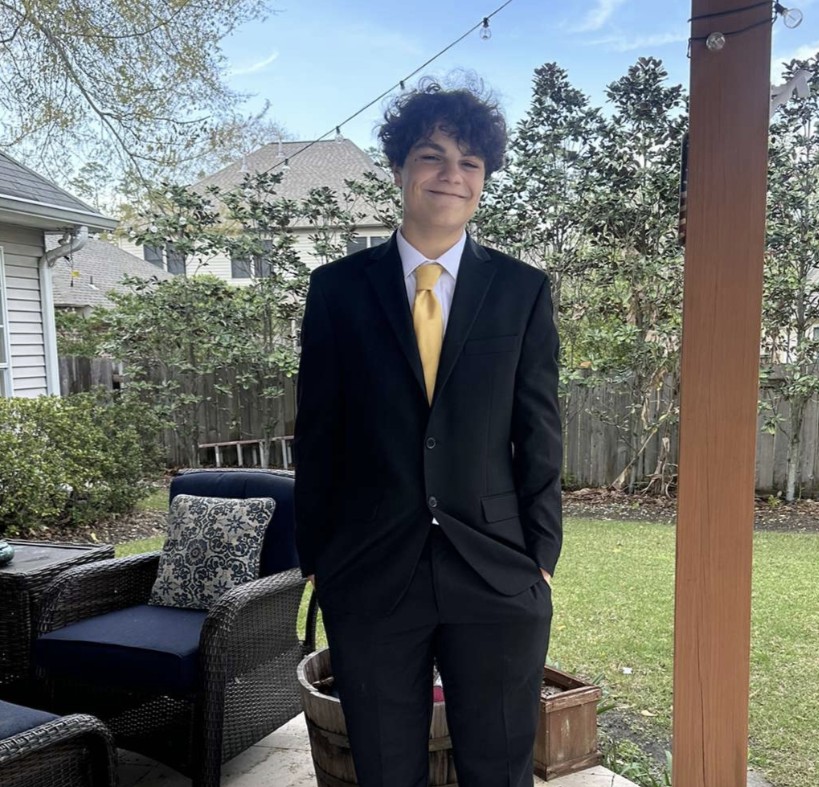
Timothy St Angelo
Slidell, Louisiana
On a quiet, normal Sunday afternoon when I was in the fourth grade, my life took a turn that I could never have predicted. It was supposed to be a fun day with my family, a quick drive to the movie theater to meet my grandma, but instead, it became a life-altering event. My mother, my little brother, and I were all in our Nissan Pathfinder, waiting to yield at the roundabout in Lacombe. Out of nowhere, a drunk driver slammed into the back of our vehicle at over 60 miles per hour. In an instant, our vehicle was thrown forward into the middle of the roundabout, airbags deployed, and dust filled the air. I still remember the smell of smoke, the fear in my mother's voice, and the jolt that ran through my body. Although I survived the accident, I was left with lingering lower back pain that still affects me to this day.
Looking back on this experience, I realize how fortunate my family was to survive. My younger brother has nonverbal autism and relies on my family for many everyday activities. He communicates primarily through pointing and cannot always express when something is wrong or explain what he needs. Knowing how vulnerable he was during that accident makes me think about how easily another driver's irresponsible decision could have taken away someone I love. We were simply going to see a movie, yet someone else's decision to drive under the influence changed our lives forever.
I believe driver education is one of the most important ways to reduce the number of deaths caused by motor vehicle accidents. Learning how to operate a vehicle is only one part of becoming a responsible driver. Drivers must also understand the consequences of their decisions and recognize that their actions affect everyone sharing the road. Education about impaired driving, distracted driving, speeding, and other dangerous behaviors can help people recognize risks before they make a mistake that cannot be undone. If the driver who hit my family had made the responsible decision not to drive while intoxicated, our accident could have been prevented entirely.
Living with the pain from this accident has shaped my life in more ways than I ever could have expected. At first, I thought this pain would ease as time went on. This was not the case. Weeks turned into months, and then into years. My back began hurting when I sat for too long, getting worse when I participated in activities with my classmates. All of my friends played football or basketball and played gym class games without a thought. I was forced to step back from the sports I wanted to try, knowing that one wrong move could worsen my pain. This was frustrating, especially to me at such a young age, because I could not do what everyone else was doing.
This experience taught me that the consequences of irresponsible driving do not always end when the accident is over. Even when everyone survives, victims may experience physical pain, emotional challenges, and financial strain for years afterward. Unfortunately, other families are not as fortunate as mine. Some lose parents, children, siblings, or friends because of decisions that could have been avoided.
Although I experienced the consequences of someone else's dangerous driving, I also recognize that I have made irresponsible decisions behind the wheel myself. Distracted driving is very common among young people, including myself, and is often underestimated until the damage is done. Families' lives are forever changed due to simple actions such as checking a text or playing a mobile game. We know that it is dangerous, but sometimes the habit is so normal to us that it becomes second nature.
For me, the biggest source of distraction has been my phone. Specifically, I easily get distracted by snapping people back on Snapchat and texting friends to tell them what I'm up to. Whenever I get into my car, especially when I am going somewhere alone, I have been tempted to get on my phone at stoplights and even in slow traffic just to reply to someone's message. It does not seem like a big deal in the moment, but deep down, I know that what I am doing is dangerous and I should avoid this behavior at all times.
I also realize my phone is not only a distraction because of the messages on it. It is all about the mindset. When I pick up my phone or am even thinking about what I should say back, I am not focused on the road. Even when my hands are on the wheel and I am technically looking forward, I can still be mentally distracted.
Recognizing these habits is an important step toward becoming a safer driver. Before I even leave my house or the parking lot, I can send a quick message to anyone I have been texting that day, letting them know that I am about to drive and will not be able to respond. That way, the conversation ends before I even start the car, and I will not feel pressured to reply once I am on the road. I can also put my phone in Do Not Disturb mode while driving and place it somewhere out of sight. Turning off notifications and putting my phone away should help reduce the urge to check it.
Beyond distracted driving, there are many steps that can be taken to reduce traffic-related deaths. Drivers should always wear seat belts, obey speed limits, maintain safe following distances, and never operate a vehicle while impaired. Schools should continue teaching young drivers about the consequences of reckless behavior, including through real-life stories from people who have experienced serious accidents. I believe hearing directly from someone whose life has been changed by an irresponsible driver can make a stronger impression than simply memorizing traffic laws.
I also believe we have a responsibility to encourage safer driving habits among our friends and families. I think a lot of us engage in distracted driving because it seems normal. Most people do it, so others assume that it is safe, but that is very incorrect. Being willing to speak up when a friend is driving irresponsibly, offering someone a safe ride instead of allowing them to drive impaired, and setting a positive example can all help prevent unnecessary tragedies.
As a nursing student at Southeastern Louisiana University, I hope to dedicate my future to helping people who are experiencing pain, illness, and difficult circumstances. I chose this path because I know firsthand how it feels to live with pain and limitations. I want to be someone who not only helps patients recover physically, but also mentally. My experiences have taught me empathy, which is just as important as skill and knowledge in healthcare. However, I also recognize that preventing injuries before they happen is just as important as caring for someone afterward.
Even though I will always carry the physical reminder of that day at the roundabout, I now carry it as a symbol of what I have overcome rather than a limitation. That accident taught me how quickly an ordinary day can become a life-changing experience. It also reminds me that every time I get behind the wheel, I have a responsibility to protect not only myself but also my passengers and everyone else on the road.
In the end, no message, snap, or moment of carelessness is worth risking a life. I cannot change what happened to my family, but I can use that experience to make better decisions and encourage others to do the same. By holding myself accountable, striving to make a change, and speaking up about dangerous driving habits, I believe I can help make the roads safer. Driver education is not simply about learning how to drive. It is about understanding that every decision behind the wheel has the potential to change someone's life forever.
Content Disclaimer:
Essays are contributed by users and represent their individual perspectives, not those of this website.