Room to Spare
2026 Driver Education Round 1
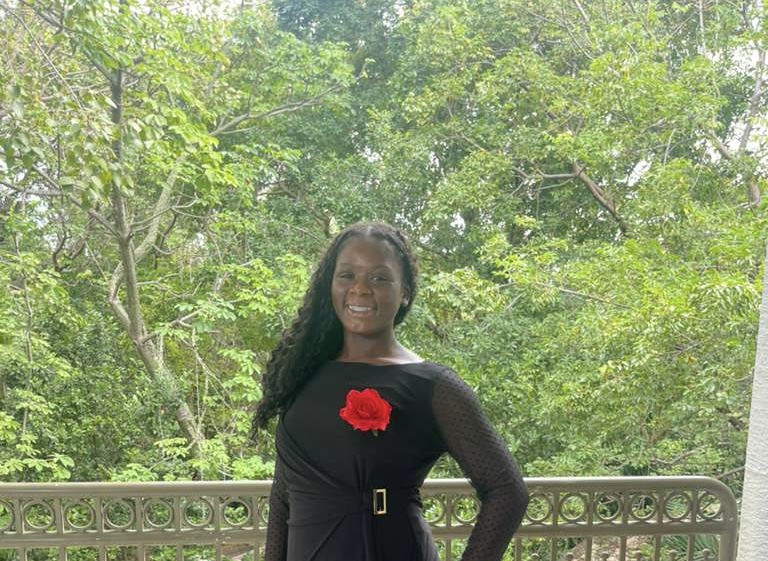
Ariona Eugene
Lauderhill, Florida
Every driver is given a small cushion of space and time — the gap between the car ahead and your own, the second or two before a light changes, the distance it takes to stop. Most days, you never notice it's there. It's only in the moment everything goes wrong that you find out whether you left yourself enough of it. A car can represent freedom, independence, and opportunity — it carries us to school, to work, to the people we love. But the instant the engine turns over, that freedom comes bundled with a responsibility most of us don't think about nearly enough. A vehicle is also one of the most dangerous machines an ordinary person operates every single day. Every year, thousands of families lose someone in a crash that never had to happen.
Behind every one of those statistics is a real person. A parent who never came home. A friend whose future ended early. A child whose whole life bent in a different direction because someone else ran out of room to react.
That is why driver education matters so much. It doesn't just teach people how to steer a car — it teaches them how to protect the margin that keeps everyone around them safe.
Driver education is one of the most effective tools we have for reducing crash deaths, because it teaches people to protect their margin before they're ever tested by a dangerous moment — the space, the time, the attention that stands between a close call and a tragedy. Learning to park, merge, or parallel-park is only the surface. A real driver education program goes deeper — defensive driving, hazard awareness, sound judgment under pressure, and the discipline to stay focused when nothing seems to be happening. It drills in a simple but easy-to-forget truth: one small decision that eats into your margin — a text, a few extra miles per hour, one more mile driven while exhausted — can leave you with nothing left when you need it most.
Perhaps the single most important lesson driver education teaches is that driving was never just about protecting yourself. It's about everyone sharing that stretch of asphalt with you: the family in the minivan beside you, the child chasing a ball near the curb, the cyclist hugging the shoulder, the paramedic trying to get through. Safe driving asks for patience, respect, and a working understanding that every choice behind the wheel has a consequence attached to it, whether or not you ever see it land. The best drivers on the road aren't the fastest or the most self-assured — they're the ones who choose, trip after trip, to be responsible.
Cutting down driving deaths takes both personal discipline and collective effort, and almost every dangerous habit comes down to the same thing: spending margin you didn't know you'd need. Distraction is the clearest example. Phones have wound themselves into nearly every part of daily life, but no text, no notification, no call is worth the seconds of attention it borrows from the road. Looking away for even a moment can quietly spend the exact gap that would have kept a normal Tuesday from becoming something else. Silencing the phone, switching on "Do Not Disturb While Driving," or just tossing it in the back seat protects that margin before it's ever at risk.
Speed works the same way. Plenty of people push past the limit because a few saved minutes feels worth the gamble. It isn't — speed shrinks the very reaction time and stopping distance that margin depends on, and multiplies the force of every collision when that margin runs out. Impairment does it too: driving under the influence of alcohol or drugs remains one of the top causes of fatal crashes, because it slows down the exact reflexes you're counting on to use whatever room you have left. Calling a rideshare, texting a friend, or handing someone else the keys might feel inconvenient in the moment, but that small inconvenience is nothing next to what it protects. Fatigue deserves the same respect — a driver running on no sleep has already spent reaction time they don't know they're missing, even though nothing about the situation looks dangerous.
None of this is complicated, and that's exactly the point — the habits that save lives are almost embarrassingly small. A seat belt clicked on out of habit rather than reminder. A few extra car-lengths left open in traffic. A turn signal used even when no one seems to be around to see it. A little more caution in rain or fog, when the margin for error shrinks and nobody adjusts for it. Small as they are, they're the difference that shows up in the moment it matters most. Communities carry their share of the work too — better lighting, clearer signage, consistent enforcement — but no streetlight or sign has ever grabbed a wheel. That part is still ours.
I remember being scared the very first time I got behind the wheel to learn how to drive — nervous in a way that's hard to explain, because you never really know if any given drive could end up being your last one. I didn't have a word for it then, but looking back, I think what scared me was not knowing how much margin I actually had. That fear didn't go away once I had my license. If anything, one drive not long after proved it was right to be there.
We were coming home from church, on the highway, and out of nowhere everyone in front of us started braking. Hard. My foot went to the brake before I even fully understood why — and I stopped in time, close enough that my heart was pounding, but with just enough room left between me and the car ahead. The only reason I didn't hit anything was distance. I had been keeping enough space between us without even thinking about it, and that space was the only thing standing between an ordinary Sunday and something much worse. I sat there afterward still shaking a little, replaying how fast it had happened and how little warning there'd been. That moment taught me something no textbook fully prepared me for: you can never let your guard down behind the wheel, because you never know when everything around you is about to change in a second. It also taught me that rushing is never worth it — the second you start pushing to save time is the second you start losing the room you need to react. Distance, patience, attention — that's what got me home safe that day, and it's stayed with me every time I drive since.
Growing up as a driver, I want to be the kind of person other people relax around without noticing they've done it — the friend a passenger doesn't have to watch the road for, because I'm already watching it for them. That's not abstract to me anymore. It means the belt clicks before the car moves, not after. It means the phone lives in the glovebox on longer drives, not just in theory. It means admitting when I don't have the margin left to drive safely and finding another way home instead of betting on reflexes I already know are running slow.
It also means saying something out loud when it would be easier not to. If a friend's thumb drifts toward their phone at a red light, I'd rather be the annoying one who says "put it down" than the quiet one who says nothing later. If someone's had a few drinks and reaches for their keys anyway, that's worth an awkward five minutes of arguing. And if I'm the one in the passenger seat and something feels off, staying silent has never once made a road safer — it's just made the silence louder afterward.
In the end, safer roads start with individual decisions, made one trip at a time — decisions that either protect that small cushion of space and time or quietly spend it before it's needed. Laws, technology, and enforcement all help, but no safety feature ever built is more powerful than a driver who simply shows up, again and again, ready to leave themselves room.
The true measure of a good driver was never how fast they get somewhere, or how many years they've held a license. It's whether the people around them feel safe because of the margin they never used up — mile after mile, without anyone having to ask. Driver education hands us the knowledge to protect that margin. What we do with it is up to us.
I still think about that stretch of highway coming home from church, and about how the whole difference between that afternoon and a very different one came down to something as ordinary as the distance I'd left between my car and the next. Not a fast reflex, not luck — just space I'd already given myself before I ever needed it. That's the part driver's ed really teaches: not how to operate a car, but how to leave yourself room, every single trip, before you know you'll need it.
Every safe decision protects the same small margin — the one you never notice until the day it's the only thing standing between you and something you can't take back. The goal was never just to arrive. It's to make sure everyone else arrives too, with room left to spare.
Content Disclaimer:
Essays are contributed by users and represent their individual perspectives, not those of this website.