A Place of Rest
2025 Driver Education Round 2

Bailey Kays Boone
Mayslick, Kentucky
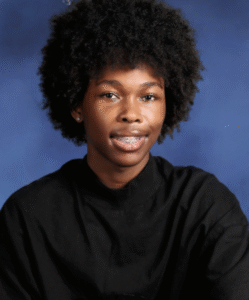
I walk at a steady pace, not a run, or a jog, but a fast walk. I am rounding the third quarter of the walking path at the park. This is lap six, maybe seven, could be eight, I have lost count. My breathing is starting to become thick, I mean after all, this is close to ten miles I have now gone. To test my limits, I push with everything I have got left in the tank to sprint this last fourth of the trail. I pick up speed and I am off like the Kentucky Derby, as this is the greatest two minutes in my athletic career. I duck beneath a low hanging oak branch, skip over the unstable path rock, and muster up enough breath to politely shout, “On your left!” to the young couple walking their smiley Golden Doodle. My feet become heavy, but I push to the laps end, taking a few steps off the path to collapse on the blue bench before me. I lay watching my chest rise, fall, rise, and fall. I begin to trace my fingers on the lettering of the blue bench. Starting with, “I,” ending with, “Y.” I whisper to myself, “In Loving Memory.” I sit up, stare at the picture of his face, and think of him. Coltin, my childhood peer and friend, is dead.
Every time I visit the park I am reminded of the day we installed the bench into the ground, as it was just a little over a year ago, and his death a little over two. While, yes, it was a celebration of life, we still mourned in our quiet sobs, as this was not supposed to happen. Sixteen years on this Earth is not enough time to live, not enough time to love, and not enough time to be loved. We released balloons in his honor, prayed, and had small conversations amongst ourselves trying to avoid our feelings with a, “Got any summer plans?” or a “How is the new restaurant downtown?”
My friend Coltin passed away the summer before our sophomore year of high school in a tragic car accident. He was driving on a rural back road just outside of Maysville. He was going too fast and lost control. The car ran off the road, injuring three others and killing Coltin. I remember the sick feeling that took over when we found out the details. None of it seemed real. But it was. And it was preventable. That is the part that has stayed with me the most. He was not trying to be reckless; he was just young. Just like all of us.
Teen driver safety is not just a personal responsibility, but a public issue that demands attention. Car accidents remain one of the leading causes of death for teenagers in the United States. Coltin’s crash was not a freak accident. It was the result of inexperience and speed, the two things most common in teen crashes. The more I learned about teen driver safety statistics, the more I realized how close so many of us come to being in Coltin’s place. Distracted driving, peer pressure, poor weather, fast roads, and little training: all factors do not just exist on paper. They exist in our daily lives.
Driver’s education can and should be the first line of defense. But it must be more than a checkbox. We need education that is active, realistic, and engaging. After Coltin’s passing, my school’s FCCLA (Family, Career and Community Leaders of America) chapter, made up of myself and some of Coltin’s other close friends, decided we could not just mourn. We had to act. We worked together to bring the Kentucky State Police to our school to give real, hands-on driver safety lessons. They brought a driving simulator so students could practice what it feels like to react in dangerous scenarios. The experience made a difference, and you could see it on the faces of our classmates. This was not just a lecture, it was real life. It could be any of us.
Our FCCLA chapter raised the money for Coltin’s memorial bench. Every raffle ticket, every bake sale, every donation was a labor of love. It is more than just a place to sit, it is a place to remember, and a place to learn from the past. We wanted something that could last, not just for us, but for the kids who come after us.
Teens can play a role in this movement. We can speak up when a friend drives too fast. We can put our phones away. We can wear our seatbelts every time. But schools and our local government must do more, offering practical education and inviting law enforcement and survivors to speak directly to students. Communities should invest in safer road signage, accessible training programs, and campaigns that show the real impact of unsafe driving, not just the rules, but the consequences, the faces, and the names.
Sometimes I wonder who Coltin would be now. I picture him smiling in Spanish class, or driving with the windows down, music too loud, or fishing with friends, but those are only memories I can only borrow from the past. So, I keep walking the path, lap after lap, until I end where I always do, at the bench. My place of rest. His place of remembrance, and now, a place of purpose. Safe driving is not just about staying alive. It is about living enough to grow old. It is about giving ourselves and our friends the chance to become who we are meant to be. Coltin did not get that chance, but maybe, through his story, someone else will.
Content Disclaimer:
Essays are contributed by users and represent their individual perspectives, not those of this website.