Crash Course in Responsibility
2025 Driver Education Round 2
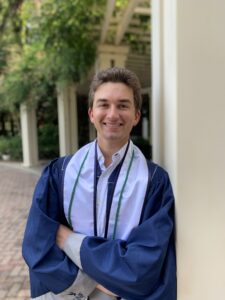
Carter Richards
St. Augustine, Florida
Two weeks after getting my driver’s license, I totaled my mom’s car. It was Homecoming night. The dance had ended, and I was driving five of my friends. We were all dressed up and excited. Someone suggested grabbing a late-night snack, and it felt like the perfect way to end the night. I was happy to be the one behind the wheel for once instead of sitting in the passenger seat. The freedom that comes with being able to drive is incredible, but I learned very quickly that it also comes with great responsibility. That night, I made a turn I shouldn’t have. I thought I had enough space and time to make it safely, but I didn’t. The car that hit us, the driver was on his phone, he made no effort to swerve or slow down.
The collision was instant. The force of the impact against my body. The sound of metal crunching. The airbags exploding. The screams from my friends. It is a memory that has never left me.
Thankfully, no one was seriously hurt and we all walked away from the accident. But the accident could have easily ended much worse. The crash was a perfect storm of distracted driving from both sides. I had let the energy in the car and the excitement of the moment affect my decision-making. The other driver had their eyes on their phone instead of the road. Neither of us was fully present behind the wheel, and we both paid for it.
Even though we all walked away, there were still consequences. I got a ticket, had to retake a driver’s education class, and our insurance rates went up. I lost my driving privileges for a while, and my mom had to replace her car. When I was finally allowed to drive again, I wasn’t allowed to have any passengers in the car. These were all minor consequences in the big picture, but at the time, they felt huge. What could have happened is far worse. Someone could have been seriously injured or killed. I could have lost my license or even gone to jail. There are so many heavier consequences that teens don’t fully realize or think about until it’s too late. Sometimes it takes learning the hard way for the lesson to truly sink in.
Since then, I have reflected a lot on what caused that accident and have adopted better habits. I don’t text and drive. That line is clear to me. But I didn’t realize until after the accident how many other forms of distraction exist. It is easy for teens to justify them until something goes wrong. Some distractions can be subtle, but just as dangerous. Unfortunately, it took an accident for me to take driving more seriously and be more focused on the road. I wonder if I could have convinced my younger self to act differently without having gone through the experience of the accident.
Teenagers are bombarded with warnings about safe driving. In their mind, they know not to text and drive, but still, many don’t listen. They believe consequences happen to someone else. What if they could feel the risk and experience it firsthand? In addition to traditional driving instruction, teens should also experience the consequences. If they could virtually walk through a simulation where the outcomes shift based on their choices. They might make it home or they might not. And if they don’t, they will experience the aftermath of an ambulance ride, a courtroom, or a funeral. This should not be an option, but a required part of every high school driver’s education curriculum.
Teens already know how to answer the driving test questions, of course you don’t text and drive, or get in a car with someone who has been drinking. The goal would be to have some personal reflection so they act on what they know, allowing them to make the wrong decision without paying the real-world penalty. Hopefully, they will come out of it more cautious and aware. They can walk through the aftermath of an accident without real-world risk. They can get a second chance to try again, something that doesn’t exist in real life.
The scariest thing about distracted driving is how normal it feels. That accident taught me that distraction doesn’t always come from a phone in your hand. Sometimes it comes from music, friends, mood, or momentum. And sometimes, you’re not the one distracted, which makes it even more important to pay attention and be aware of the road. Every time we get behind the wheel, we are responsible not just for ourselves but for everyone around us. That’s something I will never take lightly again. If teens could experience the consequences of an accident, without going through the accident itself, maybe they too would treat every drive more cautiously. It’s a lesson I learned the hard way.
Content Disclaimer:
Essays are contributed by users and represent their individual perspectives, not those of this website.