Empathy for a Life
2025 Driver Education Round 2

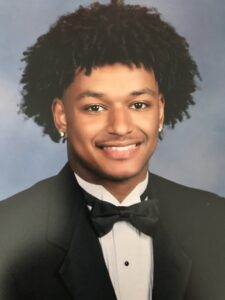
Jayd'n Couch
Tucson, Arizona
I grew up knowing the importance of good driving and the risks that are taken every time you get behind the wheel or step into a car. Driving can seem fun or thoughtless, but that’s the thing—it only seems simple. In reality, driving requires multitasking, focus, and full attention. It only takes a second for a life to end, and often, it’s a gamble from the start if certain precautions aren’t taken.
While some accidents are unavoidable, many could be prevented if drivers paid attention and assessed their physical or emotional state beforehand.
Someone in my life who was affected by a distracted driver is my dad. When I was six and a half, my mom woke me from bed one night to tell me that my dad had been in a serious motorcycle accident. He was switching lanes from behind a large truck when another driver turned from the median, causing a severe collision. From that night on, the wreck changed almost everything for my dad and our entire family. For a while, the doctors were unsure whether he’d survive. I spent a lot of time in the hospital alongside my mom and my grandparents on my dad’s side.
He was in a coma for weeks. Emotionally, our family was scarred. My dad now lives with a traumatic brain injury, short-term memory loss, sciatica, and other sensory issues. Even after surgeries, hospital stays, and therapy, the memory loss and physical pain still interfere with his daily life—and mine. He has scars, metal plates in his arm and forehead, and pain that reminds us of the accident every single day. That collision only took seconds, and it was caused by a lack of attention.
The wreck wasn’t caused by a teenager, but I believe that if good habits are learned early, they’re more likely to last. I think engaging and emotionally stimulating lessons should be a required part of driver’s ed. These lessons could include images, personal stories, videos, and sensory activities—anything that makes the risk of reckless driving feel real to the student.
Sometimes, the issue isn’t that a teen doesn’t care about safety—it’s that they’re not engaged by reading pages of statistics and text. Real-life stories and interactive lessons can make a lasting difference.
In addition to better driver’s ed, teens also need to feel empowered to speak up in unsafe situations and consider their condition before driving. Peer pressure is especially tough for teens. It can feel awkward to ask a friend to pay more attention or to get off their phone, but one less distraction is one less risk.
I have a friend who often gets distracted behind the wheel—arguing with a sibling, switching the music, or being overwhelmed. I ask her to pull over if she needs to talk or calm down. As a passenger, I always take over finding the music or helping with directions. Eventually, I told her I wouldn’t ride with her anymore if she couldn’t stay focused. We’ve never been in an accident, but I believe that’s because I was cautious.
To me, driving can feel like gambling—your life and someone else’s. I know how serious it is because I’ve seen what distracted driving can do. As a passenger, it’s my right and responsibility to ride with safe drivers. And as a future driver, it’s my job to assess whether I should be driving in the first place. If I’m too tired, emotional, distracted, or unwell, I won’t drive.
I’ll be taking my driving test within the next month, and I don’t take the responsibility lightly. I will put my phone on driving mode so notifications and calls don’t pull my attention. If something needs my focus, I’ll pull over. People say pulling over wastes time, but those few minutes are nothing compared to a life changed forever by reckless driving. I’ll wear my seatbelt, follow the speed limit, watch the road and weather conditions, and check in with myself before choosing to get behind the wheel.
I know that not all accidents are preventable, but I believe that focusing on my driving and surroundings can help limit them. I know better than to drive in unsafe conditions because I’ve seen how much destruction a vehicle can cause. I’ve seen how it can nearly tear a family apart.
But not everyone knows the risk like I do. That’s why I believe drivers’ education should do more than repeat the rules—it should move students to care. Engaging and emotional learning could lead to even the smallest change, and that’s where it starts. Because if there’s little awareness about teen driving safety, there’s even less momentum to create real change.
Even one life saved makes every effort worth it.
Content Disclaimer:
Essays are contributed by users and represent their individual perspectives, not those of this website.