Learning the Hard Way: Why Teen Driver Safety Matters More Than Ever
2025 Driver Education Round 2
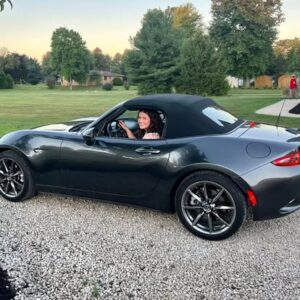
Boston Silveus
Mogadore, Ohio
As a teen driver, I’ve learned that the road doesn’t always give second chances. Teen driver safety isn’t just a box to check during high school, it’s a life-or-death issue that affects our families, our schools, and our communities. I've seen firsthand how a few seconds of distraction, poor judgment, or inexperience can change everything. And I’ve made my own mistakes, too. But through it all, I’ve come to understand why safe driving matters and why educating young drivers is essential.
I remember the first time I was involved in a car accident. I was backing out of a parking spot at the same time another driver, also a young woman, was doing the same from the spot behind me. Neither of us saw the other in time. Our bumpers met with a light jolt, and I instantly felt my stomach drop. I parked my car to talk to her, expecting we'd exchange information and figure things out. But instead drove away without saying a word. I stood there stunned, trying to process what had just happened. Later during that day she made a post about me. Even though it was a minor fender bender, it left a lasting impression. I realized in that moment how unprepared some of us teens are, not just to drive, but to respond maturely and responsibly when things go wrong.
A few months later, I received a speeding ticket. I wasn’t racing or being reckless,I was just running late, and I told myself I could shave off a few minutes if I drove a little faster or a lot. I was wrong. Getting pulled over made my heart race, and the consequences that followed made me think twice about the choices I make behind the wheel. The fine, the points on my license, and the disappointment from my parents all stung, but what stuck with me most was the realization that speeding isn’t just a rule violation. It’s a risk to myself and everyone around me.
Sadly, some of my classmates haven’t been as lucky. Over the past couple of years, several students at my high school have been in serious car crashes, many of them caused by other drivers who were under the influence of alcohol. I’ll never forget the day I heard that one of my previous classmates was hit by a drunk driver on a drive to the gas station. They were in the hospital for a while. These weren’t just headlines, they were people I sat next to in class, saw in the cafeteria, laughed with in the hallways.
And then there’s the tragedy that has shaped our entire school community. A few years ago, a girl from our school lost her life in a car accident. I didn’t know her personally, but I had heard about her throughout the yesr. Her name is still spoken with sadness and respect. Her loss should be a wake-up call for all of us. It is not something that is never going to happen to us. The mindset of “never could happen to me” needs to be changed. These incidents happen so fast,
In response to these incidents, our school and community have made serious efforts to promote safe driving. Every year, they now host car accident awareness seminars. Local police officers, survivors, and families who have lost loved ones share their stories. There’s one presentation that always sticks with me, it's from a father who lost his daughter in a texting-and-driving crash. Hearing his voice break as he described receiving that phone call changed something in me. These events aren’t just informative, they’re emotional. They make the consequences of unsafe driving real in a way statistics never could.
Driver’s education plays a major role in preventing more tragedies like these. It’s more than learning how to parallel park or pass a written test, it’s about preparing for the responsibility of sharing the road. But driver’s ed alone isn’t enough. Teens face so many pressures, distractions from phones, loud passengers, social expectations to “keep up,” and the inexperience that comes with being new to driving. The truth is, we’re still growing and learning, and we need strong guidance and support along the way.
So what can we do? Teens like me can start by owning our actions. Put the phone away. Drive within the speed limit. Say no to dangerous situations, even when it’s uncomfortable. We can speak up when our friends are making poor decisions. Schools can keep hosting awareness events and involve students in leading them, peer-to-peer messaging is powerful. And communities can make sure resources are available to all teens, regardless of income, including defensive driving courses, public awareness campaigns, and access to counseling after crashes.
I’ve made mistakes behind the wheel, but I’ve also learned from them. And I’ve seen how deeply unsafe driving can affect people’s lives, not just physically, but emotionally and mentally. Teen driver safety is not just about protecting ourselves; it’s about protecting everyone we care about. Through education, community support, and personal accountability, we can change the narrative. We can choose to drive better, safer, and smarter, not because we’re told to, but because we know what’s at stake.
Content Disclaimer:
Essays are contributed by users and represent their individual perspectives, not those of this website.