Views of a Passenger
2024 Driver Education Round 3
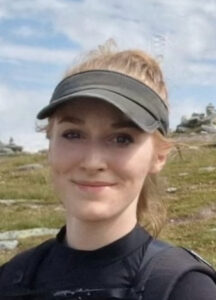
Sophie Eglinton
New City, New York
I am writing this essay for the first option, the staff vote, as I have no properly active Facebook account. The answers to the essay prompt questions are not under headings discretely but instead are naturally found within the body of the text, but each prompt has been answered. I really enjoyed writing about this topic.
Cars on highways can be compared to red blood cells circulating through arteries, moving in harmony within the larger system, gliding and flowing in a natural, seemingly instinctive way. Just as red blood cells travel through arteries with little thought from the organism, cars often move along highways as an extension of daily life, embodying the rhythm and routine of modern living. This seemingly smooth flow, however, is susceptible to interruption, just as the body is to blockages or infections. Like a stroke or a clot, where one part of the system fails, an accident or a reckless driver can halt or disrupt the movement of traffic, throwing the whole structure into disarray. When this happens, the red blood cells—drivers in this analogy—are faced with the question of their role in both the flow and the potential damage of the system.
In a medical context, we know that red blood cells themselves don’t decide to form clots or cause blockages, yet they play a role in the larger context of circulation. Just is the same for a single driver who might not set out to harm or disrupt the flow of traffic, yet each individual’s decisions contribute to the overall health and safety of the road system. A car swerving unpredictably, much like an errant cell, can trigger a chain reaction that builds into a dangerous blockage. But in this analogy, red blood cells don't have the choice to change direction, yet drivers do, possessing the agency to prevent or exacerbate the accident.
This is where responsibility enters the metaphor. While a single red blood cell can’t be blamed for the body’s demise, a driver has the agency—and often the obligation—to make choices that support the "health" of the system. Safe driving practices, like following speed limits, merging correctly, or respecting smaller vehicles, function as preventive measures, like lifestyle changes that improve cardiovascular health. Such individual choices reduce the chances of fatal "blockages" on the road, and thus, are each driver's contribution to a healthier, more stable road environment.
Yet even with individual responsibility, some larger structural "diseases" of the highway system persist. Just as the body faces illnesses beyond individual cells’ control, so too does the highway system experience broader issues that individual drivers can’t fully remedy. For instance, lack of regulatory oversight or the prevalence of aging infrastructure are structural challenges that contribute to road hazards. Drivers, like cells, can be mindful and responsible, but larger-scale interventions, akin to medical treatments or lifestyle changes for vascular health, are essential for systemic improvement.
To take us back away from the figurative language, the grim reality of road safety demands a serious conversation about driver education and accountability. The statistics are stark: every year, thousands upon thousands of lives are lost in car accidents, a tragic reality that we just seem to ignore, despite each person likely knowing someone who’s either been in one, or died in one, with most people having accidents at some point(s) throughout their life. Although individuals tend to think of themselves as inherently “good” drivers, this personal belief is often built on assumptions rather than critical self-evaluation and formal education. Most of driving is learned on the road, but is what was learned that way, correct?
There’s an unspoken myth among drivers that the danger of an accident is something that happens to “other people”, never to oneself…because they “drive well”; it’s a mindset that creates a gap in how seriously we, as a society, approach driver education. This illusion of immunity is shattered by stark reality: the vast majority of accidents occur within familiar areas close to home. This is likely due to overconfidence and a lack of situational awareness in routine settings, where people feel most secure and yet, paradoxically, are least attentive.
The problem of overconfidence can manifest in simple yet reckless behaviors, such as neglecting seat belts or assuming full control of the road. I remember once when I was in fourth grade, a friend's parent picked us up from school, and drove us to Dairy Queen with the seatbelt unbuckled for a full 15 minutes, dinging incessantly. On the way back from Dairy Queen, what did he do? He just buckled in the belt and sat on top of it to avoid the dinging. It goes without saying that I was never allowed back in his car after I mentioned it to my parents. Even when we are being bombarded by alerts that we’re doing something wrong or illegal, some people just will ignore it, just like some ignore those little red symbols indicator failures and needs to repair parts section on the dashboard. These are the same people who drive on the roads, ignoring basic safety habits. It even goes on to driving essentially deaf to others and their horn blares, by driving or riding with blasting music or headphones, making one incapable of hearing a yell or a honk. A side note, but I personally believe it’d lead to less road rage if honks had purpose-dependent tones, e.g. what the engineer Mark Rober had done in a YouTube video, allowing for polite and sweet honks, as well as very loud, unignorable ones.
But how can we improve how things are right now in other, big-picture ways? What’s the medicine to fix this disease that kills so many? Is it a psychological issue? Hardware and infrastructure? Technical? Just the fact that we are imperfect beings in control over mechanical ones? I believe it’s a mix, driver education needs to move beyond technical instructions and incorporate real-world strategies for avoiding common pitfalls and defensive driving tactics. I have observed instances, for example, where the simplest of strategies like the zipper merge—where drivers alternate in merging lanes in a cooperative manner—are met with selfish indifference. The avoidance of basic courtesies in driving mirrors a broader selfishness on the road, where the need to save a few seconds results in dangerous decisions, often at high speeds. These choices could easily be mitigated by a better understanding of traffic psychology and shared road etiquette, elements that are too often skipped over in cursory driver’s education courses. With this all being said, we must learn to drive predictably, and not politely. We nonetheless drive like one large organism. Traffic feels alive, just like in my original metaphor, a single person breaking on the highway can cause a chain reaction to cause an entire, seemingly idiopathic traffic jam. A natural flow of stopping and accelerating… ebbs and flows of blood pressure. Have you ever wondered “Where’s the car crash?”, after you’ve spent an hour passing a traffic jam without passing any major highway exits?
We need to understand driving from a stance that’s outside the car, outside te traffic jam. Simulated driving environments and supervised on-road training allow individuals to practice their skills in a controlled setting. This hands-on experience helps them develop the necessary reflexes and decision-making abilities to handle various driving situations, from navigating busy intersections to reacting to unexpected events. This practical training is essential in building confidence and competence, ultimately leading to safer driving habits.
But, driver education alone is not enough. To further reduce the number of driving-related deaths, a multi-pronged approach is necessary. This includes stricter enforcement of traffic laws, particularly those related to speeding, drunk driving, and distracted driving. Implementing stricter penalties for violations can serve as a deterrent and encourage responsible driving behavior. I also believe we need better public transportation, as fewer drivers would mean fewer proportional accidents. We unfortunately don’t live in a society that prioritises public transport, it’s a must to learn to drive and to drive, meaning people who don’t have the “head” to drive, are also on the streets.
It appears to me that when people drive cars, they get a sense of anonymity, like they’re wearing a mask, so they act far more selfishly and perhaps even truer to their inner selves. Another experience I had that did scar me, was being a passenger in the car of a boy who was trying to impress me, and he was speeding like a maniac, I even shrieked! My hand firmly grasping the door and the chair. He then went on to purposefully run over a hedgehog as though it was a game. I was horrified. You feel like a prisoner in a car when a person drives poorly. Another time, my mother broke at a crossing light, and she had enough time to reasonably slowly say, “We’re going to get rear-ended.” the driver behind us slid underneath us due to not paying attention. Luckily we had the Land Rover discovery, and he the mini Cooper.
Unfortunately, it isn’t always easy to educate someone on driving safety, especially if one does not hold a license like me. I have been in this position as a passenger, witnessing friends and family members driving recklessly without feeling qualified to comment. Trying to advise someone on driving is much like critiquing their cooking—it’s often met with resistance and even defensiveness. The attitude around driving is culturally ingrained: people are sensitive to criticism regarding their habits on the road, perhaps because driving feels instinctual and is seldom self-monitored. It is shocking, absolutely baffling, the amount of people on their phones I see as a passenger. How can this be kept in check without compromising privacy? Cameras into cars at all times? Cameras within cars? If you’re on a street, does that make anything you do fair game to see? It’s a hard line to walk.
After my own traumatic brain injury from a riding accident, I spent time (one year) in inpatient rehabilitation after being in a two-month coma and met countless individuals who were there because of motor vehicle crashes. Among these patients, I found that those injured in car, motorbike, or bicycle accidents harbored an unmistakable anger, a lack of guilt and blame that hung heavy in every conversation. Regardless of whether the incident involved reckless driving on their part or failure to follow basic precautions like wearing helmets or protective gear, the resentment was pervasive. In their frustration, many were keen to assign fault externally rather than examine the personal choices that contributed to their circumstances. These conversations showed me that serious accidents are preventable but only if we are willing to abandon the false assurance that such tragedies only happen to others. It did scare me though, as again, these people share the roads with each of us, and blindness to personal error is not how someone can improve. Now, at age 26, I am finally starting to learn to drive after going the mandated amount of years on an anti-epileptic medicine (TBI-induced seizures), so in a way, I am grateful to have seen what is at risk by being a fellow patient to these people.
To decrease accidents, we need a more comprehensive approach that doesn’t just end with individual driver education but includes structural changes and regulatory practices. Simple changes, such as periodic retesting for elderly drivers (with increasing regularity as age increases), can account for the decline in reflexes and reaction times. Yet it’s not only the elderly who could benefit from reassessment—drivers of all ages should be routinely tested on current road safety practices and defensive driving techniques, like people who have recently passed their tests. In regions with high-speed highways, like Germany, where speed limits are often unlimited, the rate of car accidents remains lower than in many other countries. This paradox proves the impact of Germany’s uniform inspection regulations, known as the TÜV, which require vehicles to pass rigorous safety inspections. In the United States, where vehicle inspections vary widely by state and are often less stringent, drivers can legally operate vehicles with rusted brakes or worn tires. This difference in regulation suggests that a standardized approach to vehicle inspection could have life-saving implications. My boyfriend is a mechatronic, and sees day in and day out the amount of cars that are not road safe… and even he, a seasoned car-person, did not know you couldn’t use the phone when the car is stationary at a crossing light!
Technology advancements such as speed cameras could be useful too. The fines from speed cameras can be reinvested into road restructuring, like how it’s done in Switzerland already. I also believe that high-beam lights need a more thorough replanning. For example, the increasingly powerful high-beam headlights installed on larger vehicles often end up blinding drivers of smaller cars, contributing to risky and uncomfortable driving conditions. I ride in a smaller call, and on each drive, I am blinded at least once by improperly or properly angered halogen lights. We don’t want people putting their hands up to shield their eyes from other cars when they’re driving… I believe we need better streetlamps and cat eyes on the roads. Also relying on automatic sensors that toggle lights or engage braking systems can create a false sense of security; if these sensors fail, the driver’s reflexes become the last line of defence and oftentimes drives fail to shut high beams off in time for oncoming traffic.
Driver safety is equally critical for those of us who regularly use alternative modes of transport, such as bicycles and e-scooters, both of which leave riders feeling particularly vulnerable. I experience this vulnerability daily when riding my e-scooter and note that a significant number of drivers don’t account for the presence of smaller vehicles, despite their legal obligation to do so. In my view, license plates on bicycles, similar to those required for e-scooters, could create a greater sense of accountability for cyclists and improve road safety for all. There should be no such thing as adversaries while driving. I also think that encouraging people to make their vehicles highly visible by opting for brighter, more distinguishable car colors would be another minor yet impactful adjustment that could save lives, perhaps financial incentives could be given if cars were painted brighter, more visible colours.
While structural changes can drive significant improvement, changing the culture around driving safety is perhaps the most urgent need. Driving predictably and following set protocols—rather than attempting to “politeness” one’s way through intersections—prevents confusion and accidents. Imagine the chaos of a crowded public space with individuals bumping into each other and pushing to get through. This disorganized behavior, when translated to driving, results in confusion and danger. Just as you wouldn’t trust someone rushing past you in a queue to avoid bumping you, so too must we not place blind trust in individuals operating heavy, high-speed vehicles.
People inherently develop their own justifications for risky driving habits, often bending logic to suit their preferences, with some of these logical fallacies being prompted by sexism, like bias against women drivers. As an example of the former, in Germany, some drivers defend tailgating by claiming that staying close reduces the speed difference if the car in front brakes suddenly, supposedly leading to less severe crashes. This kind of reasoning reflects a dangerous tendency to rationalize unsafe practices rather than prioritizing road safety.
In summation, and despite listing many problems here, I know that the core issues are behavioral reducation, my experiences and observations have proven to me that a multi-faceted approach to driver education and safety regulation is necessary to reduce the tragic number of road-related deaths. By embracing a culture of accountability and respect, enacting practical regulatory measures, and encouraging humility behind the wheel, we can take tangible steps towards safer roads. Recognising the vulnerability of oneself and others on the road is, I believe, the beginning of responsible driving.
As a future veterinarian, I am profoundly aware of the devastating impact car accidents can have on both humans and animals (maybe knowing this, you can see why I chose the topic of the metaphor at the beginning). Every year, countless animals—wildlife and pets alike—become victims of road collisions, often suffering severe, life-threatening injuries. I am committed to being a safe and vigilant driver, not only for the people around me but also for the countless animals that may find themselves unexpectedly on the road. I will prioritize safety by adhering to speed limits, remaining fully attentive, and refraining from reckless actions, recognizing that even a split-second distraction can have tragic consequences. I am dedicated to raising awareness about the impact of road accidents on animals, advocating for responsible driving practices in my community. Together, we can create a culture of road safety that protects all lives—human and animal alike.
Cars on highways can be compared to red blood cells circulating through arteries, moving in harmony within the larger system, gliding and flowing in a natural, seemingly instinctive way. Just as red blood cells travel through arteries with little thought from the organism, cars often move along highways as an extension of daily life, embodying the rhythm and routine of modern living. This seemingly smooth flow, however, is susceptible to interruption, just as the body is to blockages or infections. Like a stroke or a clot, where one part of the system fails, an accident or a reckless driver can halt or disrupt the movement of traffic, throwing the whole structure into disarray. When this happens, the red blood cells—drivers in this analogy—are faced with the question of their role in both the flow and the potential damage of the system.
In a medical context, we know that red blood cells themselves don’t decide to form clots or cause blockages, yet they play a role in the larger context of circulation. Just is the same for a single driver who might not set out to harm or disrupt the flow of traffic, yet each individual’s decisions contribute to the overall health and safety of the road system. A car swerving unpredictably, much like an errant cell, can trigger a chain reaction that builds into a dangerous blockage. But in this analogy, red blood cells don't have the choice to change direction, yet drivers do, possessing the agency to prevent or exacerbate the accident.
This is where responsibility enters the metaphor. While a single red blood cell can’t be blamed for the body’s demise, a driver has the agency—and often the obligation—to make choices that support the "health" of the system. Safe driving practices, like following speed limits, merging correctly, or respecting smaller vehicles, function as preventive measures, like lifestyle changes that improve cardiovascular health. Such individual choices reduce the chances of fatal "blockages" on the road, and thus, are each driver's contribution to a healthier, more stable road environment.
Yet even with individual responsibility, some larger structural "diseases" of the highway system persist. Just as the body faces illnesses beyond individual cells’ control, so too does the highway system experience broader issues that individual drivers can’t fully remedy. For instance, lack of regulatory oversight or the prevalence of aging infrastructure are structural challenges that contribute to road hazards. Drivers, like cells, can be mindful and responsible, but larger-scale interventions, akin to medical treatments or lifestyle changes for vascular health, are essential for systemic improvement.
To take us back away from the figurative language, the grim reality of road safety demands a serious conversation about driver education and accountability. The statistics are stark: every year, thousands upon thousands of lives are lost in car accidents, a tragic reality that we just seem to ignore, despite each person likely knowing someone who’s either been in one, or died in one, with most people having accidents at some point(s) throughout their life. Although individuals tend to think of themselves as inherently “good” drivers, this personal belief is often built on assumptions rather than critical self-evaluation and formal education. Most of driving is learned on the road, but is what was learned that way, correct?
There’s an unspoken myth among drivers that the danger of an accident is something that happens to “other people”, never to oneself…because they “drive well”; it’s a mindset that creates a gap in how seriously we, as a society, approach driver education. This illusion of immunity is shattered by stark reality: the vast majority of accidents occur within familiar areas close to home. This is likely due to overconfidence and a lack of situational awareness in routine settings, where people feel most secure and yet, paradoxically, are least attentive.
The problem of overconfidence can manifest in simple yet reckless behaviors, such as neglecting seat belts or assuming full control of the road. I remember once when I was in fourth grade, a friend's parent picked us up from school, and drove us to Dairy Queen with the seatbelt unbuckled for a full 15 minutes, dinging incessantly. On the way back from Dairy Queen, what did he do? He just buckled in the belt and sat on top of it to avoid the dinging. It goes without saying that I was never allowed back in his car after I mentioned it to my parents. Even when we are being bombarded by alerts that we’re doing something wrong or illegal, some people just will ignore it, just like some ignore those little red symbols indicator failures and needs to repair parts section on the dashboard. These are the same people who drive on the roads, ignoring basic safety habits. It even goes on to driving essentially deaf to others and their horn blares, by driving or riding with blasting music or headphones, making one incapable of hearing a yell or a honk. A side note, but I personally believe it’d lead to less road rage if honks had purpose-dependent tones, e.g. what the engineer Mark Rober had done in a YouTube video, allowing for polite and sweet honks, as well as very loud, unignorable ones.
But how can we improve how things are right now in other, big-picture ways? What’s the medicine to fix this disease that kills so many? Is it a psychological issue? Hardware and infrastructure? Technical? Just the fact that we are imperfect beings in control over mechanical ones? I believe it’s a mix, driver education needs to move beyond technical instructions and incorporate real-world strategies for avoiding common pitfalls and defensive driving tactics. I have observed instances, for example, where the simplest of strategies like the zipper merge—where drivers alternate in merging lanes in a cooperative manner—are met with selfish indifference. The avoidance of basic courtesies in driving mirrors a broader selfishness on the road, where the need to save a few seconds results in dangerous decisions, often at high speeds. These choices could easily be mitigated by a better understanding of traffic psychology and shared road etiquette, elements that are too often skipped over in cursory driver’s education courses. With this all being said, we must learn to drive predictably, and not politely. We nonetheless drive like one large organism. Traffic feels alive, just like in my original metaphor, a single person breaking on the highway can cause a chain reaction to cause an entire, seemingly idiopathic traffic jam. A natural flow of stopping and accelerating… ebbs and flows of blood pressure. Have you ever wondered “Where’s the car crash?”, after you’ve spent an hour passing a traffic jam without passing any major highway exits?
We need to understand driving from a stance that’s outside the car, outside te traffic jam. Simulated driving environments and supervised on-road training allow individuals to practice their skills in a controlled setting. This hands-on experience helps them develop the necessary reflexes and decision-making abilities to handle various driving situations, from navigating busy intersections to reacting to unexpected events. This practical training is essential in building confidence and competence, ultimately leading to safer driving habits.
But, driver education alone is not enough. To further reduce the number of driving-related deaths, a multi-pronged approach is necessary. This includes stricter enforcement of traffic laws, particularly those related to speeding, drunk driving, and distracted driving. Implementing stricter penalties for violations can serve as a deterrent and encourage responsible driving behavior. I also believe we need better public transportation, as fewer drivers would mean fewer proportional accidents. We unfortunately don’t live in a society that prioritises public transport, it’s a must to learn to drive and to drive, meaning people who don’t have the “head” to drive, are also on the streets.
It appears to me that when people drive cars, they get a sense of anonymity, like they’re wearing a mask, so they act far more selfishly and perhaps even truer to their inner selves. Another experience I had that did scar me, was being a passenger in the car of a boy who was trying to impress me, and he was speeding like a maniac, I even shrieked! My hand firmly grasping the door and the chair. He then went on to purposefully run over a hedgehog as though it was a game. I was horrified. You feel like a prisoner in a car when a person drives poorly. Another time, my mother broke at a crossing light, and she had enough time to reasonably slowly say, “We’re going to get rear-ended.” the driver behind us slid underneath us due to not paying attention. Luckily we had the Land Rover discovery, and he the mini Cooper.
Unfortunately, it isn’t always easy to educate someone on driving safety, especially if one does not hold a license like me. I have been in this position as a passenger, witnessing friends and family members driving recklessly without feeling qualified to comment. Trying to advise someone on driving is much like critiquing their cooking—it’s often met with resistance and even defensiveness. The attitude around driving is culturally ingrained: people are sensitive to criticism regarding their habits on the road, perhaps because driving feels instinctual and is seldom self-monitored. It is shocking, absolutely baffling, the amount of people on their phones I see as a passenger. How can this be kept in check without compromising privacy? Cameras into cars at all times? Cameras within cars? If you’re on a street, does that make anything you do fair game to see? It’s a hard line to walk.
After my own traumatic brain injury from a riding accident, I spent time (one year) in inpatient rehabilitation after being in a two-month coma and met countless individuals who were there because of motor vehicle crashes. Among these patients, I found that those injured in car, motorbike, or bicycle accidents harbored an unmistakable anger, a lack of guilt and blame that hung heavy in every conversation. Regardless of whether the incident involved reckless driving on their part or failure to follow basic precautions like wearing helmets or protective gear, the resentment was pervasive. In their frustration, many were keen to assign fault externally rather than examine the personal choices that contributed to their circumstances. These conversations showed me that serious accidents are preventable but only if we are willing to abandon the false assurance that such tragedies only happen to others. It did scare me though, as again, these people share the roads with each of us, and blindness to personal error is not how someone can improve. Now, at age 26, I am finally starting to learn to drive after going the mandated amount of years on an anti-epileptic medicine (TBI-induced seizures), so in a way, I am grateful to have seen what is at risk by being a fellow patient to these people.
To decrease accidents, we need a more comprehensive approach that doesn’t just end with individual driver education but includes structural changes and regulatory practices. Simple changes, such as periodic retesting for elderly drivers (with increasing regularity as age increases), can account for the decline in reflexes and reaction times. Yet it’s not only the elderly who could benefit from reassessment—drivers of all ages should be routinely tested on current road safety practices and defensive driving techniques, like people who have recently passed their tests. In regions with high-speed highways, like Germany, where speed limits are often unlimited, the rate of car accidents remains lower than in many other countries. This paradox proves the impact of Germany’s uniform inspection regulations, known as the TÜV, which require vehicles to pass rigorous safety inspections. In the United States, where vehicle inspections vary widely by state and are often less stringent, drivers can legally operate vehicles with rusted brakes or worn tires. This difference in regulation suggests that a standardized approach to vehicle inspection could have life-saving implications. My boyfriend is a mechatronic, and sees day in and day out the amount of cars that are not road safe… and even he, a seasoned car-person, did not know you couldn’t use the phone when the car is stationary at a crossing light!
Technology advancements such as speed cameras could be useful too. The fines from speed cameras can be reinvested into road restructuring, like how it’s done in Switzerland already. I also believe that high-beam lights need a more thorough replanning. For example, the increasingly powerful high-beam headlights installed on larger vehicles often end up blinding drivers of smaller cars, contributing to risky and uncomfortable driving conditions. I ride in a smaller call, and on each drive, I am blinded at least once by improperly or properly angered halogen lights. We don’t want people putting their hands up to shield their eyes from other cars when they’re driving… I believe we need better streetlamps and cat eyes on the roads. Also relying on automatic sensors that toggle lights or engage braking systems can create a false sense of security; if these sensors fail, the driver’s reflexes become the last line of defence and oftentimes drives fail to shut high beams off in time for oncoming traffic.
Driver safety is equally critical for those of us who regularly use alternative modes of transport, such as bicycles and e-scooters, both of which leave riders feeling particularly vulnerable. I experience this vulnerability daily when riding my e-scooter and note that a significant number of drivers don’t account for the presence of smaller vehicles, despite their legal obligation to do so. In my view, license plates on bicycles, similar to those required for e-scooters, could create a greater sense of accountability for cyclists and improve road safety for all. There should be no such thing as adversaries while driving. I also think that encouraging people to make their vehicles highly visible by opting for brighter, more distinguishable car colors would be another minor yet impactful adjustment that could save lives, perhaps financial incentives could be given if cars were painted brighter, more visible colours.
While structural changes can drive significant improvement, changing the culture around driving safety is perhaps the most urgent need. Driving predictably and following set protocols—rather than attempting to “politeness” one’s way through intersections—prevents confusion and accidents. Imagine the chaos of a crowded public space with individuals bumping into each other and pushing to get through. This disorganized behavior, when translated to driving, results in confusion and danger. Just as you wouldn’t trust someone rushing past you in a queue to avoid bumping you, so too must we not place blind trust in individuals operating heavy, high-speed vehicles.
People inherently develop their own justifications for risky driving habits, often bending logic to suit their preferences, with some of these logical fallacies being prompted by sexism, like bias against women drivers. As an example of the former, in Germany, some drivers defend tailgating by claiming that staying close reduces the speed difference if the car in front brakes suddenly, supposedly leading to less severe crashes. This kind of reasoning reflects a dangerous tendency to rationalize unsafe practices rather than prioritizing road safety.
In summation, and despite listing many problems here, I know that the core issues are behavioral reducation, my experiences and observations have proven to me that a multi-faceted approach to driver education and safety regulation is necessary to reduce the tragic number of road-related deaths. By embracing a culture of accountability and respect, enacting practical regulatory measures, and encouraging humility behind the wheel, we can take tangible steps towards safer roads. Recognising the vulnerability of oneself and others on the road is, I believe, the beginning of responsible driving.
As a future veterinarian, I am profoundly aware of the devastating impact car accidents can have on both humans and animals (maybe knowing this, you can see why I chose the topic of the metaphor at the beginning). Every year, countless animals—wildlife and pets alike—become victims of road collisions, often suffering severe, life-threatening injuries. I am committed to being a safe and vigilant driver, not only for the people around me but also for the countless animals that may find themselves unexpectedly on the road. I will prioritize safety by adhering to speed limits, remaining fully attentive, and refraining from reckless actions, recognizing that even a split-second distraction can have tragic consequences. I am dedicated to raising awareness about the impact of road accidents on animals, advocating for responsible driving practices in my community. Together, we can create a culture of road safety that protects all lives—human and animal alike.
Content Disclaimer:
Essays are contributed by users and represent their individual perspectives, not those of this website.