Beyond Safety
2024 Driver Education Round 3
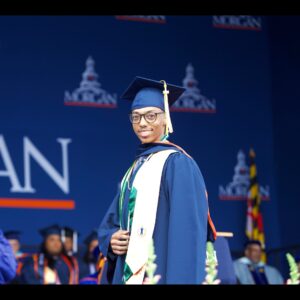
Don-terry Veal, Jr.
West Lafyaette, Indiana
I started my car and pulled out of the driveway, not knowing that within 30 seconds, it would be totaled. I was heading to cover a friend's shift at Pizza Uncommon, my favorite local pizzeria and home to the best pizza in the Midwest. Technically, my last day was four days earlier. Still, with just a week left before graduating with my B.S. in Aeronautical and Astronautical Engineering from Purdue University, I thought an extra shift would help me earn a little more cash. The weather was perfect. The sun was shining, and a light breeze paired beautifully with the sunlight. I turned on the radio, letting the music match my optimistic mood. The stress of finals was behind me, and I was looking forward to starting my summer internship at The Aerospace Corporation. I felt good, as if life was finally coming together.
I approached a stop sign, turned the corner, and spotted a green traffic light ahead. Luck seemed to be on my side. I pressed the gas, picking up speed as I aimed for the intersection. Just as the light turned yellow, I noticed another car speeding toward me from the left. In my six years of driving, I’d never had to slam on my brakes before. I learned in that split second how difficult it is to stop a 2-ton vehicle traveling at 30 miles per hour in the span of a city street. I braced myself as my car collided with theirs, hitting their passenger side. The force of the impact sent their vehicle spinning 180 degrees, and we both came to a stop on the sidewalk next to the capitol building.
I briefly inhaled the visible fumes discharged from the engine as the metallic smell mixed with the heat radiating from the airbag. The friction from its sudden deployment stung my arms, compelling me to fling the door open, stumble out, and scan my body for injuries. The airbag’s impact had literally left its mark. A red-purple Mercedes emblem was branded onto my left forearm, surrounded by scratches that could rival those from my late cat. My knees throbbed where they had scraped against the steering wheel panel during the collision. Luckily, these injuries were moderate as our speeds were still within “normal” city driving limits. These injuries, though painful, were minor compared to what could have been. I turned my attention to the other vehicle. The driver and passenger were already outside, visibly shaken but physically unscathed. I approached them as adrenaline still coursed through my veins. After ensuring they were okay, I exchanged a few words with a bystander. They confirmed what I had already suspected: the other driver had run their red light.
The real headache began with the insurance aftermath: policies, deductibles, and the labyrinth of compensation. Seven days after the accident, I graduated from Purdue, needing to drive to Maryland to collect my second degree in Engineering-Physics from Morgan State University’s graduation as the first of the Morgan/Purdue 3+2 Program. The following week, I was set to start my internship in Virginia, requiring a daily commute. Each of these plans hinged on access to my car, which was deemed totaled just two weeks after the crash.
The following month was a series of compounding frustrations. Rental billing became a nightmare due to the insurance company’s delayed responses. Medical bills were equally exhausting as I was caught in the ambiguity of what the insurance would cover and when that would happen. Nothing was as distressing as negotiating fair pain and suffering compensation, which felt nearly impossible against the insurer's iron-fisted resolve to protect their bottom line. From then on, I made it my mission to warn everyone I knew: no matter who’s at fault, some companies will do everything in their power to save money, especially at the client's expense.
Being a safe driver only gets us so far; accidents happen. To truly be safe, we must be educated, and I wanted to share my story to highlight the challenges that follow collisions with relatively minor physical injuries. After the accident, I was still rattled. I didn't trust the drivers around me or the safety mechanisms like stop signs and traffic lights to keep me safe. I invested in a dash camera to ensure that any driving-related issues were documented, rather than relying on CCTV to capture the scene. These were the only proactive steps I felt I could take, especially since I’ve always considered myself a good driver. Accidents can happen to anyone, and I just wanted to make sure I wouldn't have to rely on my shaken memory if something happened again. The more we educate new drivers to understand the dangers behind the wheel, the better they can appreciate the benefits of safe driving.
Content Disclaimer:
Essays are contributed by users and represent their individual perspectives, not those of this website.