Driver Education and Accountability
2024 Driver Education Round 3

Michael Tibollo
Waco, Texas
Coming from a sleepy town in Ontario, Canada, it felt like life rolled along. It was, thankfully, always quiet. Life was simple and everyone preferred it that way. I remember being a junior in high school, wasting away evenings after classes waiting for the late bus. The football team had practices, the band was preparing for a concert, and the future doctors and dropouts were sharing the library. It was difficult to have a quiet ride on that bus, let alone having a seat.
One fall day, we hit traffic. There was never traffic. Something felt different. Police surrounded two wrecked vehicles pulled to the side of the road. Everybody was quiet. Hardened football players and jaded geeks that I grew up with stared blankly at their phones in tears. Something was different.
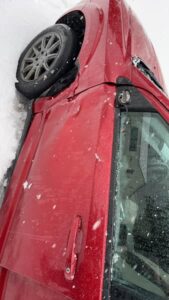
Earlier that afternoon, six students driving home from a neighboring high school ran a red light and collided with a vehicle. The car rolled until it stopped in the intersection. Unfortunately, in that vehicle was a 16-year-old whose femur snapped from the impact, causing him to bleed out internally. His name was Cole, and while we were not personal acquaintances, I felt his absence in my life – it seems everyone else did. The following day at school, the halls were quiet. Classes were empty. That small town felt the impact of an unnecessary death from unsafe driving. Everybody was different.
The response from the town was significant. People mourned, policymakers suddenly became outspoken advocates for safe driving, and driver education was a common topic at school. An uneasy feeling sat with me as everyone was making an effort after the tragedy had occurred. It was encouraging to see our town take action, but why did it take a tragedy to see change? I believe the answer lies in a fundamental flaw in human nature: we only pay attention to things which are close to us. As a town, we were reactive, exposing how our initial inaction was causative of tragedies like this.
Education is the cornerstone of correcting this innately human flaw. It informs us of the risk of our decisions, making the “correct choice” seem obvious. With this in mind, driver education is a solution to reducing our risk of dangers on the road. We know it works, too. Evidence shows that teenage drivers who have not completed driver education are 24 percent more likely to be involved in a fatal or injurious crash Knowing this, why are there 13 states that do not mandate driver education for drivers before becoming licensed?
Governmental institutions and policymakers have the priority of improving societal wellbeing. Primarily, this involves making decisions that maximize benefit and minimize harm. Given that education is necessary to make informed decisions and that driver education has been proven to reduce driving fatalities, why is it not a necessity to become a licensed driver? By failing to educate, our institutions have failed us, and this needs corrective action. Legislation should be introduced to ensure that all prospective drivers receive driver education before becoming licensed drivers. By not empowering individuals to make informed decisions, we allow tragedies to occur, despite having the means to significantly prevent them.
Education goes beyond instructional policies. While systemic change occurs institutionally, we need to take responsibility for our lives and prioritize educating ourselves. This was certainly on the forefront of our minds after the tragedy, and it boiled down to accountability. A simple action that we can take to make our roads safer is holding ourselves, friends, and family to being more responsible drivers. We need to identify irresponsible driving habits and be intentional towards creating a culture of safe driving. It is easy to feel dismissive towards the impossible task of preventing all driving fatalities as an individual, but it is even easier to accept accountability and leverage our influence to make our communities safer. This shifts perceptions, in turn, making our roads safer.
I only need to drive a minute away from my childhood home to be reminded of what happened to us on September 25, 2017. The lightpost on the corner is always decorated with flowers. I am also reminded of the fact that the collision could have been prevented. It takes the effort of everyone, individually and institutionally, to take a preventative approach through education, instead of waiting for another tragic event to happen. Without immediate change, we support a flawed loop of inaction and harm, allowing stories like Cole’s to continue to be written.
Content Disclaimer:
Essays are contributed by users and represent their individual perspectives, not those of this website.