When the Crash Comes Before the Lesson
2025 Driver Education Round 1
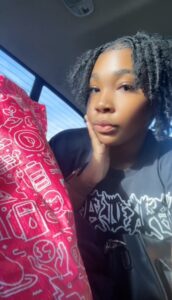
Danita Joelle Carter
Fort Valley, Georgia
I didn't need a billboard to teach me that driving is dangerous. I didn't need a PSA or a parent’s lecture. I learned in the hard way—through shattered metal, disbelief, and the silence that comes right after impact. I was in a crash. Not because I was reckless. Not because I didn't know the rules. I was in a crash because someone else made a lazy decision, and I had no time to stop it.
It happened at a four-lane intersection. I was where I was supposed to be behind the white line, alert,patient, waiting for my turn. One car went ahead of me, and then it was my turn. I pulled forward, just like I'd been taught. Then, in a blink, I saw them. Two girls in the opposite lane. They were behind the car that just went, and they must've thought they could go too—as if driving through an intersection works like a group chat, Like if the person in front goes, everyone behind gets follow. That's not how it works. But they assumed. They didn't pause. They didn't check. They just moved, and they rammed straight into the right side of my car.
The sound still lives in the back of my head. That moment where everything felt still and unreal. Then the snap of metal, the jolt through my body, the confusion that followed. They blamed me, of course. But I knew. I followed the rules. They didn't. And yet I was then left shaking, with the “what if” echoing in my chest.
The crash changed me. It stripped away the illusion that driving is something normal or casual. It reminded me that every single moment behind the wheel is a risk, even when you're doing everything right. Because it's not just your hands on the wheel—it's there too., The people who think turn signals are optional. The people who drive angry, distracted, exhausted, The people who assume.
I didn't end up in the hospital. I didn't lose a limb. But I lost a kind of safety I'd been holding onto without realizing it. I lost the belief that I could control the road just by following the rules. And in a strange way, I'm grateful for that. Because that fear became fuel—not just to be a cautious driver, but to be a smart, conscious one. One that drives with her eyes wide open, knowing exactly how fast things can go wrong.
Before that day, I didn't speak up that much about driving. I'd be in the passenger seat with someone who was going too fast, or texting, or driving like they were in a video game. I'd grip the door, hold my breath, and hope we made it. I didn't want to be dramatic or “that person” who ruins the mood. But now? I'm that person, proudly. Because what worse—making things awkward, or ending up another story on the evening news? I've seen what happens when you assume you'll be fine. I refuse to be silent about safety now.
I've also had to hold myself accountable. I'm not perfect. I've checked a notification at a red light. I've driven tired, telling myself it's just a quick trip. I've sped because I was late. But now, there's a voice in the back of my head that won't let those choices slide. I hear the crash. I saw the look on that driver's face as she tried to blame me. I felt the joint in my body again, and I corrected myself. I turn the phone off. I slow down. I pull over if I need to. Because no place is worth not making it there.
Driving education should teach this. Not just rules and road signs, but the emotional side of it. The real consequences. What it feels like to climb out a car, trembling, and know how close you were to being a headline. Young drivers need more than a handbook—they need a reality check. They need to sit with stories like mine, hear about people who didn't walk away, see the aftermath beyond the accident report. Because when you feel it—really feel it—you don't take chances the same way again.
That's what I carry now. Not just a memory, but a lesson. A constant awareness. Driving isn't casual for me anymore. It's something I take seriously,every single time. I do it for me. For the people in my car. For the strangers I'll never meet but might pass on the road.
People forget that driving isnt just about skill—its about trust. Every time we drive, were trusting strangers to do the right thing. To stay in their lane. To stop at the light. To not ruin your life with one reckless move. And that's terrifying if you think about it too long. But its also a call to action. It means the least we can do is be the drivers we want to share the road with.
I'll never be able to make everyone drive better, But I can control how I drive, I can speak. I can lead by example. I can be the reminder that life is fragile, and the road is no place for shoutouts. If I ever have passengers, I'll protect them with the same care I wish others had shown me. I'll teach my future kids that a car isn't just transportation—it's a medicine that demands your full attention, your full respect.
I didn't ask for that crash. But I'm thankful for what it taught me. Because now I drive with purpose. And I want others to learn from my story before they have one of their own.
Content Disclaimer:
Essays are contributed by users and represent their individual perspectives, not those of this website.