
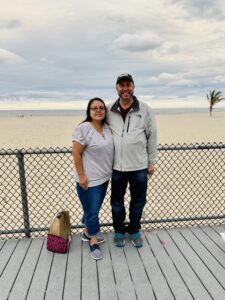
Name: Marie Markovich
From: Salt Lake City, UT
Votes: 0
From ATV’s in rural Alaska to city driving in the big city: how I learned to drive
I was born in Nome, Alaska and raised in Gambell, AK which is on St. Lawrence Island in the Bering Sea in Alaska. There were no cars there, only ATV’s. There was 1 family though that owned a truck and that was the only experience I had with vehicles other than ATV’s. I remember being invited by the owner to take a ride in the truck with some of my friends. In my childhood days, that was the ride of a lifetime! I remember the excitement of riding in such a large vehicle that had so much room and power compared to an ATV. There aren’t many roads in Alaska, most of the state is considered rural/remote and the owners of the truck had to have the truck shipped to Gambell, AK in a barge which only came during the summer when there was no winter ice in the ocean. The shipping alone must have cost a fortune to deliver it to such a remote location out in the middle of nowhere in Alaska.
Fast forward to 2002 when I graduated from high school and moved to Anchorage, AK, the largest city in Alaska. I was still not interested in driving a car so I rode the bus to get around. That became time consuming and tiring, especially during the dark, cold and long winters there. In 2004, after 2 years of riding the bus to get around, I finally looked into going to a driver’s education class so I can get a driver’s permit so I can learn to drive and get a driver’s license. I paid $650 for the driver’s education class. I remember the instructor instructing me to get in the driver’s ed car and start driving. I haven’t forgotten the fear, fascination and excitement I felt when I got in the driver’s seat and started driving with no previous experience whatsoever. The instructor put a lot of trust in me to take over driving the car and doing well! I drove smoothly which I was surprised by down the Seward Highway south of Anchorage during rush hour after work traffic. I completed the driver’s education class in 2-4 days. I passed the parallel parking test the first time I attempted it, which I believe was the hardest part of the test.
The instruction I received from the instructor helped shape my driving habits. The number 1 rule was and still is safety. Following traffic laws, requiring seatbelts for all passengers, being aware of surroundings, staying vigilant, etc. is what the instructor taught while I drove. How is driver’s education in reducing the number of deaths from driving? All of the above I mentioned and more. These should be common sense but the instructor emphasized the importance of driving safely.
What steps can be taken to reduce the number of deaths related to driving? By practicing defense driving. That entails following all traffic laws, making sure all seatbelts are in use, looking ahead and behind at traffic, be aware of walkers, bikers, runners, etc. that may be on the side of the road. Before I start driving a vehicle, I make sure to adjust the seat, mirrors and seat belt if necessary so it won’t be done while driving. I currently live in Nevada and there’s a state law that prohibits cell phone use while driving. This takes the distraction of a cell phone away and makes drivers less likely to drive distracted.
I experienced a car accident in Anchorage, AK during the winter one evening. The roads were slick and icy and it was dark outside. I failed to estimate how much space I need to break in time to stop at the red light. I slid out into the intersection at a red light and was t-boned by another vehicle that had the green light. I was still a new driver then and didn’t have much experience driving in winter conditions. I learned the hard way about how to drive in those conditions. It was costly for both myself and the driver who t-boned me. I was aware that I wasn’t an experience driver yet and had signed up for comprehensive coverage which saved both me and the other driver a lot of time and money. Thankfully, no one was hurt but I did end up totaling my car.
Steps to take to become a better and safer driver include taking the driver’s education class if you’re able to take it. I haven’t forgotten the lessons I learned from the instructor in that driver’s education class. I still look for speed limit signs to drive within the limits, be aware of all surroundings, and be ready to take action in order to avoid accidents. Another option to improve driver safety is to join a campaign for safer driving such as the Mother’s Against Drunk Driving campaign. I have heard about their campaign and talked to them at events and the work they do to bring awareness of drunk driving. I’m afraid of drunk driving and hope I never have an experience that involves it.
I want to repeat what the driver’s education instructor said. Driving is a privilege and not a right. Use your driver’s license responsibly and keep yourself and everyone around you safe. I also saw a local commercial which has been ingrained in my memory and would like to share it here. Share the road, share the responsibility. Drive safe everyone!
