
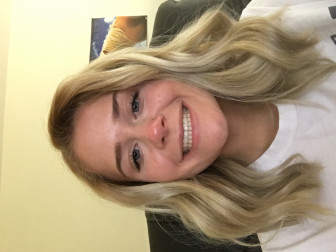
Name: Haley Jordan Thew
From: sparks, nevada
Votes: 0
The
Driving Paradox
I, at the ripe age
of 17, drive a 2001 Lexus RX-300. Obviously my life has now been
consumed by other things, but when I was 16 the only thing on my mind
was getting my driver’s license. I watched with envy as all of my
friends abandoned the bus in favor of their cushy new rides, basking
in their newly found luxurious freedom. I managed to fail my drivers
test three times before I was awarded with that small plastic card,
but when the day came my entire life unfolded in front of me. The
possibilities appeared endless and I was ready to head off into the
rest of my life, until an incident at one of our high schools rocked
me to my core.
I go to
Spanish Springs High School, and although there have been plenty of
kids who have totaled their cars, the consequence has never been a
loss of life. Unfortunately, at Reed High School (about 20 minutes
away), a student there was hit by a car while crossing the street.
She died. I was torn up, completely baffled by this theft of youth,
and I became a paranoid driver. The driver had been on the phone with
his mother and didn’t see th student crossing the street. Everyone
everywhere became worried for their children.
Although drivers
education and practice hours are a requirement for getting a license,
the reality is that once most people get their license most of those
tips and tricks are abandoned. People will inevitably make poor
driving decisions: girls will do their makeup in the car, kids will
text their best friend, and most of the time, there is no consequence
(except for a close call every once in a while). The problem is not
the Drivers Ed curriculum, nor is it the requirements for taking the
test- the problem is a universal mindset. The recognition of
this as the problem makes the issue a lot harder to tackle, because
now it requires trust in every person on the road. The rules are
clear about driving, and the curriculum makes them that way, but
getting rid of this unspoken abandonment of those rules is the only
solution.
The first and
mostly dominant issue is perspective- the naiveté that comes with
being a teenager is often our downfall. I know that I feel
invincible. Even though other people get into car crashes, it could
never happen to me… right? Wrong. It seems sad, but the only thing
that put me in check was hearing about that other girl. When a poor
driving decision took advantage of her vulnerability, I was able to
understand the weight that being able to drive holds. I could grasp
the fact that every move I make could change someone’s whole life,
and that changed the way I drive to this day. If we are able to
universally alter the way people see driving, then the roads would be
a much safer place. The distribution of those facts-the deaths, the
statistics, the irreversible results-will reach more people. Although
there are facts like that everywhere, there aren’t enough.
The
way we walk about driving has to change. It is not casual, and it is
not a privilege. It requires great amounts of knowledge, skill, and
awareness. Everything learned in Drivers Ed is essential
information that could potentially save lives one day, and there
needs to be a more widespread understanding of that. Driving needs to
be spoken about like it is a big deal, and it needs to be viewed as
something serious.
Getting
a driver’s license is one of the defining moments of most people’s
youth. Suddenly you aren’t as helpless as you used to be, and the
way you do things begins to change. Although most everyone can drive,
and although getting licensed is a rigorous process, it is not taken
seriously enough. But with time, hardworking people, and the ability
to trust other drivers, the roads can become a safe place once again.
