
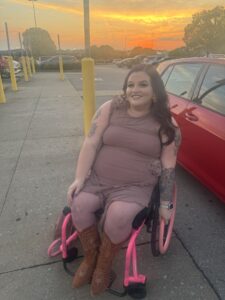
Name: Mae Beth Ruehling
From: Murfreesboro, Tennessee
Votes: 17
Driven by Hope
I was a junior in high school when I took driver’s education as a course. It felt like an easy class because I had already obtained a learner’s permit at 14 and my license at 15. By then, I knew what it took to be safe behind the wheel. I always held on to my mom’s advice: “It’s not you I worry about while driving; it’s the other person on the road.”
My driver’s education teacher was one of those who believed in hands-on experience. Each day, students would switch out for driving practice. Some days, we’d go to the local dairy bar for a milkshake, and other days would be filled with lectures about the rights and wrongs of driving. One thing he said stuck with me: He shared a statistic that, out of the number of students in the room, at least one of us would die in a car wreck. Even now, I think about that every day, wondering if that one person could be me.
In December 2017, my worst fear became a reality. A drunk driver hit me head-on. The crash left me paralyzed, with a spinal cord injury that changed my life in ways I never imagined. Just moments before the impact, I was someone with a sense of direction and purpose. I was able—able to walk, able to dream, and able to feel in control of my future. Then, in an instant, all of that was taken away. I was 19 years old, receiving a wheelchair as my Christmas gift, and suddenly, I found myself dependent on others for the most basic tasks. Strangers helped me with things I never thought I’d need help with, like being changed or bathed. Simple actions, like going to the bathroom, were no longer within my control. My life became one defined by someone else’s decision to drive under the influence.
The future I had once imagined—one with a fulfilling career and personal goals—became an unrecognizable reality because I am stuck living in a world that was not made for me. All the princess weddings I dreamed about growing up would not happen anymore because I am not the girl who can go wedding dress shopping and walk down the aisle anymore. I was never going to be the woman every young girl wanted to be as she watched me cheerlead. I became the zoo animal no one cared about, and the cage was my wheelchair. I became the person I never expected to be: a woman who uses a wheelchair, no longer the symbol of strength or youth I once was, but a person others seemed to forget or pity.
While I can’t change the trauma I’ve endured, I can choose to use my story to raise awareness about the dangers of driving under the influence. It wasn’t my place to prevent that crash, but I can speak up, hoping that my experience will stop someone from making the same reckless choice. I can also advocate for driver education to go beyond high school and reach younger generations.
Though elementary schools don’t typically offer driver education, their focus on safety can still include topics that would benefit young students in the future. Safety education, such as pedestrian safety, bike safety, and understanding traffic signs, is essential. But it’s never too early to begin educating children about the dangers of alcohol and drug use while driving. By starting these conversations earlier, we can cultivate a culture of safety and awareness long before students ever get behind the wheel.
My experience has shown me the devastating consequences of one person’s poor decision behind the wheel. But I’ve also learned the power of awareness and education. Driver safety is not just about teaching people to follow the rules of the road—it’s about instilling a sense of responsibility in every driver to think of others before themselves. If we can reach young people early, if we can teach them about the dangers of impaired driving before they ever get behind the wheel, we can prevent future tragedies like mine. My story may be one of loss, but it is also one of hope. If my journey can inspire just one person to make safer choices, then I know my suffering hasn’t been in vain. This scholarship will help me continue my advocacy, ensuring that the message of safe driving reaches those who need to hear it most: the drivers of tomorrow.
