
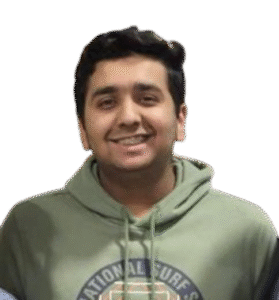
Name: Noor Nizar Ali
From: Pickering, Ontario
Votes: 0
Teen Driver Safety: A Personal Perspective on a Critical Public Issue
Teen driver safety is not only the province of anxious parents and school assemblies — it is also a significant public problem. Car accidents are among the leading causes of death for teenagers all over North America. Inexperience, distraction, peer pressure are all factors. For me, this became personal when one of my best friends, Zayn, was involved in a very serious accident while we were juniors. That moment altered the way I see driving forever — not as liberation, but as an obligation.
Zayn was one of the most cautious people I had ever met. He worked hard, avoided trouble and took time to think. But one rainy afternoon, after he picked up two friends on the way to soccer practice, he made a simple mistake: briefly looking down at his GPS. That was all it took. His car hydroplaned and collided with a pole, and one of his passengers received a broken leg and a concussion. Zayn wasn’t driving unsafely — he just didn’t realize how quickly things can turn on the road.
That experience shook us all. Until that moment, driving had always been an adventure — a symbol of freedom. But in an instant, I found out just how fast things could go wrong, even with a cautious driver like Zayn. What I learned was that driving was more than getting from A to B; it was getting to B, alive and also ensuring others get there.
I then made a conscious decision to take driver’s education seriously. Not just to check off a box or get a license, but to genuinely learn what it is to be responsibly behind the wheel. The driver’s education training was much more than just learning to park and obey road signs. It was based on real life scenarios: how weather affects traction, how to correct a skid, what to do with a tire blowout, how to conclude behavior forged from other drivers. One of our lessons was devoted entirely to distracted driving. The statistics were frightening. I learned that even taking your eyes off the road for two seconds to look at your phone doubles your crash risk.
But what stuck with me most was the change in mindset that went along with it. Driver’s education didn’t just give me skills — it gave me perspective. I stopped seeing driving as a right and started to see it as a privilege that could be taken away as fast as it was given to me, with serious responsibility. I set personal rules: my phone stays in the glove box, music stays low, every passenger must be buckled before the car goes into gear. At first, it felt weird to enforce my rules with friends. But then I would remember Zayn — and I never felt uneasy again.
The truth is that not all teens have access to a proper driver’s education. Some families cannot afford to pay for private lessons. Not all schools offer in-class programs. All of this contributes to major gaps in safety. Research shows that teens who have completed formal training have lower crash rates. This all is why teen driver safety needs to be treated as a public health priority. In a perfect world, there would be publicly funded programs in every school district, and all teens would have access, regardless of their income.
Parents and guardians are a very important part. My dad put many hours of effort into showing me parking lots and side roads to learn how the car behaves. He would take me out at night, in the rain, and in light snow, just to make sure I was prepared for it all. When I would take off on my own after some practice, he would remind me, “you don’t only drive for yourself, you drive for everyone around you.” Those words stuck with me. I still hear them in my head every time I am behind the wheel and I pay attention.
In hindsight, Zayn’s accident could have been a lot worse. When I think back to a few days after the accident, Zayn and I were sitting together in silence not really knowing what to say. He continued to replay that moment over and over in his head and he kept blaming himself about something that could have happened to anyone. That’s when it struck me really hard — good people, smart people, careful people can still do things for whatever reason that just don’t make sense and as a result potentially change that person’s life as well as other lives forever. It really crystallized for me — you can be doing everything right but things still spiral out of control in a heartbeat (certainly that’s happened in my life many times). Not every teenager is one of the lucky ones that just get to walk away unscathed from an accident. Some don’t get that second chance and that is the reason why driving safety cannot be an afterthought…it is something we have to talk about, learn about, and prepare for – not only for ourselves – but for the people that we care about.
Driving is not a one-time event; it is a responsibility we assume on a daily basis. Although experience can be the greatest teacher, it is a lot safer to obtain learning from organized education than that of a mistake we cannot undo. For teenagers such as me, the difference between a safe journey and tragedy lies with one decision – a decision that is often shaped by how seriously we take driver education.
