
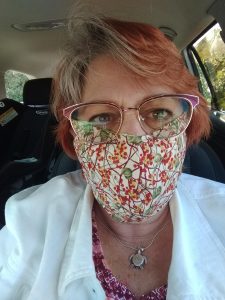
Name: Laurie Kreger
From: Santa Rosa, CA
Votes: 0
Why we Need Driver Education
Why we Need Driver Education
When I attended High School in the late ‘70s, we had 13 weeks of driver education. That length
of time gave me and my cohort the opportunity to fully understand the responsibilities inherent
in driving a car -which we understood to be a deadly projectile, sharing the road with other
projectiles, including cars, large trucks, motorcycles and bicycles, as well as pedestrians and
animals- both domestic and wild. In watching my daughter go through the modern, minimized
version of driver’s education, I realized I had a huge responsibility to teach her the finer points
and nuance she would need to safely navigate in an ever more congested driving environment.
Seatbelt, motor, dash, gear and brake! These words are etched in my memory even 43 years after my first day in the classroom. As I recall, we spent one entire month in the classroom developing and understanding of the importance of speed limits, braking distances, checking mirrors and road courtesy before we even stepped foot into the simulator- a modular classroom with 17 driving stations complete with clutch and 3 on the tree! Once we successfully and consistently navigated the simulator, we advanced to the range where we were able to grasp the size of our assigned projectile in a one way 25 mile max speed environment. Finally, we matriculated to the street! With a modicum of confidence, we established the habits of checking mirrors, marking the positions of other vehicles and observing slight movements that indicated the intention to change lanes before they signaled their intentions (if ever they did) with a blinker. Watching for potential chaotic conditions, like children playing and dogs on the street- both of which might suddenly dart into the street in pursuit of a ball or other object of fascination.
These are the kinds of habits in practice that helped to make us safe and courteous drivers. I’m sure we were all anxious to make our way to the street, and perhaps it was only later that we appreciated how well we were prepared when we were finally allowed.
Before I took Driver’s Ed. in school, I was a pedestrian in close proximity to two vehicle accidents- both resulting in fatality. In the first, I was walking home from summer school while the brother of a classmate was road racing with a friend on a two-lane street in a 35 MPH zone. They came to a slight curve when Ron (my friend’s brother) lost control of his car. His car spun out, hitting a bridge on the rear fender gas tank side and exploded on impact. Actual speed was estimated at approximately 75 MPH. It happened in slow motion from my perspective and I had not yet grasped what had happened even as the force of hot wind blew past me.
The second time, I was a freshman in high school, still not old enough for Driver’s Ed. I was leaving my swim class which was at the entrance to the student parking lot. A senior who was in my choir class and Chamber Singers- also a talented painter was making a left hand turn into the lot, when a motorcycle driver coming from the opposite direction half a block away gunned his engine and ran right into Mark’s car. He was thrown from his motorcycle, and without a helmet, his head hit the curb. I remember the sound of a watermelon hitting the asphalt and he was gone. My classmate was devastated and incapable of coping with what he had been involved in. Even though he was not at fault, it completely derailed him and he spent the remainder of his senior year completely checked out and high on any kind of drug he could get- so actually two lives were lost that day.
I have personally been in 2 accidents- one minor and one major. I am lucky that neither resulted in injury, but the major accident taught me a huge lesson about driving while fatigued. I thought I saw the signal change to green, when it was actually a reflection in the glass of the building facing me. I entered the intersection and was T-boned and my car was totalled.
We must all be aware that driving is a responsibility- not a right. Extending courtesy on the road is not only good for the recipient, but for the next person they encounter- just as road rage gets passed on, so can kindness. Next time someone is tailgating you, pull over. If there isn’t space to pull over, maintain a comfortable distance between you and the car ahead of you, and more often than not you will find the person behind you also backs off. Use your turn signals, be mindful of the impact your headlights have on the driver ahead of you- when their cabin is filled with light, they may not be able to see well and couldn’t pull over to let you pass even if they wanted to. Lead by example, this is not a video game and sometimes we don’t get another chance to do the right thing.
