
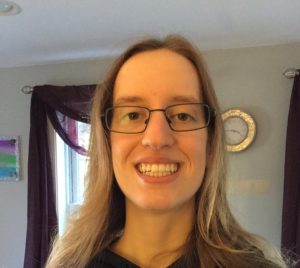
Name: Cami Contestabile
From: Pittsburgh, Pennsylvania
Votes: 0
I Am “Dying” to Save As Many Lives As I Can
Ding. Ding. Ding.
The screen of my phone lights up each time I receive a text message. While I hear this noise, my eyes are firmly locked on the road. I do not dare turn towards the source of this noise, for I fear what could happen as a result. Just a second of distracted driving could end the life of either a human or animal—I could not live with myself if that happened.
I remember as a child sitting in my car seat watching the sights pass me by.
”Look! Mom! A dog!”
“Over there! A squirrel!”
Let me tell you that long car rides in the country became an arduous task for my parents, because every cow, sheep, pig, horse, or goat that we passed, I took notice of. Watching these animals made me happy, while also passing the time.
Finally, the day came when I sat behind the wheel for the first time. I felt the smoothness of the steering wheel beneath my fingers, knuckles white from gripping it a little too tightly. I turned the key, hearing the engine come alive. Then I was off—moving extremely slowly through an empty parking lot.
As I gained confidence driving around this lot, I decided it was time to hit actual roads. One reason I feared doing this was the speed limit. Driving on an actual road meant that I would have to increase my speed, meaning that if I hit someone or something, I risked doing them harm. Since I was younger, I have always had an immense love for all animals and making sure they remain safe and healthy is my purpose in life. Therefore, my dream is to become a small animal veterinarian, making a positive difference in the lives of animals. It would be devasting to me if I were to hit or kill a helpless animal due to my own actions. It pains me how many roadkill I see, blood spattered all around the corpse with crows picking off what they desire. How many of those deaths could have been avoided if only the driver of the vehicle looked at where they were going?
I am all too aware of the dangers of distracted driving. I have watched countless news reports illustrating cars flipped over on fire due to the driver looking at something other than the road. My dad was the unfortunate victim of distracted driving. He was driving home after a day of fishing on his boat. It was around 1:00 am and there were not many cars on the road. As he got closer to home, a lady, who was distracted by her phone, drove out of a parking lot into my dad’s boat trailer. Luckily, my dad was not driving over the speed limit, therefore the impact did not do damage to him or the instigator. The cops arrived on scene and after some time, the lady offered to pay the costs to the boat trailer. She also admitted that she had been looking at her phone, never even noticing that my dad was coming. While nobody was seriously hurt, this scenario shows how being distracted is dangerous. Anything can happen in that split second of carelessness.
I believe that properly educating drivers can reduce the number of deaths as a result of driving. By educating people at a young age prior to them even receiving their learner’s permit, then that can hopefully encourage them to be safe behind the wheel. New and seasoned drivers must feel confident behind the wheel, as well as take on the responsibility and consequences of being in control of a motor vehicle—a weapon that can kill. Every driver should know the various laws of their state and know what each sign means. For example, a yield sign tells you that when merging with traffic, you have to be prepared to stop if necessary to allow oncoming traffic to proceed. If not followed because you think you have the right of way, an accident can soon follow. New drivers should also be familiar with the controls of the car itself. They should know how to turn on the headlight, windshield wipers, know how to turn on the left and right turn signal, and even the difference between the gas and brake—not knowing the difference between the gas and brake is a telltale sign that you should not be driving. If a driver is not comfortable with these controls, then driving on a road with other people is not a safe choice. Not to forget other car features, but your seat should be far enough forward so you can reach the pedals, but not too close as to cause your chest to hit the steering wheel—this distance will vary for each person. The mirrors should also be adjusted so you can see objects around you, ensuring you are not driving “blind”. Similar to how veterinarians must be educated at veterinary school in order to begin practicing medicine, drivers must be educated before they can begin driving.
As I have mentioned above, distracted driving is a major obstacle that must be overcome everywhere. Unfortunately, the reality is that it probably will never be fully resolved because there will always be people who will not obey the law. In addition to distracted driving, there are other reasons that crashes occur: speeding, alcohol, medical emergency, mental disorder, animals, and suicide. God forbid, if a crash does occur, one way that you can protect yourself is to buckle your seatbelt! Seatbelts can reduce the risk of injury and death—although they are not a guarantee. You should never drink and drive or drive while intoxicated by medications or drugs. Even with prescribed medicine, caution and common sense must be used. For example, some medication causes drowsiness or dizziness and this increases the risk of a crash. If you experience any of these symptoms, do not drive a vehicle. To reduce the number of deaths related to driving, drivers must consider the conditions of the road and of the surrounding environment. For instance, rain and ice cause slick roads and your speed should rest below the speed limit. Be aware of your surrounding at all times, because in the blink of an eye, anything can happen. Pay attention to the speed limit signs, other drivers, and even the people or animals next to the road—the movie Pet Sematary illustrates what can happen to a child whenever they wander into the road and are hit by a distracted driver. For speed limits are there for a reason. In a school zone, the speed limit can be as low as 15 miles per hour. Contrast this with an interstate where the speed limit reaches 70 miles per hour, each location has different factors that determine the maximum—or safest–speed a car should be traveling in that area.
Regarding steps you can take to become a safer driver, make sure you yourself are able to drive. Your vision should be good, as well as your peripheral vision. If you cannot see clearly, then do not get behind the wheel. You should also make sure you can turn your head around safely—no injuries. Being driver makes it your responsibility to ensure that your car is safe enough to drive, meaning that it has passed its inspection. For example, the tires should be pumped full of air and the brake lights should turn on when you apply pressure to the brakes.
Furthermore, I believe that there is another area that could be improved upon to reduce deaths occurring as a result of driving—bad roads and their associated signage. There are some roads where I live that are dangerous—there are blind curves and not enough stop signs. There are also other places where the road needs paved, for the potholes force you to drive into the oncoming lane to avoid hitting the holes head on. If roads become safer for drivers, then that can rescue the possibility of crashes and subsequent injuries and deaths. This could be as simple as adding stop signs to being more complex where entire sections of a road need to be designed. In the winter, safety crews need to ensure that roads are cleated of snow and are salted to prevent ice buildup. These precautions can ensure the safety of both people and animals that are on or by the road.
I myself have never been in a car accident, but as stated previously, my dad was in an accident with a distracted driver. I have often wondered what I would do if I were the passenger in a car whose driver was distracted or being outright irresponsible. My immediate instinct would be to make them pull over—of course, I would have never gotten in the car in the first place if I feared for my safety. By pulling over, I could ensure that both myself and the driver stay safe, as well as other people or animals that are on the road. Safety is my number one priority, because I do not want to end up on the news as a victim of a preventable car accident. For even the aforementioned example with my dad repeats in my mind whenever I am behind the wheel of my car. I know that I can never trust anyone on the road. I am the one who has to be proactive, because for all I know, any driver around me could be distracted. The unknown leads me to be even more attentive and focused on my driving. So, if my phone does ring while I am driving, I do not pick it up. I do not want to run the risk of killing an animal or a person. As a fellow driver, I believe that we all have a duty when we sit behind the wheel. We have a duty to ourselves and to every other living being on this planet to protect them. Driving is not a given but a gift that can be taken away at any moment. Driving gives us newfound freedom, the ability to let your hair down and feel the breeze on your face. It allows you the chance to go fast or slow. But driving can also kill the ones we love. Being distracted increases the chances of harm to yourself and to others. God forbid, if you did hit a person, how could you live with yourself afterwards? The guilt would be overbearing to deal with. When I get behind the wheel, fighting the urge to check my phone or answer a call is simple. I think of the important people and animals in my life and imagine them gone. I tell myself that this is what will happen if I touch the phone. You know what I do in response—I continue to look at the road in front of me, ignoring the dinging of my phone. All lives are precious and I will not end a life just to read a text from my friend saying hello.
Overall, preventing accidents and deaths due to driving is an issue that one person alone cannot fix. Even laws and signs cannot fix the problem. The solution starts with us. Every time you get behind the wheel, safety needs to be your priority. I am a supporter of vehicles, for they make transportation much easier and convenient, but these same machines can easily take a life in a matter of seconds. Please do not fall victim to the idea that it cannot happen to you. In reality, anyone can be involved in a crash so safety has to be your top concern—both for yourself and others on the road. Young drivers must understand that they are not immune and all powerful—do not let your pride and arrogance be the reason that a person or animal loses their life.
Thank you for taking the time to read my—rather lengthy—essay.
