
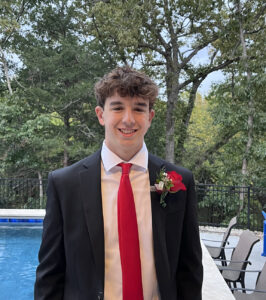
Name: Nick Sawyer
From: OVERLAND PARK, KS
Votes: 0
Freedom + Responsibility
Obtaining one’s driver’s license is one of the most exciting part of being a teenager. With a license comes a sense of freedom that teenagers are extremely eager to have. For the first time in their young lives, they do not have to look to an adult to get from point a to point b. This this newfound freedom, comes new responsibilities. All too often, teenagers receive the freedom (license) but do not take on the responsibility part of the milestone. This imbalance leads to traffic tickets, crashes, and deaths.
The first step to reduce the number of deaths related to driving is for young people to be required to take a driver education class. This should be a requirement before any permit is issued so bad habits are not formed. My experiences as a 17-year-old male driver have shown me that driver education is the key to unlocking the skills necessary to safely operate a motor vehicle. A course, taught by a trained professional, gives students the best chance to learn how to be a safe and responsible driver. When students devote the time to attend a driver education class, they are learning the importance of following the laws and being safe. Furthermore, driver education classes include real-world situations of events that have happened when someone made a poor choice behind the wheel. These stories/videos make a huge impact on the students and help them to understand what could happen. Most teenagers think that they are invincible and nothing bad can happen to them. Seeing videos of other young people telling their sad stories will make the problem more relatable. They will start to understand that bad things can happen whenever a driver is being careless. For all these reasons, attending driver education classes will reduce the number of deaths because of driving.
Another step that can be taken to reduce the number of deaths related to driving is to enforce the no cell phones while driving rule. As a drive down the street, I often see drivers looking at their cell phones. In fact, I completed a little test. While my mom drove down main streets in our town, I looked out the window for five minutes. In just five minutes, I saw twenty-four drivers interacting with their cell phone. Fortunately, no accidents occurred during my little experiment. But, if these drivers were on their phone at this time, my guess is they are often on it while driving. Police officers cannot be always everywhere so we need to make it a norm that people will not use their phone while driving. Right now, I think it’ is too normal that people use their phone when they drive.
I have never been in a car accident. I give credit to the driver education class I took at the age of 14 for this. However, I have been a passenger in a car that was being driven by my friend when he was driving irresponsibly. As he was driving at an unsafe speed down the highway, I thought of a video that I saw in my driver education class. After the video, we discussed how important it is for bystanders (passengers) so say something if a friend is not driving safe. That’s exactly what I did. I told my friend that he was driving too fast. I also said that my parents monitor my speed so they will be aware of the situation. I don’t know if it was me telling him to slow down or the fact that he thought he would get in trouble if my parents saw our speed. But, he slowed down immediately and I felt safer.
To be a better and safe driver, I will always wear my seatbelt and have my passengers do the same. I will continue to obey traffic laws, not speed, and I respect road conditions in bad weather. I always use my turn signals and do not use alcohol or drugs. I refuse to text on my phone when driving because no message or text is worth risking my life or the lives of others around me. Positive peer pressure can go a very long way. So, I will use positive peer pressure to help my friends to create safe situations behind the wheel. Distracted driving is dangerous. Passengers need to do their part to limit distractions. As a passenger in my friends’ car, I will limit our conversations, keep the music low, and make sure basic laws are followed when my peers are behind the wheel.
