
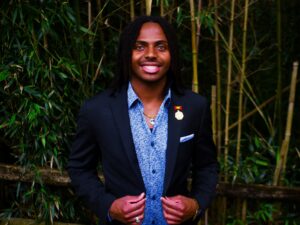
Name: Phillippe' "Jontae" Harris
From: Fairfield Township, Ohio
Votes: 0
A Nonfiction Story a Little too Real: The Steps to Be a Safer Driver
*Ring, ring, ring* “I wonder who is calling me” Julian thought as he looked down to reach for his phone. While Julian is reaching for his phone, he is oblivious to the car that has Bob, a drunk driver, that drifts head on into Julian’s lane driving 50 mph. Julian looks up and sees Bob’s car in front of him but unfortunately, it is too late. Julian, driving 45 mph, hits Bob’s car and dies on impact. Bob miraculously survives but is left paralyzed from the waist down. Julian’s mom Jane was devastated when she heard the news as she was on the way to meet Julian for their weekly Thursday night dinner. Bob no longer could walk and now was being charged with vehicular manslaughter and sentenced to 10 years in prison.
This a two-edged story. Luckily for Julian and Bob this story is not real but unfortunately for everyone else, this story is not too far from reality. One moment changed Julian, Bob, and their families’ lives forever and the same thing can happen to ordinary people. A person could be an extremely conscientious driver: They never speed, they never text and drive, they never cut anyone off, they never run red lights, they never change the radio while they are driving, they never eat while they are driving, and they never drink and drive. Until the one time they do, and it changes their life. This can seem frightening to people and create anxiety. “So, you’re telling me that I can never come close to getting into a car accident for 15 years but 15 years and 1 day go by and I can get into an accident and die from it?” and the honest answer to that question is “yes…you can”. But that answer should not be used to stir up a fear of driving in people’s minds, it should wake people up to be more cautious on the road.
Although true “accidents” do happen, some accidents can be prevented. Intentionality while driving can prevent a lot of accidents that cause people to lose their life. While driving if the person sees a car riding the double yellow line, they can safely look over their right shoulder and get over to the right lane to prevent a head on collision with the car riding the double yellow line. Now while the driver was able to safely prevent a collision by intentionally switching lanes while driving, they were only able to do that because they were paying attention. Distractions are another huge catalysis for accidents. In the short story earlier, Julian got distracted by his phone and looked down to check it. If Julian never looked down, he would have seen Bob’s car barreling towards him and would have had more time to react. Although phones are the number one distraction to drivers, they are not the only ones that drivers should be weary of. Eating while driving, changing the radio, and even a conversation with another person in the car can be distracting. It is to the driver’s best interest to limit the distractions they are presented with while driving, especially when they are new. Another clear distraction that is ill-advised is drinking while driving. It’s already hard enough to drive safely to and from places, there is absolutely no reason why a person should ingest something that slows down their reaction time, warps their depth perception, and lowers their inhibitions before driving. In the short story, Bob felt that he was still capable of driving because his house was only “5 minutes away from his house” but he was not, and his life changed forever because he tried to.
Once a person learns the basics of driving, learns to be intentional with their moves, pays attention to the road and limit their distractions they can do a more advanced form of driving: predictive driving. A car rapidly approaches a stop sign from the right exiting a neighborhood. A driver that is not paying attention may just continue to drive like they are the only car on the road. While a predictive driver foresees that car running the stop sign and turning left in front of them. The predictive driver starts to watch the car and has their foot hoovered over the brakes so when the careless car does turn left the predictive driver was able to prevent himself from t-boning the driver’s side of the car. Some may ask “Well what happens if the car does stop at the stop sign?”. The answer is “Then they stopped but at least you were prepared for the worse that could have happened in that situation and were not caught by surprise.” The adage it’s better to be safe than sorry is vital for a driver that is driving and has a life to protect. The goal of predictive driving is not to be omniscient about actions that drivers will take that day on the road, the goal is for the driver to be able to position themselves to stay safe while driving with other drivers who are not paying attention.
It is not feasible to say that every accident is preventable. There are some elements that may be out of one’s control like when my dad’s truck was hit while he was sitting at a red light. But there are steps that drivers can take to reduce the likelihood of them being in an accident. If the driver knows all the driving laws, are intentional with the moves they make while driving, are actively paying attention to the road and predicting the actions of cars around them and coming up with hypothetical plans if a car makes a bad move, they will be a safer driver on the road. Julian and Bob family wishes that they followed the steps above. If so, Julian would still be alive and would have been able to attend his dinner with his mom and Bob would have made it home safely and still had his freedom to walk, to make his own choices. No driver should have to lose their life or be incarcerated for careless driving, so don’t put someone else through that pain.
