
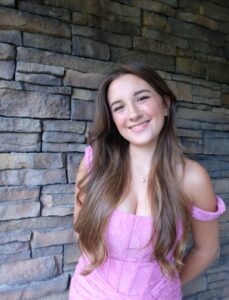
Name: Adriana Roth
From: Gainesville, FL
Votes: 0
A Crash Course in Responsibility
The drive from New Jersey to Florida was my dad’s mission. No stopping, no hotels, just miles of highway, a trunk packed with my college essentials, and an endless supply of gas station coffee. He was determined to get me moved in, settled, and set up for success because that’s just the kind of dad he is. But somewhere around 3:42 AM, that determination started to look a lot like exhaustion.
I watched from the passenger seat as his grip on the wheel loosened, his eyes blinking slower, his posture shifting as if his body was trying to stay awake out of pure willpower. And then, for just a second, his head dipped. The car veered slightly, a moment so brief I might have missed it if I hadn’t already been hyperaware of how long it had been since our last stop.
Without hesitation, he flicked on his turn signal and pulled into the next gas station. Under the hum of fluorescent lights, we sat in silence, sipping bitter coffee and stretching our legs. He didn’t argue. He didn’t insist he was fine. And that’s the thing. He was fine. Until he wasn’t. And on the road, “I’m fine” doesn’t cut it.
Every year, over 34,000 people in America die from car accidents. Driving remains one of the most mundane, everyday things we do. We get in the car, turn on our music, sip our coffee, and think, It won’t happen to me. But that’s the thing. No one ever thinks it will.
I know that better than most.
My best friend almost died because of someone else’s bad decision. She wasn’t speeding. She wasn’t distracted. She wasn’t the one making reckless choices. But that didn’t matter. The crash was violent, unavoidable. Her mom, sitting in the passenger seat, broke her back upon impact. My best friend walked away, but not without scars. Stitched up completely from shoulder to wrist, she hides them under long sleeves, embarrassed by something that wasn’t even her fault. That’s what makes car crashes so terrifying. You can do everything right and still end up hurt. You can be the most responsible driver on the road and still pay the price for someone else’s recklessness.
It’s easy to point fingers at the obvious villains. Drunk drivers. People who text at the wheel. The ones who treat stop signs like a suggestion. But reckless driving isn’t always that extreme. Sometimes it looks like someone who’s too tired to be behind the wheel. Sometimes it’s someone like my dad, pushing through an overnight drive when his body is screaming for rest. Or someone like my grandma, who is a perfectly fine driver, except when it comes to yellow lights.
She doesn’t run reds. She just really believes in her ability to beat the change. “It was basically still green,” she says as I white-knuckle the passenger seat. And most of the time, she’s right. Most of the time, she makes it through without a problem. But that’s the issue. When people get away with risky driving behaviors, they start believing they’re good at it. That they have skill. That the rules don’t fully apply to them because they know what they’re doing. Until the one time they don’t.
And that’s how crashes happen.
Driver’s education needs to be better. We teach people how to parallel park but not how to recognize when they’re too tired to drive. We make people memorize road signs but don’t require them to practice defensive driving. Real-life hazard training should be mandatory. Not just so people know how to drive, but so they know how to react when someone else is driving irresponsibly.
Laws also need to be stricter. DUI penalties should be harsher because “I was just buzzed” doesn’t bring back the 13,000 people who die in alcohol-related crashes every year. Drunk driving isn’t an accident. It’s a choice. And what’s worse? The number of people who stand by and let it happen because they don’t want to be “that person” who calls it out. But being “that person” is the difference between life and death.
I know because I’ve been in that situation. I’ve seen someone, clearly intoxicated, pick up their car keys and insist they were fine. I’ve watched other people shrug, not wanting to start a fight, not wanting to deal with the drama. But I wasn’t about to let that happen. I stopped him. I made sure no one got in that car with him. Maybe he thought I was overreacting. Maybe he was angry at me. But I would rather have him be angry than be dead.
Technology is already doing its part. Collision detection, lane assist, emergency braking. Too many people ignore it, turning off safety features because they’re annoying. Meanwhile, those annoying alerts are the reason some people are still alive today. It’s time we stop seeing safety as optional.
But at the end of the day, no amount of laws or technology can override human error. That part is on us.
I’m an overly cautious driver, and I have no shame in that. I would rather be too careful than overconfident. Confidence doesn’t save lives. Awareness does. Driving is one of the few things in life where you don’t get second chances. You can’t undo a crash. You can’t hit rewind. And you can’t tell yourself, Next time, I’ll be more careful. Because sometimes, there is no next time.
That night on I-95, my dad could have kept going. He probably would have been fine. He almost made it.
But almost isn’t good enough.
That night, we chose safety. And sometimes, that’s the only choice that matters.
