
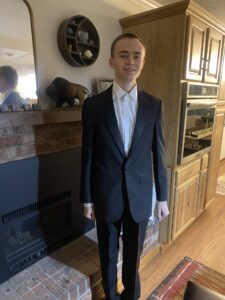
Name: Sean Thomas Lackey
From: Vilas, North Carolina
Votes: 0
Wielding a Deadly Weapon with Care
When my mother was thirty-five weeks pregnant with me, a teen driver ran a red light and t-boned my parents in their car as they were making a left turn. Thankfully, they both were wearing seatbelts and did not sustain serious injuries, but the impact from the wreck led to my pre-mature birth. My first week of life was spent in intensive care thanks to an inattentive driver. This was a traumatic experience for my parents and led to them being extremely attentive and careful drivers and instilling that value in me. Having such a dramatic birth story has certainly influenced my thinking and behavior as a teenager first learning to drive. I passed my driver’s education course and driving tests on the first attempt, and I’m proud to say that I’ve never received a ticket or been involved in a wreck. Literally since my birth, I’ve always known the deadly potential of operating a vehicle.
Driver education programs are critically important for exactly that deadly potential. It was in my driver’s education class that I was taught to think of a vehicle as a deadly weapon and to treat it with the same level of caution, care, and respect that I would a gun or a knife. Not only is a vehicle a deadly weapon, but it is also one that, without driver’s education programs, millions of people would wield with absolutely no training. That is a terrifying scenario to consider. Driving is a complicated skill that requires simultaneous motor skills, visual and auditory processing skills, contextual knowledge of things like laws and driving directions, and the ability to maintain focused awareness while executing all of these tasks. It is absurd to think that one should be able to execute such a complex set of tasks without appropriate education, training, and practice provided by driver education programs.
One meaningful step toward reducing traffic fatalities would be to mandate driver education courses across the country in a standardized way. The use of AI to create technology like parking-assist, automatic braking systems, cameras to increase spatial awareness, and even body and eye scanning technology to prompt drivers into safer behaviors are also promising opportunities to create safer roadways. However, I believe the single most important thing we can do to reduce traffic fatalities is to reduce distracted driving. I imagine when the first cars were produced those earliest drivers couldn’t imagine the number of distractions future drivers would need to contend with while operating motor vehicles. We all have super computers in our pockets, and sadly too many of us are addicted to them, unable to sit without distraction for even the duration of a redlight. Creating and enforcing strict hands-free, anti-distraction laws would be an excellent starting place. What could be even more promising is if we might harness the incredible technology available to us for good rather than for profit and develop the capacity to limit cell phone engagement while a vehicle is turned on or in motion. What if our phones just couldn’t work while we were driving? It would change everything.
I have been in the car with friends who were driving carelessly. It is an unpleasant, scary experience. The first time I did not say anything simply because I was immature, insecure, and embarrassed. My friend was driving too fast and was frequently checking his text messages. At one point he even tried to manage the steering wheel with his knee as he responded to a message. As I sat next to him in the front seat, my teeth were clenched, my palms were sweating, and all I wanted to do was get out of that little Mazda. While he was listening to music, texting his girlfriend, and driving me home, I was acutely aware of the fact that I was strapped into a seemingly out of control deadly weapon. I collapsed in exhaustion that night, exhausted from the adrenaline of the experience, and swore I’d never put myself in that situation again. I tend to drive myself places for this reason, however, there have been a few times since when I’ve been in the car with others and spoken up, keeping that promise I made to myself that fateful day in the Mazda. I have even, at least once, corrected my grandmother for her distracted driving.
My life depends on the person I’m riding with, literally. I will not ever forget that. I believe that the very best thing I can do to make the roads safer for all of us is to not be afraid to stand out and never be afraid of speaking up. I silently lead by example, setting my phone on “do not disturb” and placing it in my center console while I drive, refusing to put the car into gear until my passengers are buckled, and closely adhering to traffic laws. When riding with others, I have learned to gently and compassionately request my drivers be safe. I’ve asked friends to slow down before. I’ve volunteered to check a notification or respond to a text for my driver. And I’ve come to realize that there are some friends who I simply will not ride with, no matter the circumstance, and that is okay. Positive peer pressure can go a long way, and I am happy to provide it in this situation, as I have a lot to live for, and my future is worth too much to me to risk it over something so immaterial.
While I came into this world with the “bang” of a car wreck, it is not how I intend to leave this world. Driving is a profound responsibility that we too often fail to acknowledge as such. We wield deadly weapons every time we get behind the wheel, and we must remember that. Driving education programs, coupled with laws, technology, and positive social pressure give us hopeful and helpful ways to deal with the inherent dangers that come with the great privilege of driving a car.
