
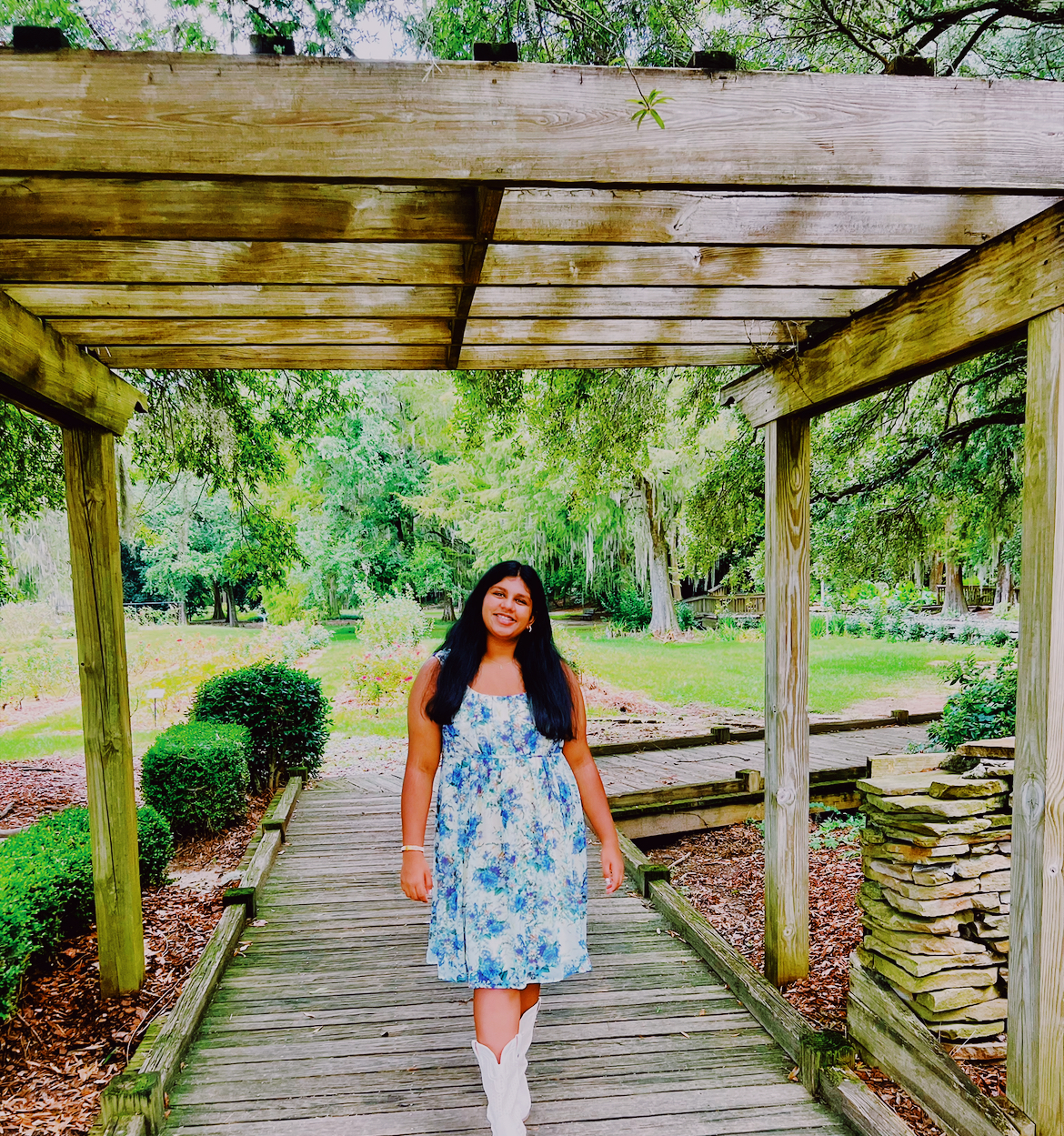
Name: Lathika Satishkumar
From: Orangeburg, SC
Votes: 0
Impaired driving means more to me than a definition in a driver’s education manual. It’s the split-second decision that changed my life on an August morning in 2025, during my first week of senior year. I was sixteen years old, driving my usual route to school, when a speeding driver ran a red light and slammed into my car. The impact left me with internal bruising, but the deeper wounds were invisible—the anxiety that grips me every time I sit in a car, the way the seventh of each month makes my heart race, and how that same route to school now feels like navigating a minefield of memories.
“Impaired driving” is dangerously misunderstood. Most people think of drunk drivers or texting behind the wheel. They’re not wrong, but they’re missing something critical. The driver who hit me wasn’t drunk or on their phone. They were simply speeding—driving too fast to stop at a red light, too focused on getting somewhere quickly to consider the consequences. This is where driver’s education often falls short: we learn about impaired driving as distinct categories—alcohol, drugs, texting, fatigue—but we don’t always understand that anything compromising judgment, reaction time, or control is impairment.
Even drivers who’ve completed driver’s education sometimes fail to recognize their own impairment because they’ve internalized false confidence. They think, “I’m a good driver, so I can handle going faster,” or “I know this road well, so I don’t need to be as careful.” This overconfidence is itself a form of impairment—it clouds judgment and creates an illusion of invincibility. The driver who hit me probably didn’t plan to run a red light. They likely thought they were in control, that they could make it through the intersection, that their skills compensated for their speed. They were wrong, and I paid the price.
The most common types of impairment I observe now are speeding, distracted driving, and what I call “routine complacency.” Drivers become so comfortable with their daily routes that they stop actively engaging with the road. They speed through familiar intersections, glance at their phones at stoplights, or drive while exhausted because “it’s only a few miles.” Each of these impairments degrades critical driving skills: perceiving danger, processing information quickly, and reacting appropriately. When you’re speeding, your reaction time shrinks and stopping distance expands. When you’re distracted, you miss critical cues. When you’re fatigued or overconfident, your brain isn’t operating at full capacity.
My accident fundamentally changed how I think about driving and my responsibility behind the wheel. I am hyper-aware now in ways I never was before. I check intersections multiple times, even when I have a green light, because traffic signals only work if everyone follows them. I notice dangerous drivers—the ones weaving through traffic, glued to their phones, treating speed limits as suggestions—and I give them space. Most importantly, I’ve committed to never be the reason someone else experiences what I went through.
Driver’s education and traffic school can be powerful tools for preventing impaired driving, but only if they go beyond memorizing rules and statistics. Effective programs need to challenge students’ assumptions about their own invincibility. They need to make consequences real and personal, not abstract. They need to emphasize that impairment isn’t just about substance abuse—it’s about any factor that compromises your ability to drive safely. When I took driver’s education, I learned about accidents, impaired driving, and road safety, but nothing prepared me for how quickly everything can go wrong because of someone else’s poor judgment.
The role I can play in preventing impaired driving starts with sharing my story. When friends joke about speeding or checking their phones at red lights, I speak up. When I see dangerous driving, I don’t stay silent. I advocate for taking driver’s education seriously, not just as a box to check but as essential training for operating a machine that can end lives in seconds. My accident wasn’t my fault—I had every right to be on that road, driving safely to school—but I refuse to let that experience be meaningless. If sharing what happened prevents even one person from making the same reckless choice that driver made, then something good can come from that August morning.
Every time I approach an intersection now, I remember. But instead of just feeling fear, I’m reminded of my responsibility to drive differently than the person who hit me—and to inspire others to do the same.
