
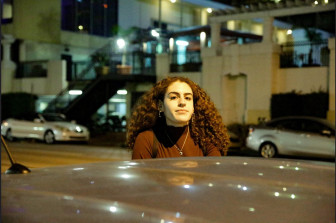
Name: Nikki Newball
From: Orlando, Florida
Votes: 0
My
mother says she remembers the days when a person got in their car,
may or may not have put on the seatbelt, and drove away. Get in your
car now, and you have access to numerous and often dangerous
distractions. We can: text, email, voice-text, GPS, YouTube, Facebook
message, Tweet, post on Instagram, send a Snapchat, etc. All of this
while attempting to keep our eyes on the road and avoid winding up
under an 18-wheeler or worse, causing a fatal accident.
Driving
while exercising common sense would prevail in a perfect world;
however, accident statistics and sky-high insurance rates tell a
different story. As with any other serious issue, education is the
most important factor. All first-time drivers, people from other
countries who may not be familiar with our laws, and anyone who has
committed a driving offense are the first in line for driver’s
education. Unbelievable as it may be, people are really not aware
that driving and texting is the equivalent of driving the length of a
football field blindfolded. Drivers ed is not just “important.”
It is absolutely crucial. We cannot allow a 16-year-old to get in the
car alone and trust they will avoid temptation to look at their phone
while driving without instruction on the dangers and illegality of
their actions. There is not one day I am driving that I don’t
see full-grown adults scrolling through Facebook while weaving in and
out of lanes.
I
did get my learner’s permit at 15 and began driving at 16. However,
in retrospect and looking back at how mentally immature I was at the
age I began driving, I feel that 18-years old should be the minimum
driving age. The amount of accidents caused by 16 and 17-year olds
speaks volumes about cognitive functioning, decision making and
driving at a young age. I applaud the texting/speaking on the phone
laws recently implemented. I am hopeful they will significantly
reduce the number of fatalities. There are strategies in place to
reduce vehicular accidents such as “do not disturb” and so on.
Unfortunately, this kind of technology is needed to keep drivers from
making poor decisions about using phones on the road. I would like to
see a steering wheel that can measure blood alcohol level when you
put your hands on it and turn the car off automatically if the driver
is over the legal limit, but again, only in a perfect world.
Fortunately,
my parents were relentless about me driving without being distracted
by my phone, loud music, or friends in the car. I knew from day one
that I would have my phone, license, and car taken away if I broke
the rules and caused an accident. However, two of my former roommates
both had serious accidents because of distracted driving. Nothing is
so urgent that it can’t wait until you are stopped at a light or
have arrived at your destination. I have seen my mother pull over to
a safe location to answer an email from work. She has been a
wonderful example that cemented good driving habits in my brain.
I
consider myself a safe driver, and I feel that part of community
service hours to graduate or for offenders should involve a
comprehensive course under the watchful eye of a supervisor to ensure
that they actively participate. The commercials we see with
celebrities driving in cars and getting into fatal crashes aren’t
enough: that is only fiction. People need to be more informed and
aware of the consequences of reckless driving (raised insurance, cost
of repairing damages, legal consequences, etc.). Essentially,
education is the most important factor in preventing fatalities on
the road.
