
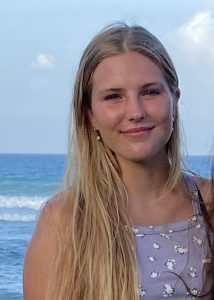
Name: Alanna Keister
From: Middleburg, PA
Votes: 0
In the Driver’s Seat: Is Drivers Education a necessity or not?
In the Driver’s Seat: Is Drivers Education a necessity or not?
Alanna Keister
Nobody wants a speeding ticket, but the minute we get behind a slow-moving vehicle or a reduced speed zone we get agitated. We start yelling at the car in front of us like we are angry they are driving safe. However, even when we get that ticket from flying around the safe driver, it’s only a matter of time before we speed up again, and who knows what happens then. Maybe it’s only a small accident, a fender bender, or maybe it only takes ten miles over the speed limit and a quick glance at a phone to cause a lot of people a great deal of pain.
On average 34,000 people in the U.S. die as a result of poor driving each year. Including all car related accidents so far in 2021, we have exceeded that average by over 3,000 deaths. Understanding the laws of the road is something we are taught in high school and by our parents. By taking in that information and putting it into practice when we are on the road, we can save thousands of people. We don’t, though it’s as simple as remembering safe following distance or knowing you need to drive slower on wet roads. One would think as easy as it is to be safe that we would be safer, but look at the average deaths per year. Sadly enough, deaths alone aren’t enough for people to learn to be safe on the road and neither is law enforcement, so what options are available?
There really only is one good option that’s effectiveness now doesn’t seem to help but could result in less deaths. Law enforcement hasn’t proven to be that effective so far, speeding tickets don’t tend to phase young drivers until their license has been revoked and that doesn’t happen until after two of three tickets and maybe a warning or two. Multiple chances are given to be a better and safer driver, and they’re taken advantage of. About 42 million speeding tickets are given out each year. If the consequences of those tickets were greater the average deaths would decrease. If those chances are limited and warnings aren’t an option, it might urge people to slow down when driving. Taking busy highways into consideration, I understand pulling anyone going over the 65 or 70 speed limits would be a hassle but setting up speed cameras and catching license plate numbers like they do at red lights could be very effective. Catching the plate numbers of drivers going maybe 10-15 miles over the limit and getting a ticket or notice in the mail could also be effective.
Another small, yet effective option would be to extend the schooling teenagers get in drivers’ education; instead of one semester make it two: a full year of learning the rules of the road, practicing safe driving more often, and understanding the many unsafe driving conditions and how to handle them. If teachers could bring more awareness and understanding to kids about the dangers of driving, maybe the death rate could be lowered. I remember in driver’s education my teacher’s way of helping us to understand the risk of driving was having us watch documentaries and videos of the fatal and heartbreaking reality of driving recklessly. As a teenager, though, I didn’t think that would have anything to do with me. I knew how to drive and be safe, but I didn’t think it would ever affect me.
Even though I thought I was a great driver and the things in the videos could never happen to me or my friends, it did. Many of my class mates have been in car accidents, and all but one wasn’t fatal. One of my school’s star football players was in an accident and he lost his life; it was a very hard loss for everyone. He wasn’t just the average football player who made that all he was, he was a people person and loved everyone. You couldn’t be around him and not smile or laugh, and one night everyone lost him. I remember sitting at his viewing and thinking how real it was now, that driving is dangerous and how serious you need to be with it. As if that wasn’t enough to get me to be a safer driver, I was in an accident of my own. No one was hurt and for that I am very thankful, but my car didn’t make out so great. One night I was coming home from a friend’s house running late and I took a turn too fast on a backroad I was unfamiliar with. I hit the brakes but lost steering and went straight into a tree. That was really an eye opener, the sudden realization that I had just wrecked my car being careless. It could’ve been avoided if I had just driven slower and left on time. Just like many others I thought it was never going to happen to me, but I ended up lucky.
Steps taken towards becoming a better driver start small. An easy one I’ve learned to used is driving the speed limit and understanding its set at what is safe. The speed limit is what proves to be safest for you and the other drivers around you. I, just like many others, have learned that the hard way. I feel the need now to tell others to slow down or be more careful when driving through reduced speed areas and even highways. You never know what could happen and the more reckless you get, the more fatal the outcome could be.
